

More news on this day
What began as a distant geopolitical flashpoint has rapidly turned into a deeply personal crisis for thousands of cruise passengers and crew caught on the wrong side of a suddenly perilous Strait of Hormuz.
Get the latest news straight to your inbox!
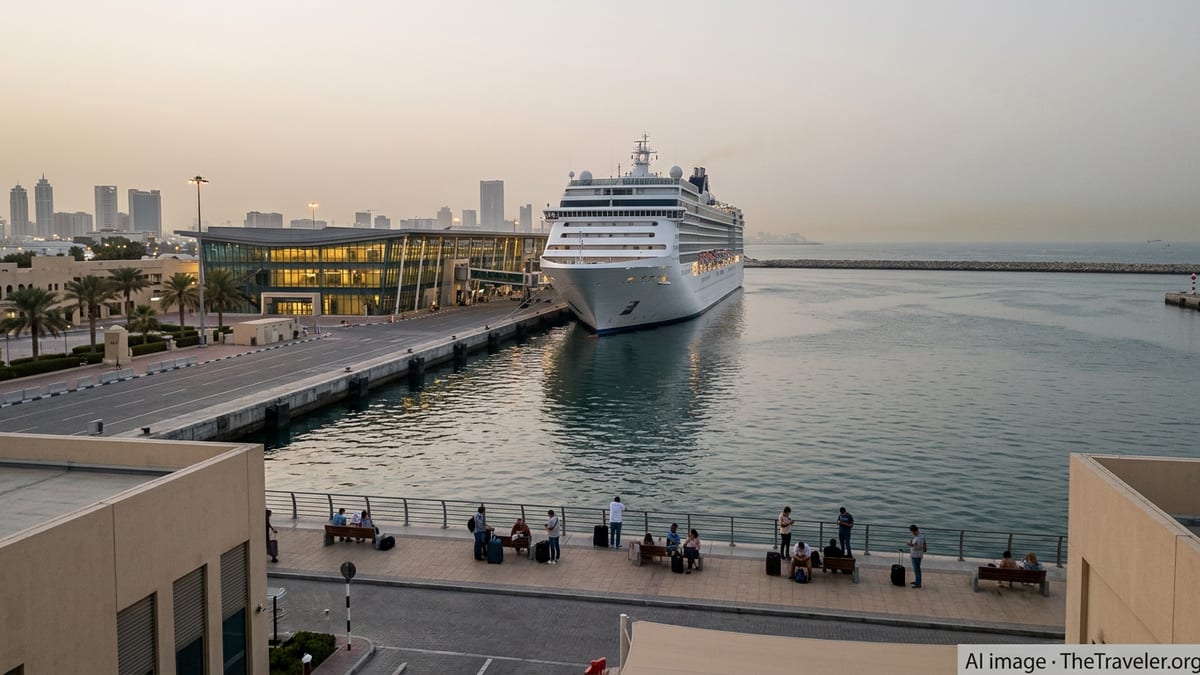
A Sudden Standstill in a Once-Booming Cruise Playground
Until late February 2026, the Gulf had been marketed as cruising’s new frontier, a winter playground of short-hop itineraries linking Dubai, Abu Dhabi, Doha and Muscat with year-round sunshine and aggressive port investment. That fragile success story has been abruptly halted by the effective shutdown of the Strait of Hormuz, as the Iran war spills squarely into vital shipping lanes and sends war-risk premiums and security alerts soaring.
Since joint United States and Israeli strikes on Iran on February 28, vessel tracking data shows traffic through Hormuz collapsing, with major container and tanker operators rerouting around the Cape of Good Hope and warning clients of extended delays and mounting surcharges. Cruise ships, far more exposed reputationally and physically than hardened cargo fleets, were among the first to withdraw. Within days, sailings into and out of the Gulf were paused, then canceled outright as security advisories urged operators to avoid the strait.
The shutdown has been described by regional tourism officials as an unprecedented reversal for Gulf cruising, which had spent a decade courting big brands with new terminals and relaxed visa regimes. Those ambitious plans now collide with an unsettling reality: the region’s flagship cruise products depend on a narrow, contested waterway that has become a front line.
Stranded at Sea and in Port: Passengers Grapple With Uncertainty
The human cost of that strategic calculation is playing out on board at least half a dozen large cruise ships that found themselves either inside the Gulf or at its approaches when the crisis deepened in early March. Industry trackers report that Saudi-backed Aroya Cruises has its Aroya Manara effectively marooned in Dubai, while Celestyal Cruises, MSC Cruises and Germany’s TUI Cruises have vessels idling at Gulf berths or diverted to alternative ports, with their advertised itineraries suspended indefinitely.
Travel trade outlets estimate that more than 15,000 cruise passengers have been affected across the wider Gulf, from travelers whose voyages were cut short mid-cruise to those who flew into Dubai or Doha only to discover their sailings canceled hours before embarkation. Airlines facing partial airspace closures and reroutings have compounded the disruption, with some passengers stuck in limbo between canceled return flights and non-operational cruises.
On board, the experience bears little resemblance to the carefree vacations passengers booked months ago. Crew members describe impromptu “floating hotel” scenarios, with ships remaining alongside in port while entertainment teams rework daily schedules and hotel departments scramble to extend provisioning. For guests, the transition from anticipation to anxiety has been swift, as views of palm-fringed shorelines mingle with news alerts about missile volleys, naval mines and new military advisories in surrounding waters.
Consumer advocates warn that contractual fine print around war and force majeure leaves many passengers reliant on the goodwill of cruise brands rather than ironclad legal protections. While most major operators have offered full refunds, future cruise credits or rebooking options, there is growing frustration among travelers who face additional out-of-pocket costs for disrupted flights, unused shore excursions and unexpectedly extended stays on land.
Crew at the Sharp End of a Security and Labor Gap
For the multinational crews who keep the global cruise machine running, the Hormuz crisis has revived uncomfortable memories of past maritime flashpoints and the pandemic-era crew change debacle. Seafarer unions and welfare organizations report heightened stress among crew trapped aboard ships whose movement is now dictated by military risk assessments rather than commercial schedules.
Some cruise staff have been at sea or anchored in the region since before the February 28 escalation, with contract extensions now likely as operators reposition vessels away from danger zones. Port calls that once offered brief respite are being curtailed by security rules, while shore leave is restricted in cities subject to airspace alerts or missile defense activity. Welfare advocates caution that crew mental health, already strained by long rotations and uncertain future deployments, is under renewed pressure.
Maritime analysts note that the protections available to cruise passengers, however imperfect, often far exceed those afforded to seafarers under fragmented flag state and labor regimes. The current blockade has highlighted once again how quickly sailors and lower-paid hotel staff can find themselves effectively confined to vessels, navigating not just literal minefields but also bureaucratic gaps in international law when crises erupt.
Calls are growing within the industry for clearer protocols on crew evacuation, rapid contract termination rights in designated conflict zones and standardized minimum protections that would apply across flag registries. For many crew now watching warships patrol shipping lanes that only weeks ago carried snorkelers and sunbathers, those reforms cannot come soon enough.
Gulf Ports and Tourism Economies Absorb a Sudden Shock
The Hormuz disruption is also a profound economic shock for Gulf tourism economies that had banked on cruising as a pillar of diversification away from oil. Dubai, Abu Dhabi, Doha and smaller Gulf ports collectively invested heavily in new cruise terminals, waterfront districts and marketing campaigns positioning the region as a safe, modern alternative to more crowded Mediterranean routes.
With sailings suspended, those gleaming terminals now sit quiet, their taxi ranks and tour buses idling. Local tour operators report mass cancellations of shore excursions, from desert safaris to guided souk visits, while small businesses in port districts say they have seen visitor footfall evaporate in days. Hotel groups that had synchronized promotional offers with cruise arrivals are hastily recalibrating toward regional staycation markets and business travel.
Port authorities insist that cargo operations in many Gulf harbors remain functional even as ships avoid Hormuz itself, but acknowledge that passenger volumes are likely to lag far behind any eventual recovery in freight. Insurance surcharges, reputational damage and lingering traveler unease are expected to weigh on bookings long after maritime security conditions stabilize.
Regional tourism boards are racing to update messaging, emphasizing safety measures and alternative gateway strategies that rely less on congested chokepoints. Yet industry insiders concede that for many international travelers, the Gulf’s brand as an easy winter cruise corridor has been badly dented, likely redirecting demand toward the Caribbean, Mediterranean and Asia for at least several seasons.
From Distant Chokepoint to Personal Risk Calculation
The 2026 Hormuz blockade underscores how quickly a remote maritime chokepoint can intrude into the intimate calculations of individual travelers deciding where to spend limited vacation time and savings. For cruise fans who once treated the Gulf as a turnkey tropical escape, news images of damaged hulls, missile defense intercepts and darkened radar screens are forcing a reassessment of risk tolerance.
Travel agents report a surge in client questions about naval escorts, safe corridors and the likelihood of further escalation, topics that previously sat far from the usual conversations about balcony upgrades and drinks packages. Some customers are now explicitly asking whether their chosen itineraries rely on Hormuz, the Red Sea or other contested lanes, and how quickly ships can divert if conditions deteriorate.
For the global cruise industry, the episode is a stark reminder that sprawling fleets and ever more adventurous itineraries rest on fragile geopolitical foundations. As ships reroute away from Hormuz and booking engines quietly remove Gulf sailings from future seasons, the human stories unfolding in terminals from Dubai to Doha offer a sobering counterpoint to glossy brochures. The promise of paradise, it turns out, can hinge on proximity to a narrow strait now synonymous with danger rather than discovery.