

More news on this day
The effective shutdown of shipping through the Strait of Hormuz has widened into a global transport and energy shock, with the United Arab Emirates now joining Qatar, Saudi Arabia, Lebanon, Oman, the United Kingdom, France and other nations in confronting escalating travel disruption, aviation rerouting and sharply higher oil and gas prices.
Get the latest news straight to your inbox!
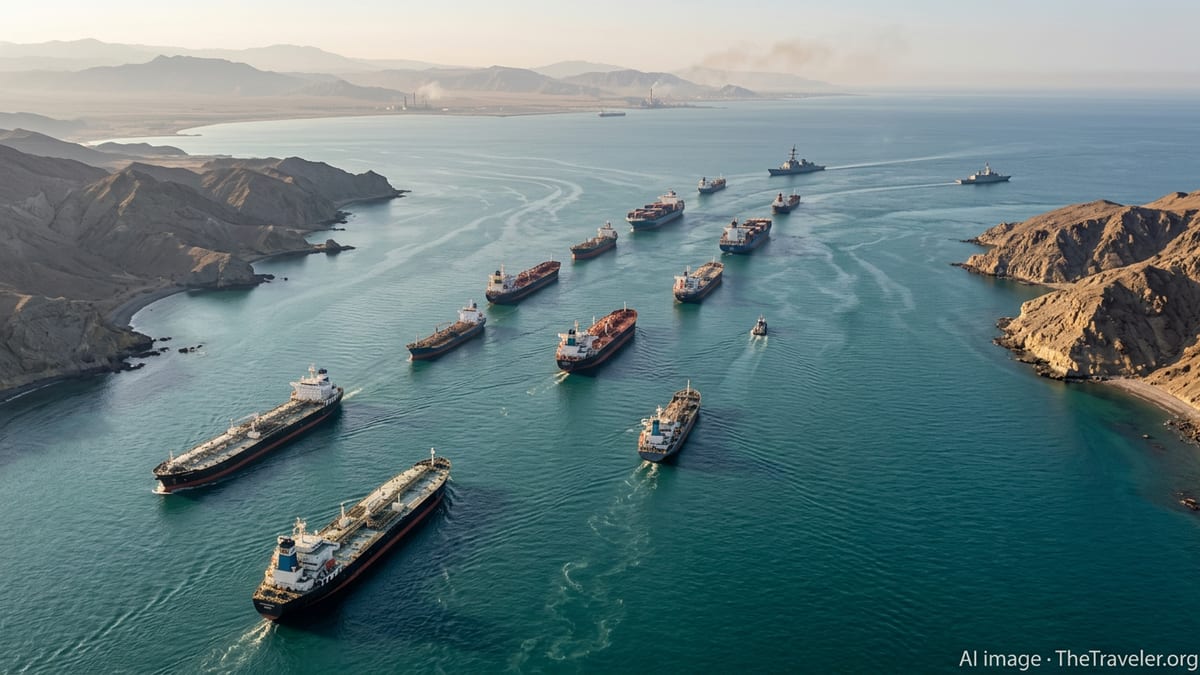
UAE Added to Expanding List of States Hit by Hormuz Disruption
As of 7 April 2026, publicly available information shows that the United Arab Emirates is increasingly exposed to the fallout from the near-halt in commercial traffic through the Strait of Hormuz, a corridor that normally carries about one fifth of the world’s seaborne oil and significant volumes of liquefied natural gas. The UAE now appears in shipping and logistics advisories alongside Qatar, Saudi Arabia, Oman and other Gulf exporters as carriers suspend or sharply curtail sailings linked to the waterway.
Container lines and tanker operators have announced suspensions or severe restrictions on services touching key Gulf ports, including those in the UAE, in response to heightened security risks and attacks on merchant vessels. Trade circulars issued in March and updated into early April refer to an “effective closure” of the strait, with cargo originating from or destined for the UAE, Qatar, Saudi Arabia, Bahrain, Kuwait, Iraq and Oman subject to routing changes, surcharges or temporary halts.
Marine traffic data cited in regional coverage indicates that more than two thousand commercial ships, including over three hundred oil and gas tankers, remain trapped in or around the Arabian Gulf due to Iran’s blockade of the passage. While limited, tightly controlled transits continue under new restrictions, energy exports from major Gulf producers are largely stranded, curbing flows from the UAE and its neighbors.
This maritime squeeze coincides with an intensifying regional conflict that has targeted energy and port infrastructure around the Gulf, further complicating efforts by the UAE and other states to maintain critical export and import lifelines.
Flights Grounded, Rerouted and Delayed Across the Gulf and Beyond
The shipping standstill has been accompanied by severe disruption in regional airspace, feeding through into global aviation networks. Port and logistics advisories issued since early March describe widespread airspace closures over several Gulf countries and a near-total cessation of regular passenger operations by key Middle Eastern carriers at various points in the crisis.
According to airline and freight bulletins, flights to and from the UAE, Qatar, Saudi Arabia, Bahrain and Kuwait have been suspended or rerouted on multiple occasions, with knock-on delays affecting services connecting Europe, Asia and Africa. National carriers in the region have cancelled services to destinations such as Dubai, Abu Dhabi and Doha when airspace restrictions intensified, forcing passengers onto longer, indirect routes or leaving them to rebook once corridors reopen.
Logistics firms report that while hubs such as Dubai, Abu Dhabi and Doha remain technically operational, schedules are volatile and capacity is constrained. Carriers have redeployed aircraft, shifted flights to alternative airports and increased fuel and security surcharges. Travel industry coverage notes that tourism-dependent destinations in the Gulf, especially the UAE and Oman, are now confronting cancellations, reduced visitor numbers and uncertainty around future bookings.
The impact is not confined to the Middle East. European travel markets are feeling the strain as long-haul routes that once relied on Gulf connections contend with fewer frequencies, higher fares and additional congestion on remaining services. Tourism authorities and airlines in the United Kingdom and France are monitoring the situation as travelers face more complex routings and potential price rises during the upcoming peak seasons.
Oil and Gas Prices Spike as Energy Flows Choke
The shock to physical shipments through Hormuz is reverberating through global energy markets. Economic analyses of the conflict report that the closure, combined with direct attacks on fields, refineries and export terminals, has removed a double-digit share of worldwide oil supply from the market, making it one of the largest disruptions on record.
Benchmark Brent crude prices have climbed well above 100 dollars a barrel in recent weeks, with some reporting days showing levels closer to 115 dollars. European natural gas benchmarks have also surged, as buyers seek alternatives to Gulf liquefied natural gas cargos delayed or cancelled by the shipping halt. Commentaries from regional banks and international energy observers stress that the effective closure of Hormuz is a key factor supporting prices at these elevated levels.
Producers are attempting to respond. OPEC and allied exporting states have agreed on modest output increases that would be implemented once exports can flow more freely, while some Gulf countries are exploring greater use of pipelines and Red Sea ports to bypass the chokepoint. However, analysts caution that the physical and political constraints of alternative routes mean they cannot fully offset a prolonged disruption at Hormuz.
For consumers in countries such as the UK and France, where a portion of gas supplies and refined products are linked to Gulf exports, the result is higher wholesale costs that feed into retail fuel, home heating and electricity bills. Industry forecasts warn that if the blockade persists or escalates, oil prices could test new highs, placing additional pressure on inflation and economic growth worldwide.
Travel, Tourism and Supply Chains Face Mounting Strain
Beyond energy markets, the Hormuz crisis is intensifying strains on global supply chains and tourism flows. Multinational freight forwarders describe a complex, fast-changing environment in which ocean services into and out of the Gulf are being restructured, with some carriers choosing to anchor ships, others diverting to ports outside the strait, and many applying war risk and congestion surcharges.
The UAE, Qatar, Saudi Arabia and Oman are working to keep ports and terminals operational where possible, but exporters and importers face delays, reduced vessel calls and uncertainty over future sailings. Logistics advisories highlight efforts to route cargo via alternative corridors, including overland links between Red Sea ports and Gulf markets, and new intra-regional feeder services connecting hubs in Saudi Arabia, Oman and the UAE to Asian and African ports that avoid Hormuz.
For the travel and tourism sector, the crisis is a double blow. Gulf destinations are dealing with fewer direct flights and higher operating costs, while their own outbound travelers encounter more expensive and less predictable journeys. Internationally, tour operators and travel platforms are updating advisories, adjusting itineraries that involve stopovers in the region and monitoring further potential disruptions linked to fuel costs and route closures.
Industry bodies caution that if elevated fuel prices and network instability persist into the northern hemisphere summer, airlines may trim capacity on some long-haul leisure routes, prioritizing high-yield business and essential travel. That could further limit options for holidaymakers and constrain the recovery of global tourism after recent years of volatility.
Governments Seek Workarounds as Diplomatic Pressure Builds
The growing list of countries affected by the Hormuz shutdown is prompting a mix of national contingency measures and coordinated diplomatic efforts. Publicly available information indicates that the United Kingdom recently convened more than forty countries for talks on pressing Iran to reopen the strait, highlighting the broad economic stakes involved.
Within the Gulf, states are accelerating logistics projects that had been under development before the crisis. Analysts describe a rapid push to strengthen overland transport corridors, expand capacity at Red Sea and Arabian Sea ports, and deepen regional shipping alliances that can support alternative routing. The UAE and Saudi Arabia in particular are promoting new road and rail links to connect their western and eastern seaboards, reducing exclusive reliance on Hormuz over the longer term.
At the same time, energy and shipping companies are recalibrating risk models, insurance arrangements and investment plans. Some are exploring new storage hubs and floating storage solutions to smooth supply once flows resume, while others weigh diversification away from routes perceived as vulnerable. Financial market commentary notes that the crisis has sharpened investor focus on maritime choke points and the resilience of global transport infrastructure.
For travelers, airlines and tourism-dependent economies, much now hinges on how quickly and sustainably transit through the Strait of Hormuz can normalize. Until a durable solution is found, the UAE’s addition to the roster of states grappling with the blockade underscores that what began as a regional security flashpoint has evolved into a far-reaching test of global mobility and energy security.