

More news on this day
Thailand has rushed to join the Philippines, Vietnam, Myanmar, Malaysia and Indonesia in rolling out emergency energy measures, as the effective shutdown of the Strait of Hormuz sends oil prices soaring above 100 dollars a barrel and threatens to upend air travel, ferry services and the wider tourism economy across Southeast Asia.
Get the latest news straight to your inbox!
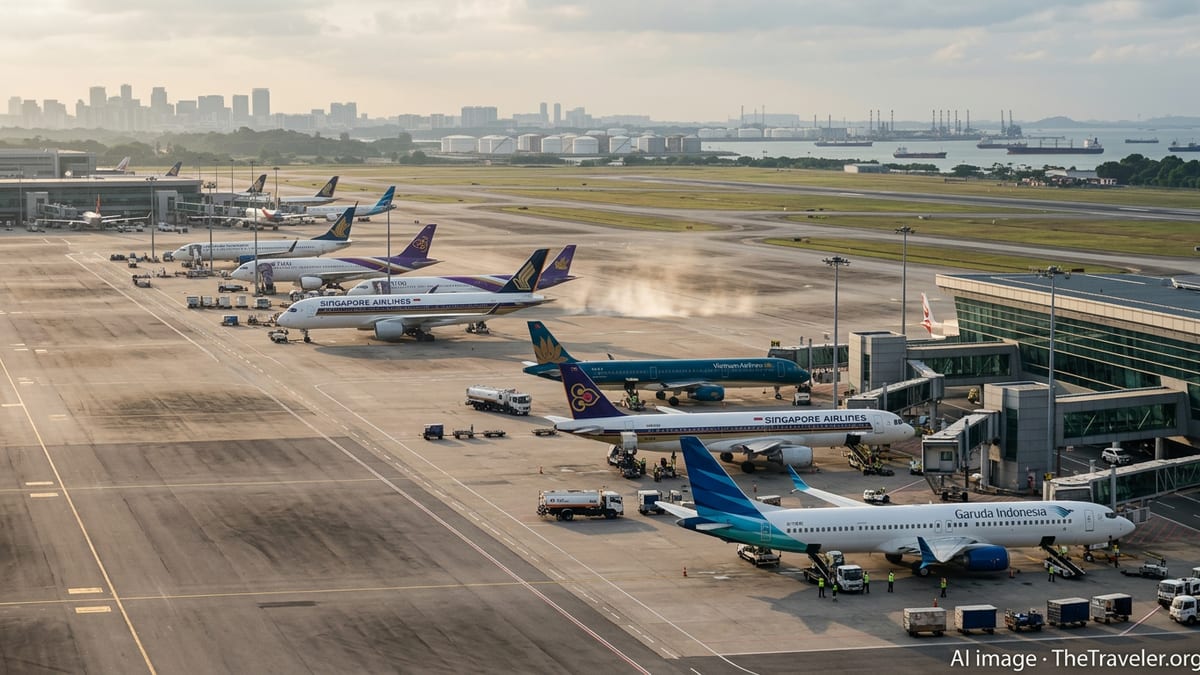
Hormuz Crisis Ripples Across Asia’s Tourism Heartland
The escalating Iran war and effective closure of the Strait of Hormuz have unleashed the most severe energy shock in years, with global benchmark Brent crude briefly topping 115 dollars a barrel this week and hovering back near 100 dollars. The price surge comes as mines, missiles and naval stand offs have brought tanker traffic through the narrow waterway to a near standstill, choking off roughly a fifth of the world’s seaborne oil and significant volumes of liquefied natural gas.
While the fighting is thousands of kilometres away, the impact is landing hardest in Asia, the destination for much of the Gulf’s oil. Analysts warn that the combination of disrupted crude and liquefied natural gas flows, plus a new war risk premium, is likely to keep prices elevated for months even if some traffic resumes. The region’s tourism dependent economies, still rebuilding from the pandemic, are especially exposed.
Across Southeast Asia, governments are scrambling to secure replacement cargoes from outside the Gulf, tap strategic reserves and shield consumers from the worst of the shock. At the same time, travel and tourism officials are trying to reassure visitors that flights will continue to operate and that key destinations, from Thai beach resorts to Indonesian islands, will remain accessible despite higher fuel costs.
Industry executives say much will depend on how long the disruption in Hormuz lasts. A short crisis could be absorbed through stockpiles and emergency reserve releases by wealthy oil consuming nations. A protracted shutdown, however, would test the resilience of Southeast Asia’s airlines, low cost carriers and budget conscious travelers as jet fuel and gasoline prices grind higher into the northern summer.
Thailand Turns to Reserves and Price Controls to Protect Travel
Thailand, Southeast Asia’s second largest economy and a major aviation hub, has moved quickly to insulate both households and its crucial tourism sector from the global turmoil. Officials say the country has around three months of strategic oil stocks in place, a buffer designed precisely for external shocks. That cushion, combined with the return of record tourist arrivals, gives Bangkok slightly more room to maneuver than some of its neighbors.
In recent days the Cabinet has deployed the state run Oil Fuel Fund to freeze retail diesel prices for at least fifteen days, effectively subsidizing transport operators and logistics firms that form the backbone of domestic travel. Energy authorities have also signaled a shift toward higher biodiesel blending, raising the share of locally produced biofuel in diesel to reduce reliance on imported crude. The measure is modest in volume terms but symbolically important, underscoring a determination to diversify supply wherever possible.
Thai officials insist they are wary of steps that would directly undercut tourism demand, such as forced early closures of shopping malls or entertainment districts to save energy. With Songkran, the country’s water festival and peak domestic travel period, only weeks away, the government is instead urging voluntary conservation in offices and industry while working behind the scenes with refiners and airlines to manage jet fuel allocations.
So far, airports and airlines report normal operations, and hotel bookings for coastal hotspots such as Phuket and Pattaya remain robust. Travel industry leaders caution, however, that if oil prices remain above 100 dollars for long, passengers are likely to face higher airfares and surcharges on regional routes later this year as carriers pass through rising fuel bills.
Philippines, Vietnam and Indonesia Brace for Higher Fares
Elsewhere in Southeast Asia, governments with fewer reserves and larger exposures to imported fuel are bracing for a more immediate hit. The Philippines, reliant on foreign oil for nearly all of its needs, has activated fuel price stabilization mechanisms and is weighing additional subsidies for public transport operators to avoid sudden jumps in bus and ferry fares that could deter domestic tourists and migrant workers returning home.
Vietnam, one of the region’s fastest growing economies, has already called on companies to encourage staff to work from home where possible to curb commuting demand and conserve fuel. That appeal, reminiscent of the early pandemic years, underscores the mounting concern in Hanoi that extended high prices could squeeze both export factories and the country’s burgeoning domestic travel market.
Indonesia, the region’s largest economy and an oil and gas producer in its own right, is in a more complex position. It benefits from higher export revenues but still imports significant volumes of fuel, and heavily subsidized domestic prices mean that any prolonged spike will strain the state budget. Jakarta is reviewing its subsidy regime and warning that further increases in regulated pump prices may be unavoidable, a move that would ultimately raise operating costs for airlines, inter island ferries and tour operators serving Bali and other resort islands.
Malaysia, which hosts a major aviation fuel hub and serves as a key stopover for long haul flights, is working closely with national carrier Malaysia Airlines and low cost giant AirAsia to monitor jet fuel supplies. Officials say they are prioritizing fuel allocations for international and inter state routes critical to tourism while asking large industrial users to prepare contingency plans for possible rationing if the global situation deteriorates.
Myanmar and Regional Carriers Face Toughest Tests
Myanmar, already grappling with political instability and a fragile economy, is among the most vulnerable to the energy shock. Limited foreign reserves, patchy infrastructure and dependence on imported fuel leave it with few tools to cushion the blow. Local media report long queues forming at some fuel stations in major cities as motorists rush to fill up before further price hikes, raising the risk of shortages that could disrupt domestic bus routes and internal flights.
Regional airlines, particularly low cost carriers that rely on high load factors and thin margins, are also on the front line of the crisis. Fuel typically accounts for a large share of operating costs, and each additional dollar per barrel can erode profitability on short haul routes linking secondary cities across Southeast Asia. Some carriers are already signalling that fuel surcharges will be reviewed on a weekly basis rather than monthly, allowing them to react more quickly to volatility but adding uncertainty for passengers.
Airport authorities across the region are working with national energy agencies to prioritise aviation fuel deliveries where possible, mindful that any perception of flight disruptions could quickly spook travelers. So far there have been no widespread cancellations linked directly to fuel shortages in Southeast Asia, in contrast to parts of the Middle East where airspace closures have grounded flights.
Industry executives note that the crisis is hitting just as travel demand in Asia had finally surpassed pre pandemic levels, with new routes being launched and airlines taking delivery of additional aircraft. The sudden reversal in fuel fortunes is forcing a rapid reassessment of growth plans, with some carriers hinting they may delay route expansions or upgauging if prices remain elevated through the second half of 2026.
Future of Affordable Travel at Stake as Crisis Deepens
Beyond the immediate scramble to secure supplies and stabilise fares, policymakers and travel industry leaders across Southeast Asia are confronting a more uncomfortable question: whether the era of consistently cheap regional travel can survive repeated energy shocks. The Hormuz crisis has exposed just how dependent Asia’s aviation and tourism sectors remain on a handful of vulnerable chokepoints and fossil fuel supply chains.
In the medium term, governments are likely to accelerate plans to diversify energy imports, expand storage capacity, and invest in alternatives ranging from sustainable aviation fuels to improved rail links on high density corridors. Such measures will take years to bear fruit, and for now the region’s sprawling low cost airline networks, budget hotels and mass tourism destinations remain tightly coupled to the global oil market.
For travelers, the impact may show up first in the fine print: higher fuel surcharges on tickets, more variable pricing during peak holiday periods, and a renewed focus by airlines on profitable trunk routes at the expense of thinner leisure services. Some industry analysts suggest that if oil remains high, Southeast Asia could see a gradual shift toward longer stays and fewer trips, as visitors seek to make each journey count.
As ships continue to idle at the edges of the Strait of Hormuz and diplomats struggle to find a way out of the crisis, Southeast Asia’s tourism powers are watching anxiously. For Thailand and its neighbours, the fight to keep planes in the sky and travelers on the move has become an urgent test of their ability to weather a new era of energy turmoil.