

More news on this day
As tanker traffic through the Strait of Hormuz grinds to a halt amid the escalating Iran war, Southeast Asian governments are scrambling to ration fuel, restrict travel and shorten work hours, bracing their tourism-dependent economies for a potential regional recession.
Get the latest news straight to your inbox!
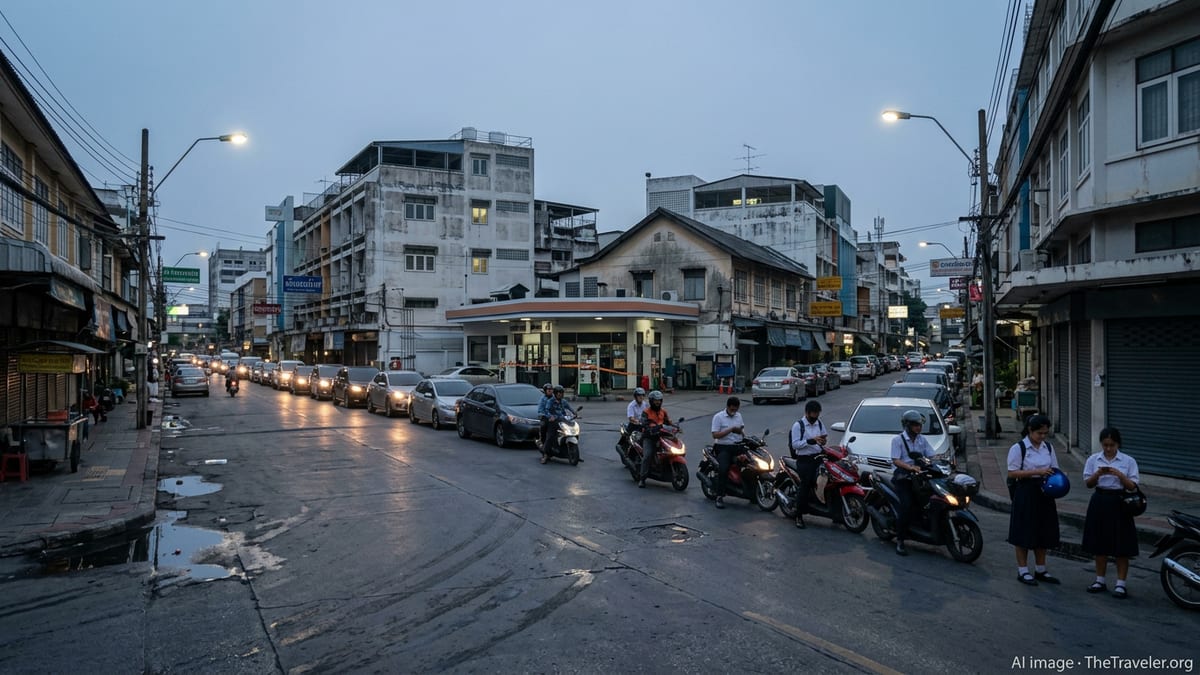
Fuel Shock Ripples Across Southeast Asian Economies
The effective shutdown of the Strait of Hormuz since late February has tightened global oil supplies, driving benchmark crude prices sharply higher and sending energy-importing nations in Southeast Asia rushing to secure alternative deliveries. With roughly a fifth of the world’s seaborne oil trade normally transiting the narrow waterway between Iran and Oman, the loss of those flows is magnifying existing inflation pressures and undermining growth forecasts for 2026.
Economists now warn that Southeast Asia, which had been banking on a tourism and manufacturing rebound this year, faces a fresh external shock just as central banks were cautiously considering interest-rate cuts. Higher fuel import bills are weakening local currencies and putting pressure on public finances, particularly in countries that heavily subsidize gasoline and diesel. Several finance ministries in the region are openly discussing emergency budget revisions to accommodate rising energy costs.
Market analysts say the region’s vulnerability stems from its heavy reliance on imported crude and refined products, even in countries like Malaysia and Indonesia that are themselves oil and gas producers. Refinery configurations and long-term supply contracts mean that a disruption in Gulf shipments quickly filters through to local pump prices, aviation fuel costs and power tariffs. The result is a rapid tightening of financial conditions for households and businesses alike.
Governments Move to Limit Travel and Conserve Fuel
In response, governments from Bangkok to Manila have begun rolling out conservation measures designed to stretch existing stockpiles and buy time while they seek alternative cargoes from Africa, Australia and the Americas. Transport ministries are issuing advisories urging citizens to avoid nonessential driving, while some provincial administrations are restricting official travel and reducing government vehicle fleets on the road.
Aviation regulators are coordinating with national carriers to trim flight frequencies on less profitable routes and prioritize key regional connections. Airlines across Southeast Asia are warning of higher fares, fuel surcharges and capacity cuts, particularly on short-haul leisure routes that had boomed after the end of pandemic-era restrictions. Travel agencies report an uptick in cancellations and postponements as households recalculate holiday budgets in light of rising transport and accommodation costs.
Urban commuters are being nudged toward public transit, with city authorities in several capitals extending operating hours for metro and bus networks while postponing nonessential infrastructure works that require heavy fuel use. At the same time, fuel retailers in some markets have quietly introduced informal rationing, limiting the volume of subsidized gasoline per customer to prevent panic buying and hoarding.
Shorter Work Weeks and Power Cuts Loom Over Industry
Beyond transport, the oil shock is starting to squeeze factories and offices. Industrial zones that depend on diesel generators for backup power are facing sharply higher operating costs, pushing some manufacturers to consider shortening work weeks or reconfiguring shift patterns to avoid the most expensive peak-demand hours. Business associations in export-dependent economies warn that if the disruption through Hormuz persists, layoffs and plant closures could follow.
Governments are encouraging large energy users, including shopping malls, data centers and logistics hubs, to adopt voluntary load-reduction plans and improve efficiency. In some cities, authorities are preparing contingency schedules for rolling brownouts if imported fuel for power plants becomes critically tight. Such interruptions would hit small and medium-sized enterprises hardest, particularly those in hospitality, retail and food processing that have limited cash buffers after years of pandemic-related stress.
The public sector is not immune. Several education and civil service ministries are examining hybrid work arrangements and compressed schedules as a way to reduce both commuting fuel consumption and electricity usage in government buildings. While officials present these steps as temporary, unions express concern that prolonged cutbacks could erode wages and service quality if the crisis drags on.
Tourism, Trade and Jobs at Risk as Recession Fears Build
The timing of the energy shock is particularly painful for Southeast Asia’s tourism industry, which had been on track to surpass pre-pandemic visitor numbers this year. Higher jet fuel prices are making long-haul travel to the region more expensive, raising the risk that prospective tourists in Europe and North America will opt for destinations closer to home. Regional travelers, a crucial market for countries such as Thailand, Vietnam and Malaysia, are also tightening their belts as domestic living costs rise.
Hoteliers and tour operators report a slowdown in new bookings for the peak midyear holiday season, even as they grapple with rising utility and transport expenses. Coastal islands and remote destinations, which depend heavily on fuel-intensive ferries and small aircraft, are especially exposed. Local communities that rely on tourism income fear a repeat of the job losses and wage cuts experienced during the Covid era, this time driven by an external oil supply shock.
Trade flows are also at risk. Higher shipping and bunker fuel costs threaten to erode the competitiveness of Southeast Asia’s export sectors, from electronics and garments to palm oil and rubber. Container lines serving major ports in Singapore, Malaysia and Vietnam are already imposing surcharges, and freight forwarders warn that further increases are likely if insurance premiums rise for vessels traversing conflict-adjacent waters.
Regional policymakers are beginning to acknowledge the recession risk. Several central banks have signaled that while they remain focused on inflation, they are prepared to provide targeted liquidity if credit markets tighten abruptly. Finance ministers are weighing temporary relief measures for low-income households and key sectors, though fiscal space is limited in countries that ran large deficits during the pandemic.
Scramble for Alternatives Underscores Long-Term Energy Vulnerabilities
The sudden loss of safe passage through the Strait of Hormuz has sparked a frantic search for alternative supply routes and sources. Energy officials across Southeast Asia are in talks with producers in West Africa, the United States and Australia, while also exploring greater use of regional refining capacity and stockpiles. But analysts caution that rerouting tankers around longer sea lanes inevitably adds cost and time, keeping upward pressure on prices even if physical shortages are avoided.
The crisis is also renewing debate over the region’s long-term energy strategy. While many Southeast Asian countries have pledged to expand renewables and reduce reliance on imported fossil fuels, progress has been uneven, and oil still plays a dominant role in transport and industry. The Hormuz shutdown is prompting calls for accelerated investment in public transit, electric vehicles and grid upgrades, alongside the build-out of strategic petroleum reserves.
For now, officials emphasize that current travel and work restrictions are precautionary and reversible if tensions in the Gulf ease and tanker traffic resumes. Yet the sense of vulnerability is unlikely to fade quickly. The disruption has laid bare how events thousands of kilometers away can reverberate through the daily lives of commuters, factory workers and small business owners in Southeast Asia, leaving governments to manage a delicate balance between conserving fuel, sustaining growth and maintaining social stability.