

More news on this day
Bali’s record-breaking hotel cycle is giving way to a more cautious, selective phase as Horwath HTL’s latest Bali Hotel & Branded Residences research points to stabilising performance, tighter regulation and a sharper focus on branded residential products heading into 2026.
Get the latest news straight to your inbox!
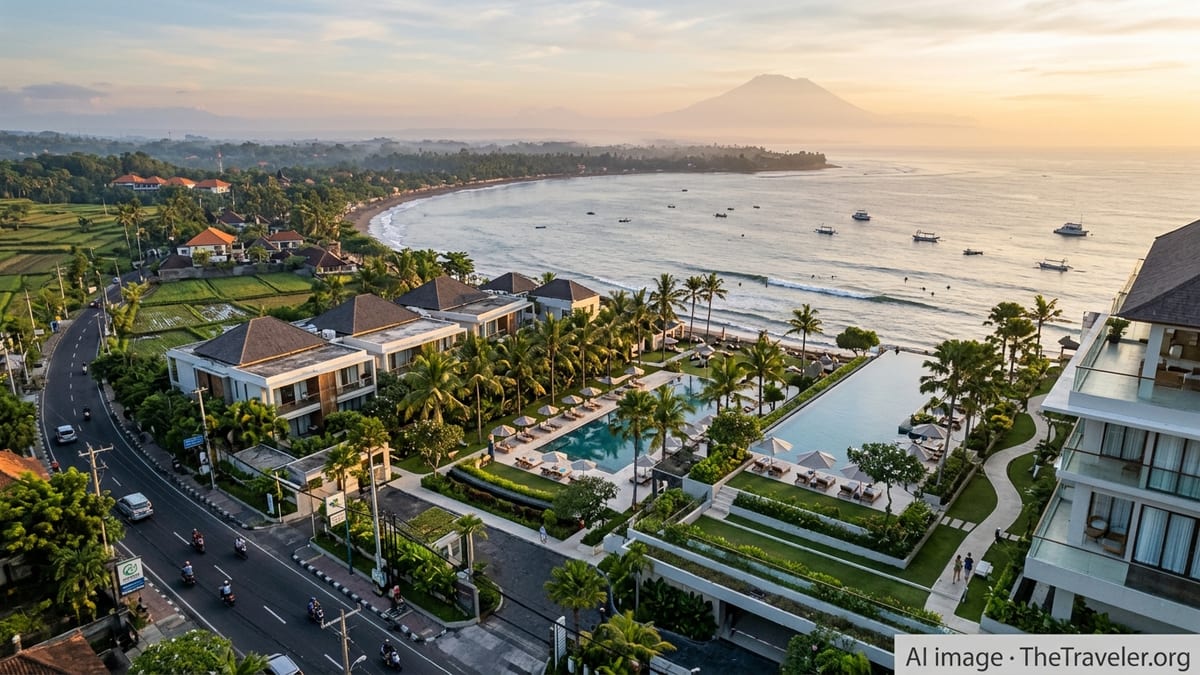
From Record 2024 to a Cooler 2026 Outlook
Horwath HTL’s Bali Hotel & Branded Residences work, covering performance through 2024 and early 2025, shows the island coming off an exceptional high. Market-wide occupancy and average daily rate climbed to record levels in 2024, lifting revenue per available room by double digits and confirming Bali’s position as one of Asia’s strongest leisure-led hotel markets. Luxury and upscale hotels captured particularly robust gains, benefiting from renewed long-haul travel and resilient domestic demand.
More recent indicators suggest that this momentum is starting to normalise. Early 2025 data cited by Horwath HTL and the Bali Hotels Association shows occupancy edging down from 2024 peaks, with operators reporting softer sentiment following government budget cuts and weaker meetings and incentive demand. Market commentary points to expectations of flatter or declining room rates in some segments over the coming year as supply continues to filter through and price-sensitive travellers respond to broader economic headwinds.
Global outlooks for 2026 from major consulting and brokerage firms also flag a more challenging backdrop for hotels, with slower growth in real disposable incomes and cautious consumer spending expected to weigh on leisure destinations. For Bali, the emerging narrative is less about a downturn and more about a recalibration after an unusually strong run, with investors and operators preparing for a more competitive environment.
Local observations in early 2026 reinforce the sense of cooling conditions. Reports from Bali’s main tourist regencies highlight lower average occupancy than during the 2024 peak, particularly outside holiday periods, underscoring the island’s sensitivity to shifts in air connectivity, currency trends and regional travel patterns.
Supply Pipeline, Controls and the Geography of Growth
Horwath HTL’s earlier Bali Hotel & Branded Residences analysis mapped a sizeable pipeline of new hotel rooms between 2024 and 2027, skewed heavily toward upscale and luxury segments. While that pipeline remains material, the distribution of projects is highly uneven across the island, concentrating fresh supply in already popular coastal corridors such as Kuta, Legian, Seminyak and the southern peninsula.
Recent policy moves have started to reshape that trajectory. Following rising concerns over congestion, flooding and overtourism in key districts, provincial and regency-level authorities have introduced tighter controls on new hotel and resort permits in some of the most saturated zones. Publicly available commentary refers to a de facto freeze on certain categories of hospitality development in pockets of South Bali, signalling a shift from volume growth toward consolidation and quality upgrades.
For existing owners, these controls may help protect pricing in established beachfront and lifestyle areas by limiting future competition. For developers, they are nudging attention toward emerging submarkets on Bali’s north and east coasts, as well as more inland locations, where infrastructure investment and improved road connectivity are gradually lowering perceived barriers to entry.
The evolving geography of growth is also visible within segments. While coastal resorts remain the island’s primary accommodation form, Horwath HTL’s work and associated commentary point to rising competition from non-hotel options such as licensed apartments, branded villas and other hospitality-managed real estate, particularly in Ubud, Canggu and the Bukit peninsula.
Branded Residences Move to Center Stage
A core focus of the Horwath HTL and C9 Hotelworks reporting is Bali’s expanding branded residences market. As of March 2025, their joint research identifies close to 60 hospitality-managed residential projects on the island, totaling several thousand units, with a heavy tilt toward apartments and condominiums rather than standalone villas. Most schemes remain small in scale, with many projects offering fewer than 50 units, reflecting the fragmented nature of Bali’s development landscape.
Despite their relative youth, branded residences in Bali are already commanding clear price premiums over comparable non-branded stock. Horwath HTL’s analysis indicates that branded projects can achieve around a quarter to a third higher prices per square metre, supported by professional management, stronger marketing reach and perceived legal and operational certainty. This premium, combined with the island’s global appeal, has attracted both regional developers and international hotel groups to explore branded residential opportunities linked to resort or mixed-use complexes.
Looking toward 2026, advisors expect branded residences to deepen their role as a bridge between lifestyle-driven buyers and institutional hospitality standards. Gaps remain in the market, particularly for condominiums explicitly designed for Indonesia’s expanding affluent domestic segment, which has been an important driver of high-season demand and weekend traffic from major cities such as Jakarta and Surabaya.
At the same time, the structure of ownership continues to shape buyer behaviour. Leasehold terms and foreign ownership rules have historically been seen as constraints relative to competing resort markets. However, as prices in rival destinations rise and regulatory frameworks in Indonesia become more codified, Bali’s branded residential market is increasingly positioned as a credible alternative for long-term lifestyle and investment purchasers.
Investor Strategies: Yield, Risk and Regulation
The shift from a boom phase to a more balanced market is prompting investors to reassess risk and return assumptions for Bali heading into 2026. Market reports aimed at prospective buyers continue to reference attractive headline yields for well-located villas and managed residences, often in the low double digits on a gross basis. Yet analysts caution that these figures are highly sensitive to assumptions on occupancy, pricing, management fees and financing costs.
Horwath HTL’s latest work highlights how rising operating expenses, regulatory compliance costs and increased competition from informal rentals can erode margins, particularly for smaller, unbranded properties. Investors are therefore placing greater emphasis on transparent governance structures, established operating partners and robust pre-opening feasibility studies that realistically reflect seasonality, booking patterns and demand mix.
Regulatory risk is now a central part of that calculation. The combination of stricter building permit regimes, efforts to formalise short-stay rentals and higher expectations around environmental impact assessments has created a more complex entry environment than in earlier development cycles. While this can slow speculative construction, it also favors capital that is prepared to engage with long approval timelines and higher upfront professional costs.
For international investors accustomed to gateway-city dynamics, Bali’s current phase offers both opportunity and cautionary lessons. The island’s tourism fundamentals remain compelling, but oversupply in certain micro-markets, coupled with infrastructure constraints and community pushback in some areas, makes asset selection and on-the-ground expertise more important than during the post-pandemic rebound.
What 2026 Could Look Like for Bali Hotels and Residences
Taking Horwath HTL’s Bali Hotel & Branded Residences findings together with broader regional forecasts, 2026 appears set to be a year of consolidation rather than expansion at any cost. Hotel performance is expected to stabilise at levels that are healthy by historical standards but below the extraordinary peaks of 2024, with greater differentiation between properties that can defend rate and those that must discount to sustain occupancy.
In the residential sphere, branded projects are likely to capture a growing share of capital as buyers seek the perceived security and professionalism that come with recognised operators. Developers may respond with more creatively structured offerings, including mixed-use schemes that blend hotel rooms, serviced apartments and for-sale branded units within a single master-planned environment.
Destination management will play a bigger role in shaping outcomes. Environmental stresses, water and waste management, traffic congestion and community expectations are now central themes in Bali’s public debate. As regulatory frameworks evolve, investors who align projects with sustainability standards, local employment priorities and cultural sensitivities are expected to be better positioned to secure approvals and maintain long-term asset value.
For travellers, the practical effect of these shifts by 2026 is likely to be a broader choice of professionally managed accommodation types at a wide range of price points, particularly in the midscale and upper midscale bands that remain underrepresented in the forward pipeline. For stakeholders tracking Bali’s next chapter, Horwath HTL’s continuing Bali Hotel & Branded Residences series has become a key reference for understanding how the island is balancing growth with liveability and long-term resilience.