

More news on this day
A new clash between House and Senate Republicans over how to fund the Department of Homeland Security has deepened the United States’ longest partial government shutdown, with House leaders rejecting a bipartisan Senate compromise and opting for a competing plan that keeps the budget standoff unresolved.
Get the latest news straight to your inbox!
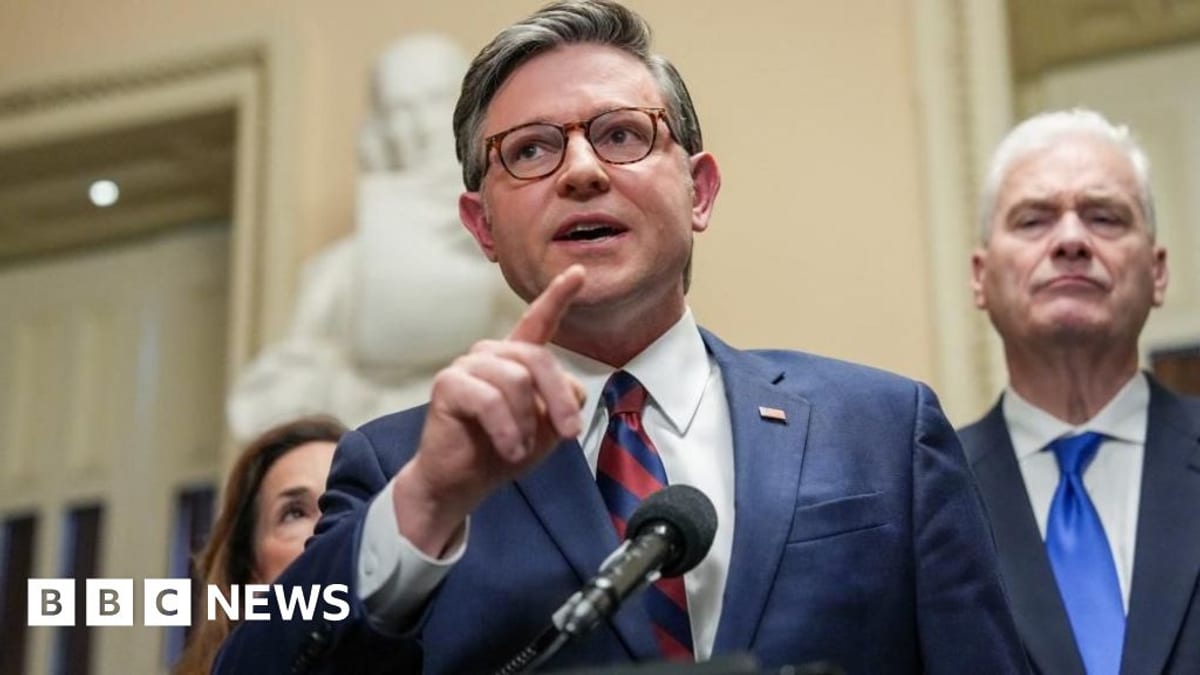
Image by bbc.com
House Blocks Senate Compromise Amid Intraparty Rift
The latest turn in Washington’s budgeting stalemate came on March 27, when House Republican leaders said they would not bring a Senate-passed Homeland Security funding bill to the floor. The measure, negotiated in rare overnight talks and approved unanimously in the Senate, would have restored funding to most of the department while carving out its most contested immigration functions.
Publicly available accounts describe the Senate plan as a narrow attempt to restart core security and travel operations without resolving the broader dispute over immigration enforcement. It would have funded the Transportation Security Administration, the Coast Guard and other Homeland Security components, but left immigration and deportation agencies without new appropriations.
House Speaker Mike Johnson instead aligned with conservatives who argue that any funding bill must include stricter border and immigration provisions. Reports indicate that Johnson dismissed the Senate product as insufficient, and House Republicans moved ahead with their own legislation that Democrats in the upper chamber have already labeled unacceptable.
The decision effectively sidelines weeks of Senate negotiations and widens the gulf between the two chambers. Coverage from multiple outlets notes that relations between Republican leaders in the House and Senate, already strained by earlier funding showdowns, have further deteriorated as a result.
Shutdown Stretches On As DHS Funding Lapse Continues
The Department of Homeland Security has been partially shuttered since February 14, after Congress failed to renew its funding for the current fiscal year. The lapse has left only essential operations running, with tens of thousands of employees working without pay or facing furloughs, according to compiled federal data and news reports.
By the final weekend of March, the shutdown had stretched beyond six weeks, making it the longest partial closure of a single federal department on record. The impasse affects agencies that oversee airport screening, border operations, coastal security and disaster preparedness, even as other segments of the federal government remain funded under earlier budget deals.
Analyses of the standoff highlight deep policy divisions over immigration enforcement as the core obstacle. While Senate negotiators sought to temporarily bracket those issues to relieve immediate pressure on airports and key security functions, House conservatives insist that the funding fight is leverage to secure broader changes to asylum rules, deportation priorities and related measures.
With no clear path forward, budget experts quoted in recent coverage warn that the dispute has shifted from a short-term tactical clash to a longer political confrontation, increasing the risk that the partial shutdown could drag on well into the spring travel season.
Air Travel Strained By TSA Staffing Gaps
The most visible impact for travelers has been at the nation’s airports, where long security lines and staffing shortfalls have become commonplace. Homeland Security data summarized in recent reporting indicate that thousands of Transportation Security Administration officers have been calling out from work or leaving their jobs altogether as the shutdown persists.
Major hubs including Houston, Atlanta and Baltimore/Washington International have warned passengers to arrive significantly earlier than usual, with some travelers reportedly missing flights because of hourslong waits at checkpoints. Industry groups say the disruptions are particularly acute during the busy spring break period, when leisure travel is surging.
President Donald Trump moved on March 27 to blunt some of the fallout by signing an order authorizing pay for TSA workers despite the lapsed appropriations. Publicly available documents show that the directive is intended to keep screeners on the job and stabilize airport operations, though it does not resolve the broader funding dispute or restore normal budgeting for Homeland Security.
Transportation analysts caution that the executive action is a stopgap. While it may relieve immediate pressure at checkpoints, continued uncertainty over DHS funding could complicate staffing decisions, training, equipment purchases and long-term planning across the aviation security system.
Wider Homeland Security Operations Feel The Strain
Beyond airport screening, the shutdown is testing other corners of the sprawling Homeland Security bureaucracy. Coast Guard personnel, border agents and disaster-response teams have faced delayed paychecks or constrained operations while continuing to perform essential missions, according to agency updates cited in news reports.
At some ports of entry, immigration processing has slowed as back-office functions dependent on full funding are curtailed. Advocacy organizations say humanitarian services connected to federal programs are also experiencing knock-on delays, particularly in communities that rely on coordinated responses between local authorities and federal agencies.
Efforts to reassign staff to ease airport bottlenecks have raised separate concerns. Earlier in the shutdown, the administration directed some immigration officers to assist at transportation hubs, a move that civil liberties groups argue could heighten tensions for travelers and immigrant communities while doing little to solve underlying staffing shortages.
Security specialists interviewed in recent coverage note that prolonged fiscal uncertainty can erode morale and drive experienced personnel to seek more stable employment. They warn that the longer the partial shutdown persists, the harder it may be for Homeland Security to quickly return to full readiness once Congress ultimately resolves the budget fight.
Uncertain Timeline Keeps Travelers And Workers On Edge
The immediate question now is how, and when, the funding impasse might be broken. With the House refusing to take up the Senate bill and the Senate signaling that it will not accept the House’s alternative package, lawmakers have entered a familiar pattern of public blame and private recalculation.
Some analysts suggest that mounting public frustration over airport delays and missed paychecks could eventually push negotiators back toward a pared-down agreement resembling the original Senate compromise. Others argue that competing political incentives, including pressure from conservative activists to hold firm on immigration demands, may harden positions rather than soften them.
For federal employees caught in the middle, the prolonged standoff has produced deep financial strain. Worker associations report rising reliance on short-term loans, side jobs and community food banks among affected staff, even as they continue to report for duty at critical security posts.
Travelers, meanwhile, face continued unpredictability. Airlines and airport operators have so far avoided mass schedule cuts tied directly to the shutdown, but executives quoted in business coverage say they are closely monitoring absenteeism among federal staff and warning that extended disruption at security checkpoints could eventually ripple through flight networks nationwide.