

More news on this day
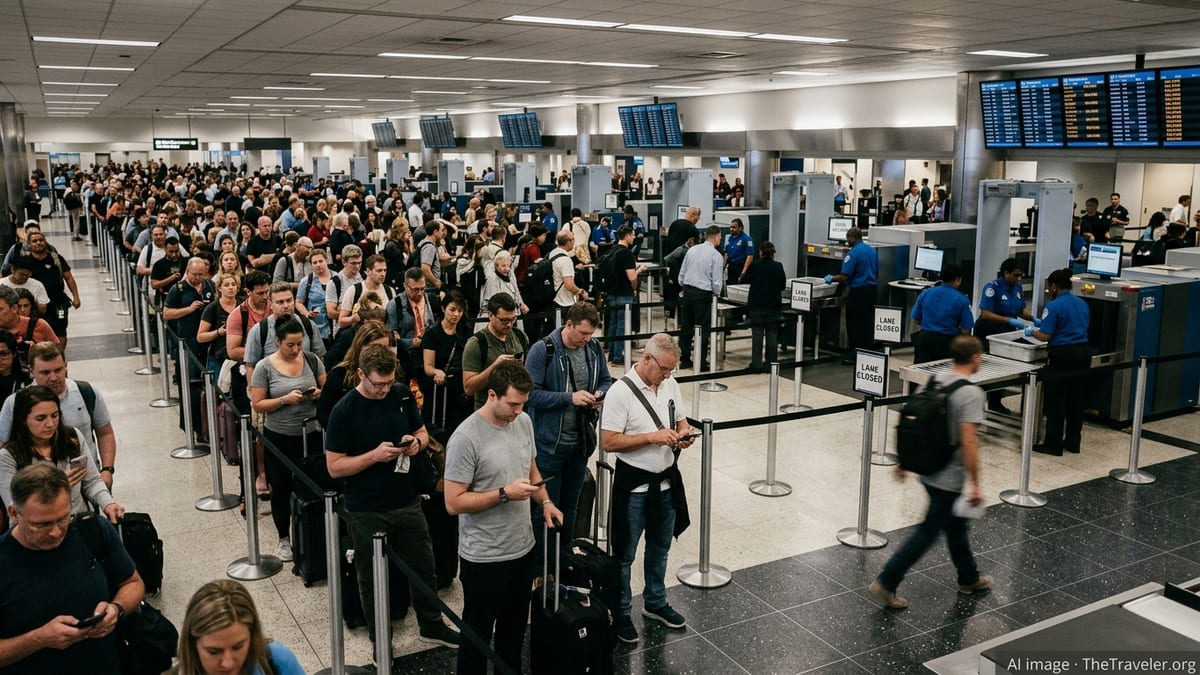
With the U.S. House refusing to take up a Senate plan to fund most of the Department of Homeland Security, Transportation Security Administration staff remain caught in a prolonged budget standoff that has already produced unpaid shifts, mounting resignations and hourslong security lines at major airports, raising urgent questions for travelers heading into the busy spring season.
Get the latest news straight to your inbox!
How a Funding Standoff Left DHS and TSA in Limbo
The current disruption traces back to a partial shutdown of the Department of Homeland Security that began on February 14, 2026, after Congress allowed DHS appropriations to lapse amid a wider clash over immigration enforcement policy. While most other federal agencies remain funded, DHS has been operating under shutdown conditions for weeks, forcing tens of thousands of employees to work without pay and delaying key programs across the department.
In late March, the Senate approved a compromise measure to fund the bulk of DHS operations while carving out the most contentious immigration enforcement activities. The agreement was designed to restore pay for Transportation Security Administration officers and ease pressure on airports without resolving the broader fight over enforcement policy.
The breakthrough in the Senate stalled almost immediately in the House. Speaker Mike Johnson announced on March 27 that the chamber would not vote on the Senate bill and would instead pursue a different short term continuing resolution that fully funds DHS, including immigration enforcement programs that Democrats have opposed. That decision left the Senate plan effectively blocked and extended uncertainty for TSA workers and air travelers.
The standoff has unfolded against the backdrop of an earlier four day federal shutdown at the start of February and months of contentious negotiations over Homeland Security appropriations. For airport staff and passengers, however, the most visible impact is the day to day strain at security checkpoints.
Unpaid TSA Shifts, Attrition and Strained Checkpoints
Throughout the DHS shutdown, TSA officers have been classified as essential personnel, meaning they must report to work even when paychecks are delayed. Publicly available information from government updates and national news coverage indicates that officers have already missed at least one full paycheck, with some locations reporting rising sick calls and resignations as the shutdown drags on.
By mid March, DHS figures cited in news reports showed hundreds of TSA officers had left their jobs since the funding lapse began, and callout rates at some airports had spiked to more than half the workforce on certain shifts. Houston area airports, including George Bush Intercontinental and William P. Hobby, have been among the hardest hit, with reports of hourslong waits and partially closed checkpoints.
Airport operators and travel industry observers note that TSA staffing was already tight before the shutdown, particularly at fast growing hubs in the South and West. The loss of experienced officers, combined with the financial strain of unpaid work, has made it difficult to maintain normal screening capacity during peak travel periods.
To keep lanes open, federal authorities have reassigned personnel from other parts of DHS, including Immigration and Customs Enforcement, to assist at security checkpoints in some locations. While those temporary measures have prevented total closures at most major airports, they have not eliminated the lengthy waits or the uncertainty facing travelers.
What Travelers Are Seeing at Airports Right Now
Travelers flying in recent days have encountered a patchwork of conditions that can vary widely by airport and time of day. At some large hubs, early morning and late afternoon peaks have produced serpentine lines stretching into terminal lobbies, while midday periods may move more smoothly. Smaller regional airports have sometimes been less affected, though they can quickly bog down if even a few officers are absent.
Reports from major outlets describe wait times approaching or exceeding three hours at some Texas and East Coast airports during recent weekends, particularly where staffing shortages force the closure of multiple checkpoints. In extreme cases, airlines have delayed departures to accommodate passengers still stuck in security, adding pressure to already busy schedules.
Programs intended to speed screening have also felt the impact. Global Entry was temporarily suspended earlier in the shutdown, and while it has since resumed, enrollment and renewal processing have lagged. TSA PreCheck lanes remain in operation but do not fully insulate travelers from the broader staffing issues, especially when airports consolidate lines to cope with shortages.
Even where operations appear orderly, the atmosphere can be tense. Many TSA officers are working extended hours while waiting for back pay, and passengers, unsure what to expect, are arriving earlier than usual. The result is often crowded checkpoints and higher stress levels on both sides of the screening belt.
Executive Action Brings Partial Relief, Not Certainty
In an effort to ease the immediate strain on TSA personnel, President Donald Trump signed an executive order on March 27 directing DHS to resume pay for Transportation Security Administration employees despite the funding impasse in Congress. Public statements from DHS leadership indicate that officers could begin receiving pay as early as March 30, including back wages owed from the shutdown period.
The move offers short term financial relief for front line screeners but does not resolve the underlying appropriations dispute. The order does not restore normal funding streams for the rest of DHS, and it relies on executive authority that could still be challenged or revisited if the shutdown continues for an extended period.
Policy analysts note that similar ideas to insulate TSA and Federal Aviation Administration workers from future shutdowns have circulated in Congress for years. Recent coverage by national news outlets has highlighted renewed efforts to advance legislation that would guarantee pay for aviation safety and security personnel during funding lapses, though those bills have repeatedly stalled once broader shutdown crises subside.
For now, TSA officers remain dependent on temporary fixes rather than a durable statutory solution. That leaves workers and airports vulnerable to the next round of brinkmanship over Homeland Security funding, even if the current shutdown is eventually resolved.
How to Plan Your Next Trip Amid Ongoing Uncertainty
For travelers with upcoming flights, the most immediate consequence of the congressional deadlock is the need to build more time into every journey. Travel industry guidance and recent airport experiences suggest arriving at least two to three hours before domestic flights and longer for international departures, especially at large hubs or during peak morning and evening periods.
Passengers are also being encouraged to monitor alerts from airlines and airport operators, which often provide updates on particularly severe delays at security checkpoints. While TSA PreCheck, CLEAR and airline priority lanes may offer some advantage, they cannot fully offset the impact of widespread staffing shortages when multiple checkpoints are operating below capacity.
Travel planners recommend being flexible with flight times where possible, favoring midmorning or early afternoon departures over the busiest peak periods. Allowing longer connection windows, particularly through major hubs that have reported the worst delays, can reduce the risk of missed onward flights if security lines or boarding processes move more slowly than usual.
Most importantly, travelers should expect conditions to remain fluid as long as the DHS shutdown and funding standoff continue. Even if TSA pay resumes under executive action, staffing patterns and employee morale may take time to stabilize, and airports may need days or weeks to adjust schedules and lane configurations once a long term funding bill is finally in place.