

More news on this day
Hundreds of travelers at Houston’s George Bush Intercontinental Airport faced long waits, missed connections, and disrupted itineraries after more than 110 flights were delayed and at least 12 were canceled, affecting passengers bound for major hubs including New York, Los Angeles, Chicago, and Miami.
Get the latest news straight to your inbox!
Major Disruptions Ripple Through a Key U.S. Hub
The disruption at Bush Intercontinental, one of the country’s busiest connecting hubs, created a cascading effect across the domestic network. Publicly available flight-tracking data showed well over one hundred departures and arrivals listed as delayed, with a smaller but significant number of cancellations concentrated on heavily traveled routes to and from large coastal cities.
Reports from passengers and airport monitoring platforms indicated that the problems began building earlier in the day, with initial delays compounding into missed crew connections and aircraft repositioning issues. As delays lengthened, more flights fell outside crew duty-time limits, resulting in additional cancellations that further limited options for stranded travelers.
The concentration of affected flights on routes to New York, Los Angeles, Chicago, and Miami magnified the impact across the national system. These cities serve as onward gateways for both domestic and international journeys, meaning disruptions in Houston rippled outward to business centers, vacation destinations, and regional airports that rely on through traffic from Bush Intercontinental.
By late in the day, the departure and arrival boards at the airport reflected a patchwork of revised departure times, rolling delays, and canceled segments, making it difficult for travelers to predict when or how they would complete their journeys.
Stranded Passengers Face Long Lines and Uncertain Timelines
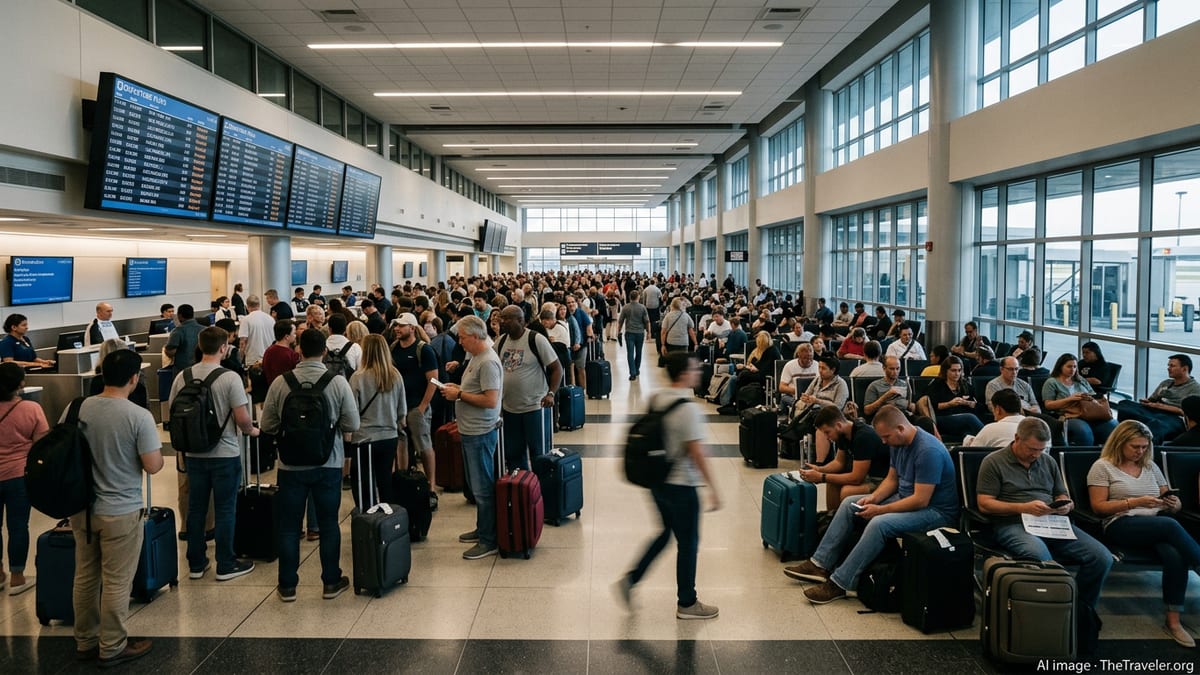
Inside the terminals, travelers reported crowded gate areas, lines for rebooking counters stretching through concourses, and limited seating as multiple delayed flights of passengers waited in the same zones. Social media posts from the airport showed groups camped near power outlets and food courts while monitoring apps and departure screens for updates.
Many affected passengers were connecting through Houston rather than starting or ending their trips there, leaving them particularly vulnerable to missed onward flights. With multiple services to major cities delayed or canceled, re-accommodation options tightened quickly, especially for those aiming to reach smaller markets that depend on connections through New York, Los Angeles, Chicago, or Miami.
Available information from airline customer advisories indicated that some travelers were being offered rebooked itineraries departing the following day or routed through alternate hubs, extending total travel times significantly. Others were advised to seek hotel accommodations when remaining same-day options disappeared, adding unexpected costs and logistical challenges to trips that had been carefully planned.
Families, international travelers, and passengers with time-sensitive commitments such as business meetings or events appeared particularly affected. For some, even a short initial delay in Houston meant missing the last available connection of the night at their next stop, turning a same-day journey into a multi-day routing.
Weather, Congestion, and Operational Strain Combine
While a full picture of the underlying causes was still emerging, publicly accessible aviation data and news coverage pointed to a familiar combination facing major U.S. hubs: localized weather disruptions interacting with tight schedules, high passenger volumes, and ongoing operational strain across the system.
Houston’s location makes it particularly sensitive to fast-changing weather patterns that can quickly reduce arrival and departure rates. When even brief periods of reduced operations occur at a hub that handles a large volume of connecting traffic, delays can accumulate rapidly. If they coincide with peak travel hours, the surge of affected flights can overwhelm available slack in airline schedules.
Industry analyses in recent years have highlighted how tightly planned networks and crew schedules leave limited buffer when irregular operations occur. Once delays begin, aircraft and crews may not be in the right place at the right time, triggering rolling disruptions that spread through the day. At a hub like Bush Intercontinental, where many flights are timed to feed specific banks of connections, a few hours of irregular operations can have outsize effects on later departures.
Publicly available commentary from aviation analysts has also pointed to broader staffing and resource pressures across the sector, from flight crews to ground operations and air traffic management. When schedules are already running near capacity, any additional constraint, such as a runway slowdown or ground stop in the region, can intensify the scale of passenger disruption.
Nationwide Impact on Routes to New York, Los Angeles, Chicago, and Miami
The disruptions in Houston were felt most acutely on flights linking Bush Intercontinental with other major hubs, particularly the key corridors to New York, Los Angeles, Chicago, and Miami. These routes are among the most heavily used for connections to international services and domestic spokes, meaning each delayed or canceled flight affected far more passengers than those staying within a single city pair.
Travel data dashboards showed clusters of delayed departures from Houston to these cities, alongside corresponding delays on inbound flights attempting to reach Bush Intercontinental. Missed connections in both directions meant some passengers found themselves stranded en route, rather than at their starting point or final destination, complicating efforts to secure alternate flights or accommodations.
Business travelers heading to financial and corporate centers in New York and Chicago faced particular uncertainty, as even modest delays could push meetings and events into conflict with arrival times. Leisure travelers bound for Los Angeles, Miami, and connecting sun destinations encountered similar challenges, particularly those with cruises, tours, or resort bookings scheduled to begin soon after their planned arrival.
According to publicly available airline network information, the concentration of traffic on these key corridors means that disruptions at one hub can reverberate across multiple regions. Houston’s role as a connecting bridge between coastal markets and interior cities made the day’s problems a nationwide concern rather than a purely local event.
Travelers Turn to Contingency Plans and Future Precautions
As the day wore on, many travelers began piecing together personal contingency plans, from booking last-minute hotel rooms near the airport to searching for alternate routings that bypassed Houston entirely. Some sought seats on remaining flights through other hubs, while others looked into ground transportation options for shorter regional legs once they reached a nearby city.
Travel forums and consumer travel sites reflected a surge in discussion around strategies for managing major disruptions, including the value of flexible tickets, travel insurance that covers delays and cancellations, and maintaining ample connection times when routing through busy hubs such as Houston. Some experienced travelers advised building in greater buffers when itineraries depend on reaching New York, Los Angeles, Chicago, or Miami in time for onward travel.
Analysts who track aviation reliability trends note that episodes of irregular operations at major hubs, while disruptive, are not uncommon given the scale and complexity of the U.S. air travel network. For travelers, they underscore the importance of monitoring flight status closely, considering earlier departures when schedules are tight, and being prepared with backup plans if a key connection point experiences a surge of delays and cancellations.
As operations gradually stabilize, the immediate focus for airlines and airport partners is moving stranded passengers to their destinations and restoring normal schedules. For many travelers caught up in the day’s disruptions at Bush Intercontinental, the experience is likely to influence how they plan future journeys through one of the country’s most important connecting airports.