

More news on this day
Hundreds of travelers faced long waits and missed connections at Houston’s George Bush Intercontinental Airport on Thursday after 158 flights were delayed and 11 canceled, disrupting operations for major carriers including United Airlines, American Airlines, Delta Air Lines and several smaller operators across the airport.
Get the latest news straight to your inbox!
Widespread Disruptions Across Major Carriers
Publicly available flight-tracking data shows that the disruption at Bush Intercontinental quickly rippled through the airport’s schedule, affecting departures and arrivals across multiple terminals. United Airlines, which operates a large hub at the airport, appeared to bear the brunt of the problems, but flights operated by American Airlines, Delta Air Lines and other domestic and regional carriers also experienced significant knock-on delays.
By late afternoon, 158 flights had been delayed and 11 canceled, according to aggregated aviation data. The figures represent a sizable portion of the day’s traffic at the airport and added strain to an already busy travel period. Many affected services were domestic routes to and from major hubs around the United States, compounding the disruption for travelers with onward connections.
The delays left aircraft waiting extended periods for departure slots, while arriving flights faced congestion at gates as schedules compressed into the evening hours. Passengers on multi-leg itineraries experienced missed connections and rebookings as airlines worked within limited remaining seat capacity to move travelers onward.
Passengers Face Long Waits, Overnight Stays
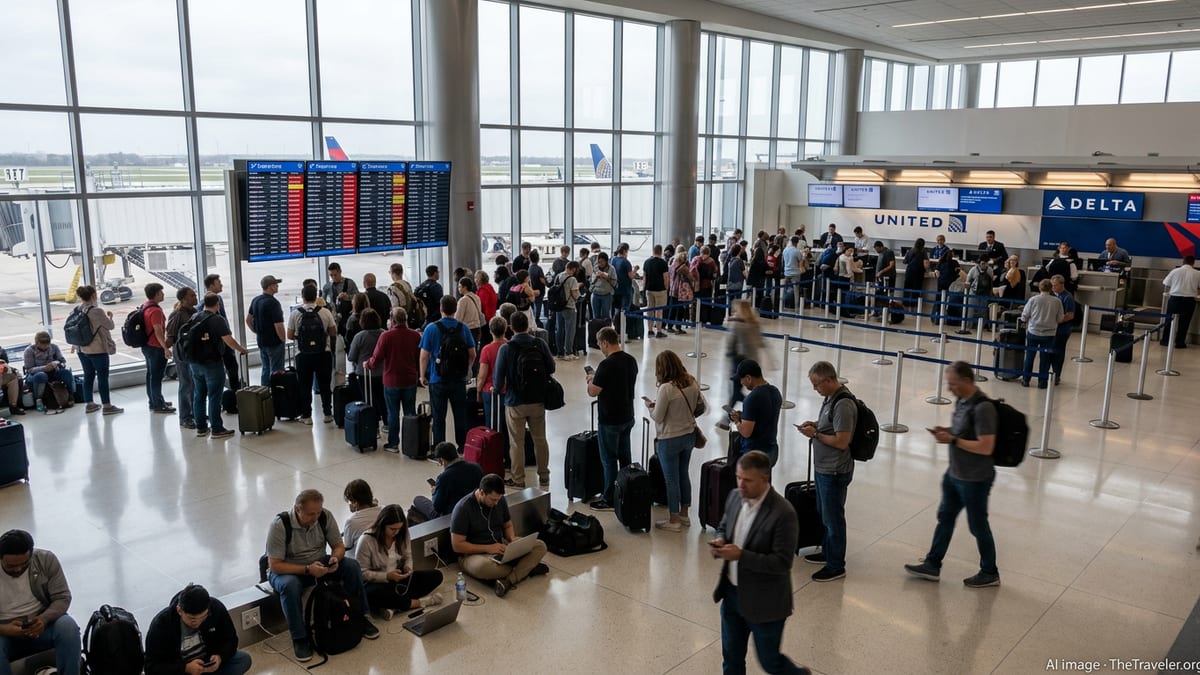
Reports from the terminal describe crowded gate areas and lines at customer service desks as travelers sought alternative options once it became clear that their flights would not leave on time. With a relatively small number of outright cancellations compared with the volume of delays, many passengers remained at the airport in hopes of eventually departing on their original flights.
For some, extended delays turned routine journeys into all-day ordeals, with revised departure times repeatedly pushed back as downstream congestion grew. Travelers connecting through Houston from other U.S. cities and international gateways were particularly vulnerable, often needing to be rebooked onto next-day departures when their inbound flights arrived too late.
Hotels near the airport saw increased demand as stranded passengers arranged overnight stays. Others chose to remain in the terminals to stay close to rebooked flights or because nearby accommodation options were limited or costly at short notice, a common pattern during large-scale travel disruptions.
Operational Strain at a Key United Airlines Hub
George Bush Intercontinental Airport functions as one of United Airlines’ most important hubs, handling a high volume of daily departures and arrivals. When irregular operations develop at a hub of this scale, disruptions can cascade quickly, as small initial delays propagate through tightly timed aircraft and crew rotations.
Flight operations data indicates that the irregularities in Houston affected both mainline and regional services, including short-haul feeder flights that supply passengers to longer-haul domestic and international routes. As turn times lengthened and aircraft missed scheduled departure windows, later flights were forced to wait for arriving planes or available gates.
Other carriers are less dominant at Bush Intercontinental but still depend on predictable operations there for their nationwide networks. Delays at a connecting point can reverberate outward, leading to schedule changes far from Houston as aircraft and crews arrive late to their next assignments.
Knock-On Effects for the Broader U.S. Network
Because Bush Intercontinental serves as a major connecting hub between the East and West Coasts, as well as a gateway to Latin America, operational disruptions in Houston can have outsized effects on the broader U.S. aviation network. Publicly available tracking of national flight performance indicated additional delays at other airports connected to Houston as aircraft arrived behind schedule.
Passengers traveling through Houston on multi-segment itineraries reported missed onward flights and unplanned stopovers as rebooking options narrowed throughout the day. With many aircraft operating near capacity, especially on peak travel days, airlines had limited flexibility to absorb disrupted travelers into later departures without causing further crowding.
The impact was felt not only at major hubs but also at smaller regional airports that rely on Houston connections to access the national and international route structure. Some of those airports saw late-night arrivals and pushed-back departures as airlines tried to restore their rotations and position aircraft for the following day’s schedules.
Travelers Urged to Monitor Flights and Allow Extra Time
According to published coverage and real-time flight information services, the day’s events highlight how quickly conditions can change for air travelers when a key hub experiences widespread schedule disruption. Even when the number of outright cancellations remains relatively modest, extensive delays can lead to missed connections, extended layovers and overnight stays for hundreds of passengers.
Travel experts routinely advise passengers transiting major hubs such as Houston to monitor flight status closely, particularly during periods of unsettled weather, heavy construction or peak seasonal demand. Longer connection windows, early-morning departures and flexible itineraries can provide a buffer when irregular operations develop.
As carriers work to recover schedules following a day of concentrated delays, travelers over the next 24 to 48 hours may continue to see minor timing adjustments as airlines reposition aircraft and crews. For passengers at Bush Intercontinental, the latest disruption serves as another reminder of the vulnerabilities in modern air travel when a busy hub experiences even a single day of compounded operational stress.