

More news on this day
A wave of flight cancellations and delays centered on Houston’s two major airports is sending disruptions across domestic and international air networks, complicating spring travel plans for passengers nationwide.
Get the latest news straight to your inbox!
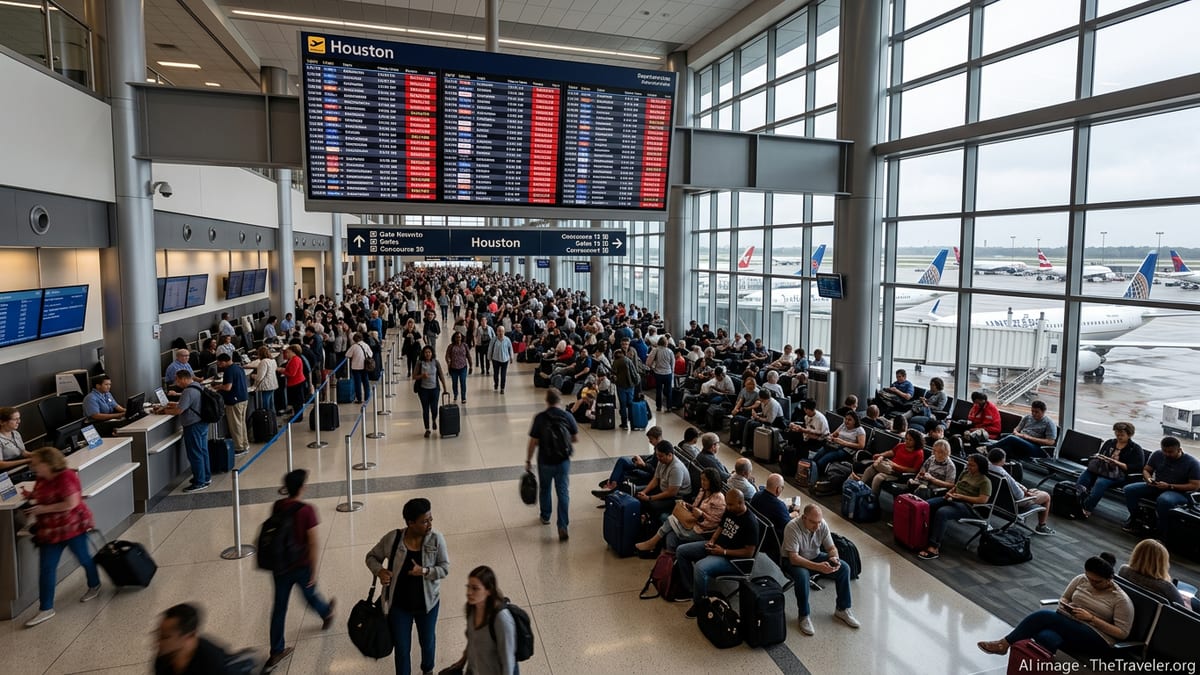
What Is Behind the Latest Disruptions in Houston
Publicly available flight-tracking data and traveler reports indicate that airlines operating from George Bush Intercontinental Airport and William P. Hobby Airport have scrubbed and delayed an unusually high number of departures and arrivals in recent days. The disruption appears to be concentrated on high-frequency domestic routes across the Gulf Coast, Midwest, and East Coast, with knock-on effects for long-haul connections.
The spike follows a volatile stretch for the national air system. A powerful winter storm in late January 2026 triggered one of the most cancellation-heavy days in the United States since the early pandemic, and network schedules have remained sensitive to regional shocks since then. When a major hub such as Houston experiences operational strain, missed connections and equipment imbalances can quickly cascade through airline networks.
In Houston’s case, a mix of factors is contributing to the pressure. Seasonal storms across the Gulf region have periodically slowed arrivals and departures, while ongoing airfield construction at Bush Intercontinental and staffing strains at security checkpoints, particularly at Hobby, have made it harder for airports and airlines to recover quickly when weather or air-traffic constraints arise.
Travel forums and social media posts from early to mid-March describe hours-long security queues at Hobby and intermittent delays at Bush Intercontinental, suggesting that ground-side bottlenecks are feeding into airside disruptions, especially during the morning and evening peaks.
How the Cancellations Are Affecting Travelers Nationwide
Because Houston functions as a major connecting hub for both domestic and international traffic, disruptions there rarely stay local. Cancellations of feeder flights into Houston can strand passengers in smaller cities, while delays on outbound aircraft from Houston can ripple to subsequent legs throughout the day.
Domestic travelers connecting via Bush Intercontinental to cities in the Midwest and along the East Coast report missed connections and same-day rebookings stretching into late evening. Those heading to or from Latin America and transatlantic destinations are facing tighter margins as airlines prioritize long-haul departures but struggle to position aircraft and crews on time.
Some carriers have resorted to consolidating lightly booked flights and trimming frequencies on shorter routes to free up aircraft and crews. While that can stabilize operations over several days, it also means fewer available seats, making it harder for displaced travelers to find alternative options, especially on peak travel days.
Even passengers whose flights are technically operating may experience indirect effects. Congested taxiways, longer waits for available gates, and crew duty-time limits can turn minor schedule changes into multi-hour delays, particularly in the late afternoon and evening when the day’s disruptions have compounded.
Key Causes: Weather, Staffing, and Infrastructure Constraints
Houston sits in a weather-sensitive region, and early-year storms have already tested the resilience of the national aviation system. The widespread winter storm in late January snarled operations across large parts of the United States, highlighting how quickly cancellations can escalate when multiple hubs face simultaneous weather and staffing challenges.
In the current disruption, localized thunderstorms and low clouds in the Gulf region have periodically triggered arrival and departure spacing requirements, slowing the flow of traffic into and out of Houston. When the Houston air traffic control center restricts arrival rates for safety, airlines must hold, divert, or cancel flights, and recovery can take many hours once conditions improve.
At the same time, Houston’s airports are managing longer-term pressures. Federal construction and capacity planning documents show ongoing and planned taxiway and airfield work at Bush Intercontinental, which can temporarily reduce operational flexibility during peak periods. On the passenger side, a series of reports in recent weeks has highlighted long security lines at Hobby in particular, suggesting that staffing levels have not always kept pace with demand.
These constraints interact with tight airline schedules and high aircraft utilization. When a single rotation is delayed leaving Houston, the aircraft and crew may arrive late to their next city pair, sparking further delays. With carriers still operating lean post-pandemic schedules in some markets, there is less slack in the system to absorb shocks.
What Travelers Flying Through Houston Should Do Now
Travelers with upcoming itineraries through Houston are being advised by travel experts and consumer advocates to treat schedules as fluid and to build extra time into their plans. Same-day connections that once felt comfortable may now be risky, particularly when connecting from shorter regional flights into long-haul departures.
Passengers are increasingly turning to airline apps and flight-tracking tools to monitor their aircraft’s inbound status and to watch for rolling delays. Many carriers will allow free same-day changes or voluntary rebooking when significant disruption is expected, although specific policies vary. Those with critical events at their destination are prioritizing early-day departures, which tend to be less affected by the previous day’s disruptions.
At the airport, arriving much earlier than usual is emerging as a practical response, especially at Hobby, where traveler accounts have described early-morning security waits stretching to two or even three hours on busy days. Checking current security wait times through airport or third-party tools before leaving for the airport can help travelers decide when to depart for their flights.
For those already facing cancellations, consumer advocates recommend immediately exploring multiple channels for rebooking, including airline apps, websites, customer service phone lines, and airport agents. In heavily disrupted periods, open seats can disappear quickly as multiple flights’ worth of passengers compete for limited inventory.
Looking Ahead for Houston and the Wider U.S. Air Network
Houston’s recent spike in cancellations underscores the ongoing fragility of the U.S. air travel system in the face of converging pressures. Weather volatility, staffing imbalances, infrastructure constraints, and high travel demand can each be managed in isolation, but together they create conditions where relatively small disruptions can quickly become nationwide events.
Industry analysts note that large hubs like Bush Intercontinental will likely continue to experience intermittent surges of disruption as airlines work through seasonal storms and as airports advance multi-year construction projects designed to expand capacity and modernize facilities. Hobby’s experience with security bottlenecks suggests that passenger-processing infrastructure and staffing will be as important as runways and taxiways in determining how smoothly major airports function.
For travelers, the situation is a reminder that advance planning and flexibility remain essential, particularly when connecting through major hubs in weather-sensitive regions. While airlines and airports refine their operations and infrastructure, passengers passing through Houston in the coming weeks may continue to encounter longer lines, tighter connections, and a higher-than-usual risk of schedule changes.
As the busy spring and summer travel seasons approach, how quickly Houston’s operations stabilize will play a significant role in determining whether the recent disruptions remain a short-lived spike or foreshadow a more prolonged period of turbulence across the wider U.S. air network.