

More news on this day
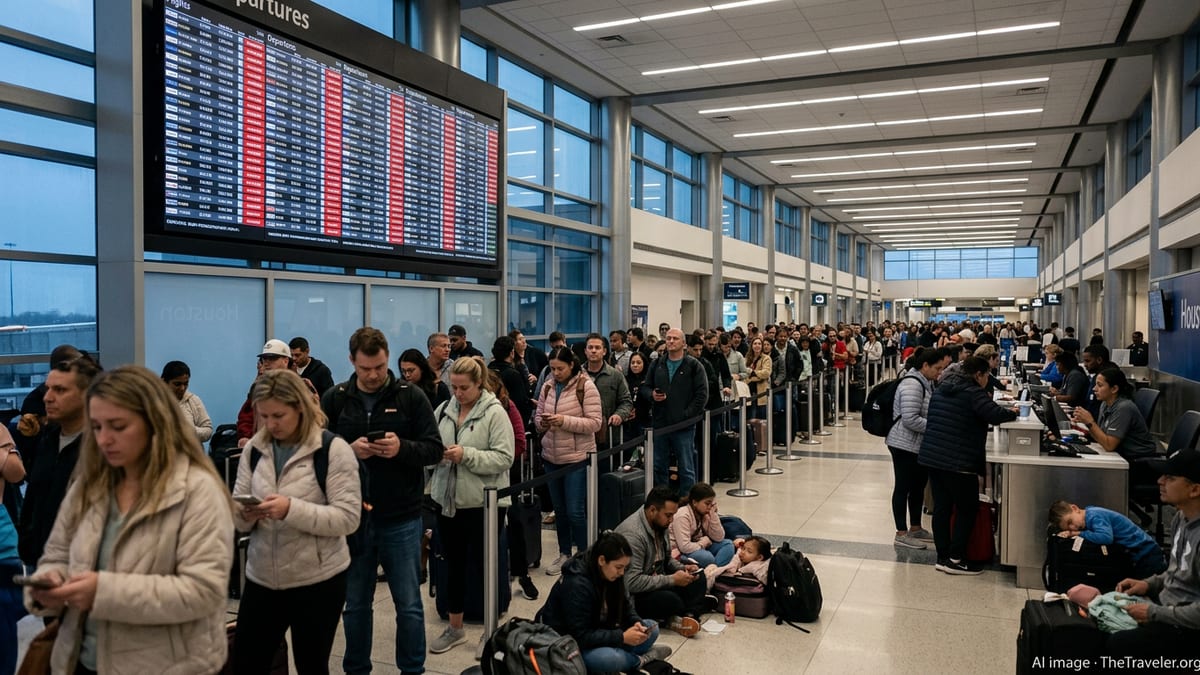
Hundreds of passengers traveling through Houston are facing sudden itinerary changes as a spike in flight cancellations at George Bush Intercontinental and William P. Hobby airports ripples across domestic and international routes, compounding nationwide disruptions linked to severe weather, a partial federal government shutdown and heavy spring break demand.
Get the latest news straight to your inbox!
Weather Systems and Operational Strains Converge
Recent severe weather sweeping across large sections of the United States has been a key driver of cancellations involving Houston flights. A major storm system active from March 13 to March 17, 2026 has produced blizzard conditions in parts of the Midwest and High Plains and triggered damaging winds and thunderstorms farther south and east, forcing airlines to trim schedules and reroute aircraft. When storms disrupt hub operations in one region, they often generate knock-on effects across the network, including in cities like Houston that may not be at the storm’s center.
National reporting indicates that thousands of flights have been canceled or delayed since March 16 as the storm moved east, with airlines citing unsafe crosswinds, low visibility and air traffic control flow restrictions at multiple airports. Houston’s role as a major connecting point for both domestic and Latin America traffic means that even weather issues in distant hubs can quickly translate into canceled segments, missed connections and extended rebooking queues for travelers passing through the city.
In addition to weather, a partial federal government shutdown that began in mid-February is adding to the strain on the air travel system. Publicly available information points to staffing pressure at security checkpoints in several cities, including Houston, which can slow passenger throughput, delay boarding and contribute indirectly to schedule disruptions when aircraft and crews are held up at terminals.
The spike in cancellations is also colliding with peak demand. March typically brings heavy spring break travel and increased traffic tied to major sports events, leaving airlines with less flexibility to absorb irregular operations. When flights are already operating near capacity, a single weather disruption can cascade into widespread cancellations and lengthy waits for the next available seats.
Impact at Bush Intercontinental and Hobby
Houston’s two primary airports, George Bush Intercontinental (IAH) and William P. Hobby (HOU), are both feeling the impact, though in different ways. Bush Intercontinental, a key hub for major U.S. and international carriers, is seeing cancellations and delays that affect long-haul routes to Europe, Latin America and the Middle East, as well as domestic connections to the Midwest and East Coast that are more directly affected by the latest storm system.
Reports from airline tracking services show elevated cancellation counts on flights scheduled to depart or arrive at IAH during the most active hours of the weather system, particularly in the early morning and late evening periods when schedules are densest. Because many connecting itineraries rely on tightly timed banked departures, the loss of one inbound flight can strand passengers whose onward legs are still scheduled to operate.
At Hobby, which focuses more on domestic and short-haul international service, disruptions are centering on routes feeding into storm-affected regions and on early-morning departures that rely on overnighted aircraft and rested crews. Some travelers have reported last-minute cancellations attributed to weather or crew availability, as airlines reposition aircraft and staff in response to changing conditions across the national network.
Local anecdotal accounts point to crowded concourses and extended lines at check-in and security at both airports, with some travelers arriving hours earlier than usual in an attempt to protect tight connections or standby opportunities. While not all of these passengers ultimately encounter cancellations, the heightened congestion underscores how quickly operational stresses can become visible inside terminals.
Nationwide and International Ripple Effects
Because Houston serves as a major connecting hub, disruptions there reach far beyond Texas. Canceled or delayed flights into IAH and Hobby can cause travelers to miss onward connections to cities across the United States, from the West Coast to the Northeast. Even when onward flights are able to depart on time, seats freed by no-show connecting passengers are often quickly filled by travelers rebooked from other canceled segments.
International routes are also feeling the impact. Publicly available discussions among travelers and airline watchers highlight intermittent suspensions and schedule adjustments on certain long-haul services to and from Houston in recent weeks, particularly on routes linking the city with major Middle Eastern and European hubs. When these long-haul flights are canceled or consolidated, travelers may be rerouted through alternate U.S. gateways such as New York, Chicago or Dallas, lengthening journey times and increasing the risk of additional missed connections.
Elsewhere in the country, airports in regions hit directly by the storm system are reporting large numbers of cancellations, which further constrain the options for passengers seeking to bypass Houston. This combination of disrupted hubs and high demand means that rebooking windows can stretch over several days for some itineraries, especially for those holding basic-economy tickets or traveling in large groups.
Industry and government data continue to show that weather remains the leading cause of significant delays in the U.S. airspace system, and the latest wave of storms is reinforcing that trend. In a network structured around tightly timed connections, each disturbance sends ripples through multiple cities, and Houston’s central role ensures it is frequently caught in the middle of those patterns.
What Travelers Through Houston Should Do Now
Travelers scheduled to fly into or out of Houston over the next several days are being urged, through airline advisories and published travel guidance, to monitor their flights closely and to prepare for the possibility of changes. Most major carriers provide real-time updates through mobile apps and text alerts, and many have posted flexible travel policies or waivers for trips touching storm-affected regions, allowing passengers to change dates or routings without additional fees in certain fare classes.
Experts routinely recommend that passengers reconfirm departure and arrival times repeatedly in the 24 hours before travel, paying special attention to aircraft origin points. If a Houston-bound flight’s inbound aircraft is coming from a city experiencing severe weather or heavy cancellations, the risk of disruption is higher even if conditions in Houston itself appear stable.
Travel guidance also suggests building in extra connection time through Houston during volatile periods. Choosing slightly longer layovers can provide a buffer if an inbound leg departs late, increasing the odds of making the onward flight without needing to be rebooked. Where possible, travelers with critical timing needs may consider morning departures, which often recover more quickly after overnight disruptions than evening flights affected by a full day of rolling delays.
For those already at the airport when cancellations occur, airlines typically handle rebooking at gate counters, customer service desks and via digital channels. Because in-person queues can lengthen quickly during mass disruptions, travelers may gain an advantage by using mobile apps or calling customer service while simultaneously standing in line. Some carriers also work with partner airlines on interline agreements that can open up additional routing options, although availability is highly dependent on demand and fare type.
Looking Ahead for Houston Air Travelers
Forecasts indicate that the current storm system will move away from some of the hardest-hit regions after March 17, which could allow operations to gradually stabilize if no additional major weather threats emerge. However, experience from past disruption events suggests that residual delays and scattered cancellations can persist for a day or more as airlines reposition planes and crews and clear passenger backlogs.
In the longer term, Houston’s vulnerability to nationwide disruption is likely to remain, given its hub role and its exposure to both inland storm tracks and Gulf Coast weather systems. Industry planning documents and federal aviation modernization programs emphasize improving weather forecasting, traffic flow management and airport infrastructure as ways to reduce the overall impact of storms and other disruptions on hubs like Bush Intercontinental and Hobby.
For now, travelers with upcoming plans through Houston are navigating a period of heightened uncertainty. By staying informed, allowing extra time and remaining flexible on routings and dates where possible, passengers can reduce some of the stress associated with the current spike in cancellations, even as the broader air travel system continues to grapple with the combined pressures of severe weather, government funding disputes and seasonal demand.