

More news on this day
Hundreds of travelers were stranded at Houston’s George Bush Intercontinental Airport on Thursday as at least 225 flights were delayed and 29 canceled, snarling operations for major U.S. carriers and disrupting connections to key hubs including New York, Los Angeles, Chicago and Miami.
Get the latest news straight to your inbox!
Major Delays Hit One of the Nation’s Busiest Hubs
The disruption at Bush Intercontinental, one of the country’s primary domestic and international gateways, rippled across terminals for much of the day as departure boards filled with red and amber notices. According to preliminary tallies based on flight-tracking data, the majority of affected services were domestic routes, although several international flights also reported late departures.
United Airlines, which maintains a large hub operation at Bush Intercontinental, bore a significant share of the disruption, with dozens of its departures pushed back and several canceled outright. Delta Air Lines, along with other legacy and regional carriers, also reported mounting delays as the day progressed, compounding congestion at gates and on taxiways.
By late afternoon, average delays for some departures had stretched well beyond an hour, with rolling knock-on effects to inbound flights. Passengers arriving into Houston on already-late aircraft often found their onward connections to cities such as New York, Los Angeles, Chicago and Miami either heavily delayed or removed from the schedule entirely.
Airport officials said operations remained safe but strained as carriers worked to re-sequence aircraft and crew while managing crowds in departure lounges. Staffing in critical functions such as ramp operations and customer service was also described as tight, adding friction to the recovery effort.
Travelers Face Long Lines, Missed Connections and Overnight Stays
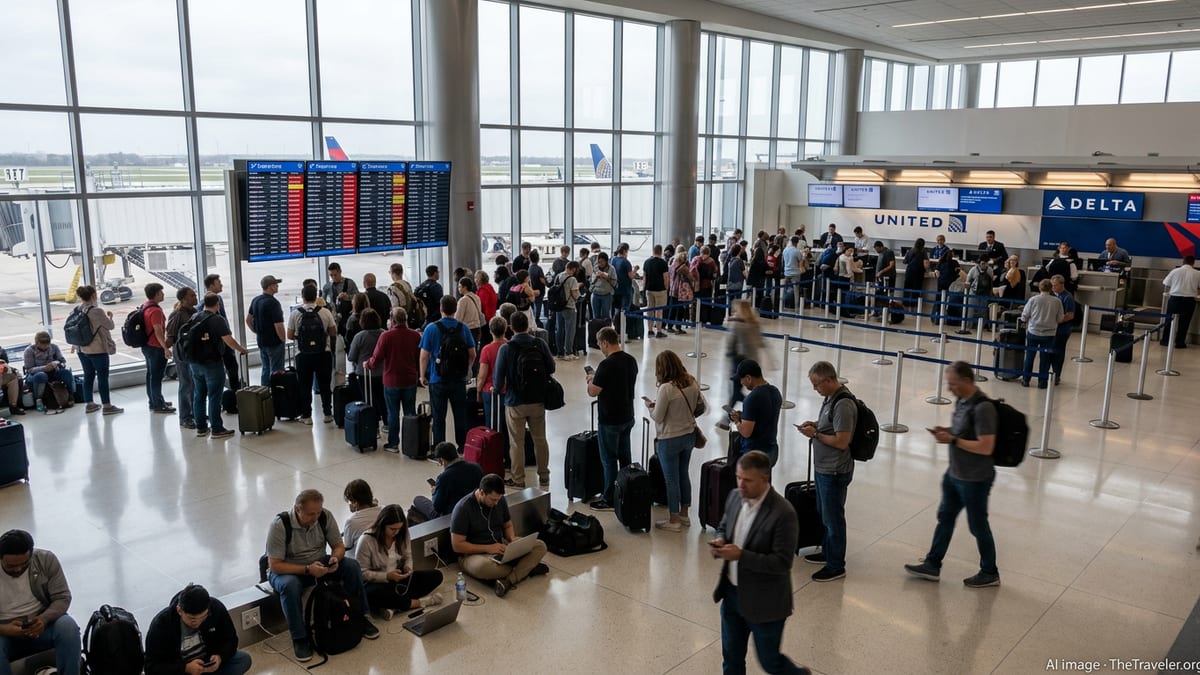
Inside the terminals, long lines quickly formed at airline service counters as travelers sought rebookings, hotel vouchers and meal assistance. Families bound for school holidays, business travelers connecting to morning meetings and international passengers trying to make tight transatlantic links all found themselves in the same scramble for limited remaining seats.
Some travelers reported being rebooked on flights leaving a full day later, while others were offered reroutes through alternate hubs such as Denver, Atlanta or Chicago to reach the East and West Coasts. Those unwilling or unable to wait in line turned to airline apps and call centers, which also saw surging demand and extended hold times.
Airport seating areas around the most affected gates were crowded with passengers camped on the floor, charging phones and laptops while monitoring flight boards for updates. Several travelers who spoke with local media outlets described a sense of confusion in the early hours of the disruption, followed by gradual but slow improvements in communication as airlines pushed more alerts to mobile devices.
Hotels near the airport reported a spike in last-minute bookings as evening departures slipped later into the night and some flights were ultimately canceled. Ride-share drivers and taxi operators also saw increased demand from stranded passengers opting to leave the airport and attempt to rebook for another day.
Knock-On Effects Across Key Domestic Routes
The disruption at Bush Intercontinental had an outsized impact on major domestic corridors, particularly routes linking Houston with New York, Los Angeles, Chicago and Miami. These city pairs are among the busiest in the nation, and delays on one end of the route quickly propagate to the other as aircraft cycle through tightly timed schedules.
Morning departures from Houston to New York area airports, including Newark and LaGuardia, stacked up on the tarmac or remained at gates awaiting updated departure windows. This, in turn, delayed afternoon returns back to Texas, limiting options for passengers attempting same-day round trips or onward evening connections.
On the West Coast corridor, flights to Los Angeles and other Southern California airports saw creeping delays that pushed many services into later time bands. Some aircraft scheduled for these high-demand routes were reassigned to cover earlier cancellations elsewhere in the network, forcing additional schedule reshuffles.
Connections through Chicago and Miami were similarly affected, particularly for travelers heading to or from smaller regional airports that depend on those hubs. With fewer daily departures on those spokes, a single missed connection often meant waiting until the next day, heightening frustration among stranded passengers.
Airlines Work to Recover Schedules and Assist Passengers
United, Delta and other carriers operating at Bush Intercontinental deployed extra staff in the terminals and urged customers to use digital tools to modify their itineraries where possible. Waivers were introduced in some cases, allowing travelers to change flights without additional fees, subject to seat availability on alternative services.
Operational teams focused on repositioning aircraft and crew to restore the most critical connections first, prioritizing heavily booked trunk routes and long-haul services. Carriers also worked with airport authorities and federal air traffic controllers to optimize runway use and reduce bottlenecks as weather and traffic conditions evolved through the day.
Customer advocates cautioned that, while refunds may be available for canceled flights, compensation policies vary by airline and by cause of disruption. Travelers were advised to retain receipts for meals, ground transportation and lodging in case partial reimbursement is later offered, and to document their interactions with carriers via email or app messages.
Airlines signaled that recovery would likely extend into the next operating day, as aircraft and crews gradually returned to their planned positions. Passengers with upcoming trips through Houston were urged to arrive early, monitor their flight status closely and consider flexible routing options if their journey involves tight connections.
What Travelers Should Do if Flying Through Houston
With Bush Intercontinental serving as a key hub for both domestic and international itineraries, aviation analysts noted that even a moderate cluster of cancellations and delays can trigger broader impacts across the national network. Travelers planning to transit Houston in the coming hours and days were encouraged to keep contingency plans in mind.
Experts recommend checking flight status repeatedly on the day of travel, rather than relying solely on the original confirmation received at the time of booking. If a delay looks likely to cause a missed connection, passengers are often better served by contacting the airline proactively to explore earlier or alternative routings.
Travelers were also reminded to keep essential items, including medications, chargers and key documents, in their carry-on baggage in case checked luggage arrives later or is briefly misdirected during the disruption. Those on fixed schedules, such as cruises or international tours departing from New York, Los Angeles, Chicago or Miami, were urged to consider building in buffer time where possible.
While Thursday’s disruption highlighted the vulnerabilities of a highly interconnected air travel system, it also underscored the importance of real-time information and flexibility. For the hundreds stranded in Houston, the focus was on getting rebooked and back in the air, even if that meant an unplanned overnight stay on the edge of one of America’s busiest airports.