

More news on this day
Severe thunderstorms and a series of operational bottlenecks at Houston’s George Bush Intercontinental Airport are rippling through the U.S. aviation network, triggering rolling delays and missed connections at major hubs from Atlanta to New York during one of the busiest spring travel weekends.
Get the latest news straight to your inbox!
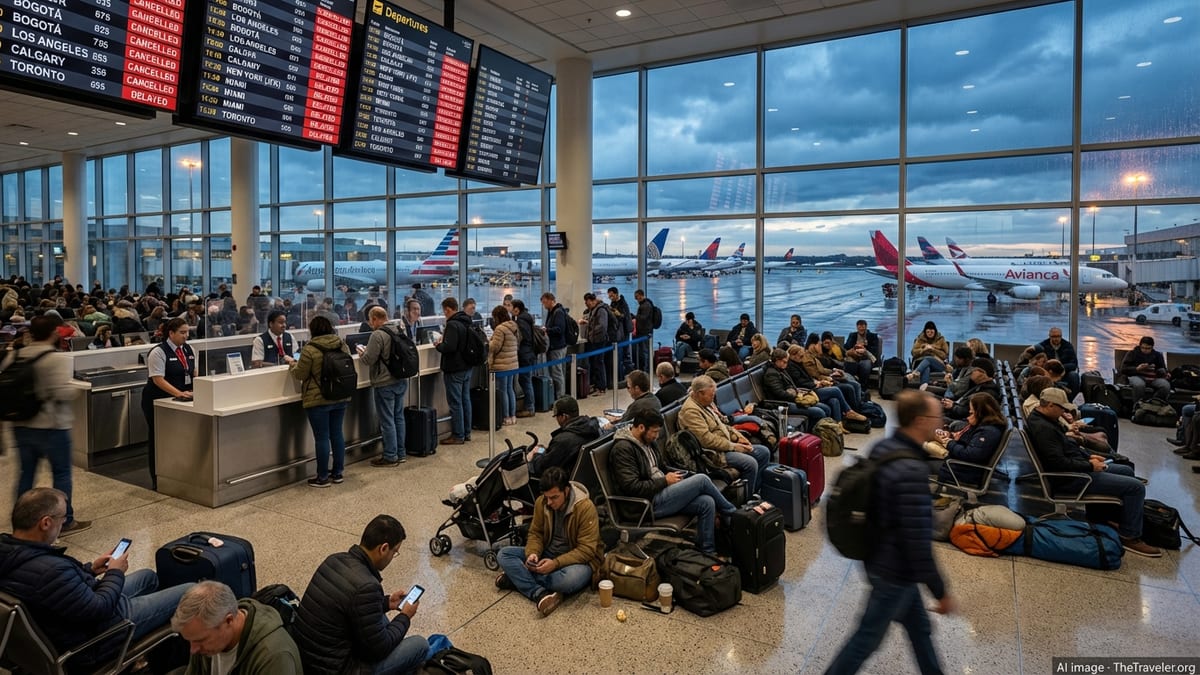
Storms, Ground Stops and a Packed Spring Travel Window
Publicly available FAA airport status pages and local coverage indicate that Houston Bush Intercontinental was placed under a ground stop on Saturday, April 4, as intense thunderstorms swept across southeast Texas, temporarily halting many arrivals and departures. Although the formal ground stop was lifted later that evening, residual delays continued into Sunday as airlines worked through backlogs created during the worst of the weather.
Weather systems affecting the broader Dallas–Houston corridor and other regions compounded the pressure. Aviation trackers and national business press reports for the Easter 2026 travel period describe widespread delays and cancellations on April 4 and April 5 at large hubs including Dallas/Fort Worth, Chicago O’Hare and Atlanta, with Houston listed among the airports experiencing significant disruption. The timing coincided with a heavy spring leisure travel weekend, leaving little slack in schedules once flights began to stack up.
Houston’s role as a central connecting point intensified the impact. As one of United Airlines’ largest hubs and a critical node for domestic and international connections, schedule disruptions at Bush Intercontinental tend to cascade outward, affecting flights that neither originate nor terminate in Texas.
Hundreds of Delays Concentrated at Bush Intercontinental
Travel industry outlets tracking real time operations reported that Bush Intercontinental logged nearly 300 delayed flights and several dozen cancellations over the most recent 24 hour period, a level of disruption well above typical daily averages. One trade publication on April 6 tallied roughly 287 delays and 20 cancellations at the airport, affecting United and its regional partners along with other carriers that rely on Houston for connections.
Separate disruption summaries covering the first week of April point to a broader spike across Texas, with nearly 400 delays recorded in recent days across Dallas/Fort Worth, Houston and San Antonio. Houston’s share of those delays has been notable, reflecting both the direct effect of local storms and the airport’s dependence on aircraft and crews arriving on time from other weather affected cities.
For travelers, the operational picture translated into long lines at security and crowded gate areas, particularly during peak outbound banks in the morning and late afternoon. Passenger accounts circulating on social platforms over the past week describe extended waits at Houston security checkpoints, especially when staffing and weather issues coincided with heavy passenger volumes.
Ripple Effects From New York to San Francisco
The disruption centered on Houston has not been contained to Texas. Airline and travel industry coverage shows that delayed departures and missed crew connections at Bush Intercontinental have contributed to late running flights on key corridors to New York, Atlanta, Denver, Los Angeles and San Francisco.
One travel news analysis on April 6 highlighted knock on effects from Houston to major business markets, noting that delays on Houston originated flights helped push average arrival waits higher at airports such as New York’s LaGuardia and San Francisco International. These airports were already managing their own weather related and congestion related programs, leading to stacked delays as the weekend progressed.
Data from airline tracking services summarized in national reports for April 4 and April 5 point to thousands of delayed flights across the United States, with more than 5,600 delays recorded on Saturday alone and well over 12,000 for the Easter weekend. In this environment, Houston’s struggles added friction to a system that was already operating near capacity, and even relatively short disruptions at the hub translated into hours of knock on delays for connecting passengers.
Airlines Adjust Schedules and Offer Limited Flexibility
Airlines have responded with a mix of schedule adjustments and limited flexibility for affected passengers. Industry coverage and customer advisories show that United, which maintains a large operation at Bush Intercontinental, introduced a series of travel waivers tied to Houston beginning in late March and extending into early April, allowing some customers to rebook without change fees when severe weather was forecast.
During the most recent wave of storms, carriers shifted departure times, rerouted aircraft and, in some cases, proactively canceled select flights in and out of Houston to reset their operations. Financial and investor oriented reports note that airlines across the country, including major network carriers and their regional affiliates, collectively canceled hundreds of flights and delayed thousands more over the weekend as they navigated weather and congestion constraints.
However, the waivers and schedule tweaks did not eliminate the disruption for many travelers relying on Houston for tight connections. Published commentary from travel analysts emphasizes that when a dominant hub like Bush Intercontinental encounters back to back weather and staffing issues, the sheer volume of connecting traffic means that recovery can take multiple days, not just a single operational cycle.
What Travelers Can Expect in the Days Ahead
Operational data available as of Monday, April 6 suggests that conditions at Houston and other major hubs are gradually stabilizing, though scattered delays remain likely as airlines work through aircraft repositioning and crew scheduling challenges. As planes and crews rotate back into place across the network, on time performance typically improves, but any new round of storms could quickly revive bottlenecks.
Travel analysts advising the public through national media channels recommend building extra time into itineraries that pass through Houston, Chicago, Dallas or other busy hubs during the remainder of the spring break period. They also note that the persistent strength of leisure demand in 2026 leaves airlines with fewer empty seats to accommodate passengers who miss connections, increasing the risk of extended rebooking windows when things go wrong.
The recent disruptions highlight how vulnerable the U.S. air travel system remains to weather and capacity shocks at a handful of large nodes. With Houston once again demonstrating its outsized influence on domestic and international flows, both travelers and airlines are likely to watch the airport’s operational status closely as the spring and summer travel peaks approach.