

More news on this day
U.S. air travelers passing through Houston’s main airport are facing a fresh wave of disruption as publicly available tracking data shows more than 110 flight delays and at least 14 cancellations affecting services operated by Mesa Airlines, Delta Air Lines, United Airlines and several other carriers.
Get the latest news straight to your inbox!
Disruptions Build Across Major Carriers at Houston Hub
The latest operational snags at George Bush Intercontinental Airport in Houston have left passengers contending with extended waits at departure gates, rolling schedule changes and, in some cases, outright cancellations. Live tracking figures reviewed on Saturday indicate that the impact is spread across a wide range of domestic routes, with regional operations and feeder flights bearing much of the strain.
Mesa Airlines, which operates regional services for several large network carriers, is among the airlines most visibly affected in Houston. Delays on Mesa-operated flights have been recorded throughout the day, affecting connections to and from key hubs across the United States. Travelers on these services are reporting missed onward connections and unplanned overnight stays as schedules continue to shift.
United Airlines, the dominant carrier at Houston’s primary airport, is also experiencing a notable number of delayed departures and arrivals. While the bulk of United’s schedule is operating, a cluster of flights has been pushed back by anywhere from 45 minutes to several hours, compounding congestion at already busy gates and forcing many travelers to rebook or reroute.
Delta Air Lines and additional U.S. carriers serving Houston are likewise facing knock-on delays as aircraft and crews fall behind schedule. Although the number of cancellations remains relatively limited compared with the total daily schedule, the combination of more than 110 delays and 14 scrapped flights has been enough to snarl airport operations and create long lines at customer service counters.
Passengers Grapple With Missed Connections and Long Waits
The operational turbulence is translating into a difficult travel day for passengers. Those relying on tightly timed connections through Houston are among the worst affected, with some travelers watching their onward flights depart while they remain on delayed inbound aircraft or stuck in lengthy deplaning queues.
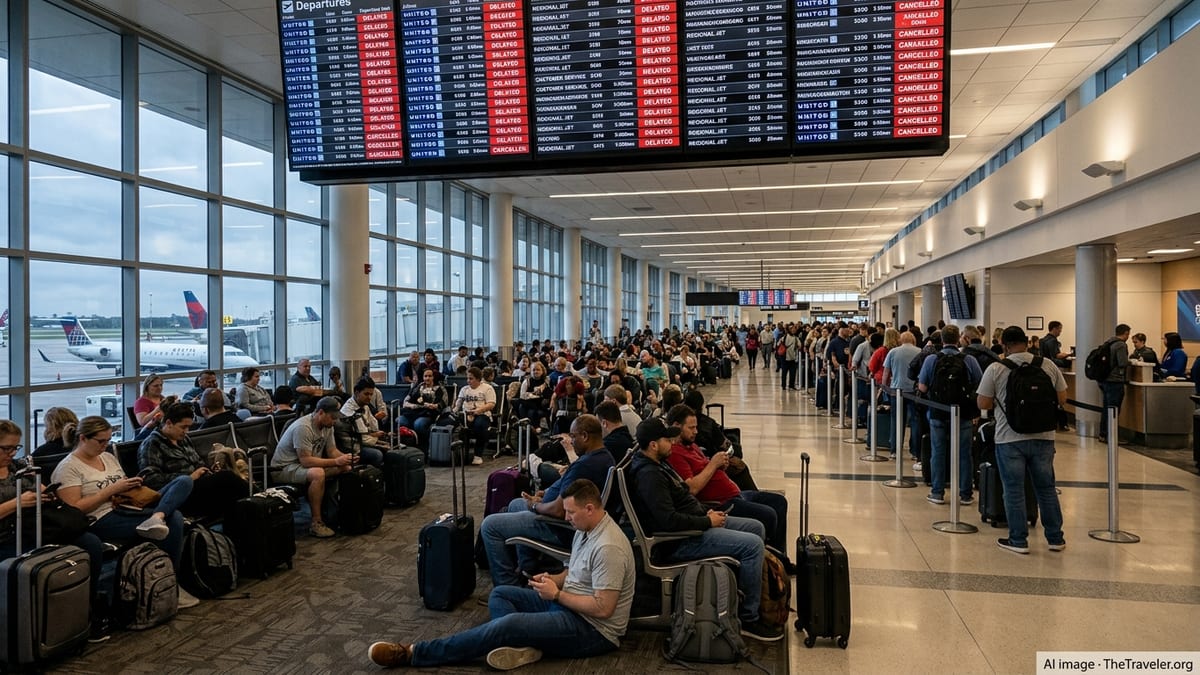
Inside the terminal, publicly shared images and descriptions from travelers show crowded concourses, busy departure boards and gate areas packed with passengers waiting for updated departure times. Many report multiple rolling delays, where a flight’s departure time is repeatedly pushed back in small increments before a final decision is made to depart or cancel.
For some travelers, the disruption has spilled beyond the airport itself. Changes in departure and arrival times can force last-minute adjustments to hotel bookings, ground transportation and work commitments. Families traveling with small children and older passengers in particular appear to be facing additional strain as they navigate long waits, gate changes and uncertainty over whether flights will ultimately operate.
Travel insurance providers and credit card trip protection policies may offer some relief for stranded passengers, although coverage can vary widely. Travelers are being advised, through publicly available guidance, to keep documentation of delays, cancellations and any extra expenses incurred as they work to rearrange their journeys.
Operational and Weather Factors Behind the Irregular Operations
While specific causes can vary from flight to flight, a combination of operational and weather-related factors often sits behind a disruption pattern of this scale. Federal transportation statistics and previous reporting on airline performance show that delays and cancellations are commonly attributed to carrier-specific issues such as aircraft maintenance or crew scheduling, as well as air traffic control constraints and changing weather conditions along key routes.
Houston’s location makes it especially sensitive to shifting weather systems that can trigger ground stops, reduce arrival and departure rates, or force rerouting of traffic across the broader national network. Even relatively short-lived storms or low-visibility periods can create a backlog that takes hours to clear, especially at a heavily used hub.
Regional carriers like Mesa Airlines, which operate flights under the brands of larger network airlines, also tend to run tight aircraft and crew rotations. When one leg of a route is significantly delayed, the same aircraft and crew may be unable to operate subsequent flights on time, contributing to a cascade of delays and, in some cases, cancellations. Industry data released in recent years has highlighted how these regional operations can be particularly vulnerable when systems come under stress.
Airlines continue to refine schedules and contingency plans in response to repeated episodes of irregular operations across the United States. Industry analyses note that tight staffing margins, complex hub-and-spoke networks and rising travel demand can all amplify the effect of even modest disruptions, turning localized issues into wider operational challenges within a matter of hours.
What Travelers Can Do When Houston Flights Go Off Schedule
For passengers currently caught in the disruption at Houston, publicly shared consumer advice emphasizes the importance of acting quickly when delays begin to mount. Using airline apps or airport kiosks to request same-day changes, stand-by options or alternative routings can, in some cases, secure an earlier departure than waiting in line at a staffed counter.
Monitoring real-time flight status and aircraft information can also provide early hints about potential problems. If the incoming aircraft for a scheduled flight is significantly delayed at another airport, that delay often flows directly into the next leg out of Houston. In such cases, some travelers may find it beneficial to explore rerouting before official delay notifications are issued.
Passengers with critical connections, such as international departures or time-sensitive events, may wish to proactively contact their airlines through digital channels to discuss alternatives. Publicly available guidance from consumer groups suggests that having flexible routing preferences, such as being willing to connect through different hubs or arrive at nearby airports, can increase the chances of being rebooked on an itinerary that works.
Looking ahead, analysts expect that periods of intensified disruption will remain a recurring feature of U.S. air travel, particularly during peak travel seasons and in weather-sensitive regions like the Gulf Coast. For now, travelers transiting Houston are being urged by publicly available advisories to build in extra time, monitor their flights closely and prepare for the possibility of last-minute changes whenever large numbers of delays and cancellations start to appear on departure boards.