

More news on this day
US travelers flying through Houston on March 26 are facing a fresh wave of disruption, as publicly available flight-tracking data shows around 110 delays and 14 cancellations affecting services by Mesa Airlines, Delta Air Lines, United Airlines and several other carriers at the city’s main international airport.
Get the latest news straight to your inbox!
Delays Mount Across Houston’s Busy Hubs
The latest operational snags are centered on George Bush Intercontinental Airport, Houston’s primary gateway for long haul and domestic connections, with knock-on effects reported at William P. Hobby Airport. Midday figures from flight-tracking services indicate that departures and arrivals combined are experiencing more than one hundred delays, while at least a dozen flights have been cancelled outright.
Carriers operating regional and domestic networks, including Mesa Airlines, Delta Air Lines, United Airlines and other partner airlines, appear among the most affected. Many of the delayed flights are short and medium haul connections that feed major hubs across the United States, compounding the disruption for travelers with onward journeys.
Operational data suggests that delays are concentrated in the morning and early afternoon banks of departures, when Houston typically handles some of its heaviest traffic. Even modest schedule disruptions during these peak periods tend to cascade through the day, leaving aircraft and crews out of position and reducing the system’s ability to recover quickly.
While the absolute number of cancelled flights remains limited relative to the airport’s total daily schedule, the combination of repeated rolling delays and selective cancellations has created significant uncertainty for passengers trying to reach destinations across the country.
Security Bottlenecks and Staffing Shortfalls Deepen the Crisis
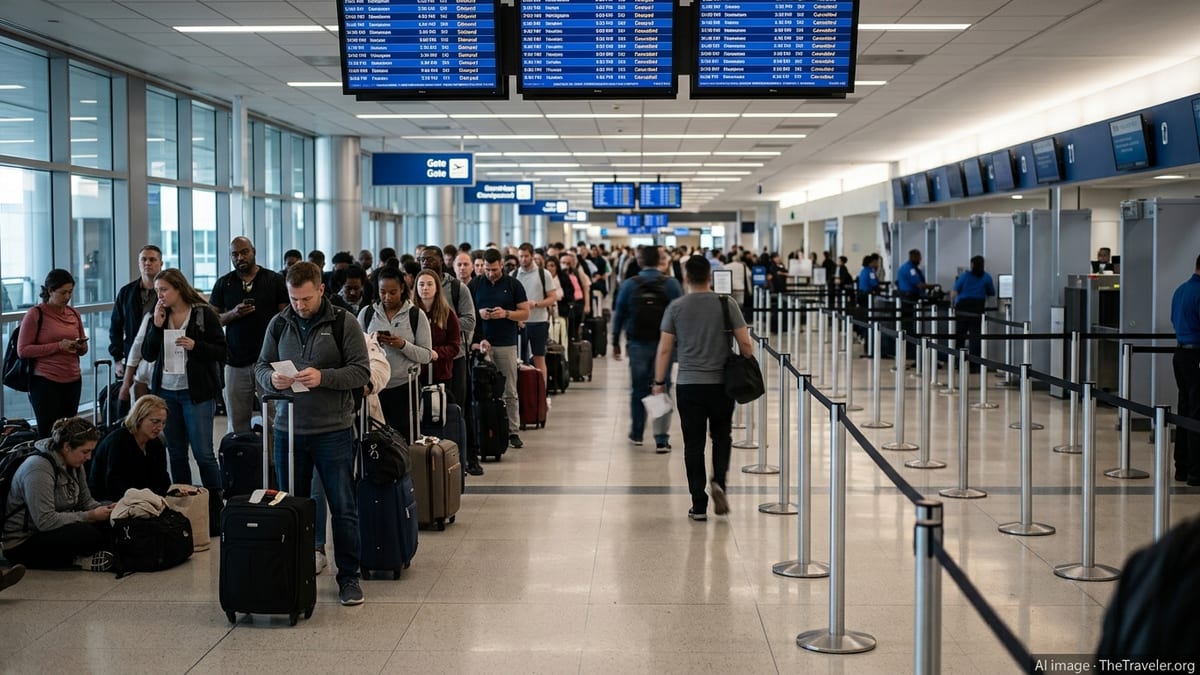
The latest round of disruption in Houston is unfolding against an already strained backdrop at airport security checkpoints. In recent days, travelers and local coverage have highlighted extremely long Transportation Security Administration lines at George Bush Intercontinental, with reported waits stretching to several hours and queues snaking across multiple levels of the terminal complex.
Reports indicate that staffing constraints and a broader federal funding impasse have reduced the number of open security lanes at key times of day. With fewer lanes available, even normal passenger volumes can produce gridlock. When flight schedules are compressed by weather or operational challenges, the surge of travelers converging at similar times only worsens congestion.
Publicly available information suggests that some trusted traveler and expedited screening options have been operating on a reduced basis at Houston, removing a traditional pressure valve that airports rely on during busy periods. Without these outlets, larger portions of the passenger flow are funneled into standard lanes, lengthening waits for everyone.
As security bottlenecks slow the movement of passengers from check in to the gate, airlines are forced to balance boarding deadlines with safety and regulatory requirements. That dynamic can tip marginal delays into missed departure slots, further contributing to the tally of late operations and occasional cancellations.
Weather, Construction and Network Pressures Converge
Houston’s current difficulties do not exist in isolation. The disruptions arrive shortly after a powerful late season storm system swept across parts of the United States, triggering thousands of delays and cancellations nationwide and leaving airline networks stretched. Aircraft and crews that started the week off schedule are still working their way back into position, reducing resilience when new problems arise.
In addition, federal aviation planning documents for 2026 highlight ongoing airfield construction work and taxiway constraints at George Bush Intercontinental that can reduce the airport’s operational capacity during certain configurations. When combined with busy spring travel demand, these structural limitations increase the likelihood that even minor slowdowns will translate into longer runway queues and airborne holding patterns.
Air traffic management procedures in the region have also been tightened at times this month in response to thunderstorms and high winds. Ground stops and flow control programs can create temporary backlogs of departing flights, which then ripple into arrival delays as aircraft are held at origin airports until slots become available in Houston.
For airlines with dense hub schedules such as United, and for regional partners like Mesa that provide feeder services, a single period of ground delay can scatter disruptions across dozens of flights. As a result, passengers may experience significant local inconvenience even on days when overall weather conditions appear calm.
Knock On Effects for Travelers Around the Country
Because Houston functions as a major connecting point for domestic and international routes, today’s local difficulties are spilling into itineraries far beyond Texas. Passengers traveling between smaller US cities may find that their routes rely on regional jets that pass through Houston, leaving them vulnerable to missed connections and last minute rebookings.
Travel waiver information published by at least one major airline in recent days has signaled an awareness of the mounting strain in Houston, with more flexible rebooking options offered to customers whose plans involve the city’s airports. These waivers typically allow affected travelers to change dates or routings within a defined window without additional fees, subject to seat availability.
Despite these measures, social media posts and traveler reports describe crowded gate areas, tight connection times and rebooked itineraries stretching into late evening or the following day. Families heading into or out of Houston for spring holidays or business travelers on time sensitive trips have been especially vulnerable to the cascading effects of late inbound aircraft and crew duty time limits.
Airlines are attempting to prioritize recovery by consolidating lightly booked flights, repositioning aircraft where possible and protecting long haul departures. However, this approach can increase cancellations on shorter legs, leaving some passengers reliant on overnight hotel stays or long ground transport journeys to reach their final destinations.
What Passengers Can Do as Disruptions Continue
With delays and cancellations still developing throughout the day, travelers scheduled to pass through Houston are being urged by publicly available guidance and airline advisories to take proactive steps. Checking flight status repeatedly in the hours before departure and enabling app notifications can provide the earliest alerts of schedule changes or gate reassignment.
Given reports of extended security waits at George Bush Intercontinental, many experienced travelers are advising arrival at the airport significantly earlier than usual. For morning and midday departures, building in several extra hours beyond standard recommendations may reduce the risk of being caught in unexpectedly long lines.
Passengers with flexible travel plans may wish to explore rebooking options that route them through alternative hubs, particularly if their itineraries involve tight connection windows in Houston. In some cases, airlines are permitting changes to nearby Texas airports, which may offer shorter waits and more predictable departure times, although onward ground transportation then becomes part of the equation.
For those already en route or facing missed connections, customer service desks, mobile apps and airport kiosks remain the primary channels for securing new itineraries. While the overall scale of disruption in Houston is less dramatic than nationwide events triggered by major storms, the combination of security bottlenecks, capacity constraints and accumulated delays has created a challenging environment for US passengers moving through the city today.