

More news on this day
Travelers across the United States faced another day of disrupted plans on April 5, 2026, as flight-tracking data showed 102 delays and 5 cancellations at Houston’s William P. Hobby Airport, snarling Southwest, Delta, United and other carriers on routes linking Texas with New York, Chicago and Los Angeles.
Get the latest news straight to your inbox!
Chain Reaction From a Single Houston Hub
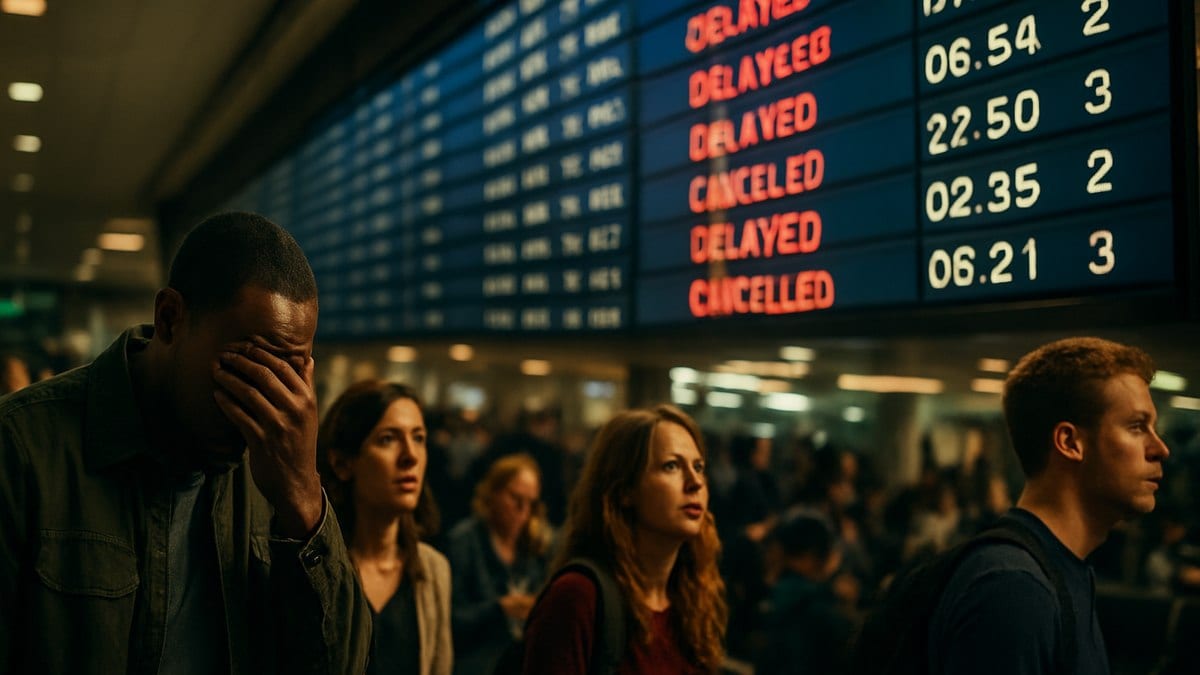
Publicly available operational tallies for April 5 indicate that Hobby Airport in Houston has emerged as one of the day’s most affected U.S. facilities, with more than one hundred delayed departures and arrivals alongside a smaller cluster of cancellations. Aviation trackers show that Southwest, the airport’s dominant carrier, features prominently among the disrupted flights, while schedules for Delta, United and several smaller operators have also been affected.
The disruption at Hobby has contributed to a broader pattern of delays across the national network. Recent nationwide data compiled in early April pointed to thousands of delayed flights and several hundred cancellations in a single day, reflecting how strain at a handful of key hubs can quickly spread through tight airline schedules. Houston’s position as a major connecting point for travelers within Texas and between the Gulf Coast, the Midwest and both coasts has made today’s problems particularly visible to travelers heading toward New York, Chicago and Los Angeles.
Reports from industry-focused outlets suggest that carriers are increasingly leaning on extended delays rather than outright cancellations to keep aircraft and crews positioned where they are needed. While this strategy can preserve longer-term schedule integrity, it often leaves passengers waiting on the ground or sitting out extended holds on the tarmac while airlines work through local and regional bottlenecks.
Southwest, Delta and United Face Pressure on Key Routes
Southwest Airlines, which operates a large share of Hobby’s departures, appears to be bearing the brunt of today’s disruption. Flight-tracking dashboards list numerous Southwest flights in delayed status on routes connecting Houston with cities across Texas as well as major destinations including Chicago Midway and Los Angeles. These delays come on top of a delay-heavy start to April in which Southwest has also faced challenges at Dallas Love Field and other regional hubs.
Delta and United, while less concentrated at Hobby, are also being hit as the disruption ripples outward. Publicly available coverage of today’s operations highlights rolling delays on Houston services that connect into Delta’s network through Atlanta and other hubs, as well as United’s connections through Chicago O’Hare, Denver and coastal cities such as Los Angeles and New York. When an aircraft arriving late from Houston then turns around to serve another route, late departures can quickly propagate far from Texas, impacting travelers who never set foot in Houston.
The current pattern follows a broader early-April trend in which major carriers have seen on-time performance squeezed by a combination of spring weather, air-traffic-management initiatives and heavy passenger loads. In this environment, relatively modest disruptions at a single airport can cascade into missed connections and overnight delays as crews hit duty-time limits and aircraft miss narrow turnaround windows.
Weather, Congestion and System Strain Converge
The situation at Hobby is unfolding against a backdrop of unsettled conditions across the U.S. aviation system. In recent days, thunderstorms over Texas and parts of the Southeast have prompted ground delays and temporary flow restrictions at George Bush Intercontinental Airport in Houston and other large hubs, which in turn have constrained capacity during peak travel windows. Although today’s issues at Hobby are not tied to a single headline weather event, they are occurring within a network already stretched by earlier storms and lingering congestion.
Analysts note that as traffic volumes remain near or above pre-pandemic levels at many large airports, even brief interruptions in arrivals and departures can trigger outsized effects. When airspace constraints, runway works or staffing limits reduce an airport’s acceptance rate, airlines must juggle arrivals, send aircraft into holding patterns or slow departures from outstations, driving up delay counts across the network.
Recent nationwide statistics underscore the scale of that strain. Data compiled for the first days of April show around 460 cancellations and roughly 5,500 delays in a single day across the United States, with large hub airports in Texas, the Midwest and on both coasts registering some of the highest disruption totals. Within that environment, today’s 102 delays and 5 cancellations at Hobby represent one concentrated node in a much wider system under pressure.
Impact on Travelers in Texas, New York, Chicago and Los Angeles
For individual travelers, the statistics translate into missed meetings, lost vacation time and unexpected overnight stays. Flight-status boards today show delayed and canceled services tying Houston to major population centers such as New York City, Chicago and Los Angeles, where even small schedule shifts can collide with tight connection windows and busy airport transfer points.
Passengers scheduled to connect in New York or Chicago from Hobby report facing extended layovers as inbound flights from Houston arrive late and subsequent departures are held to accommodate incoming travelers and crews. In some cases, publicly available information suggests that evening departures from those northern hubs are at particular risk when operational ripples from earlier-in-the-day disruptions in Texas arrive just as crews are nearing duty limits.
In Los Angeles and other West Coast cities, late-arriving aircraft from Houston can push departures further into the evening and compress already crowded nighttime arrival banks. When combined with local runway maintenance or airspace management programs, these delays may leave domestic flyers and international connections similarly exposed to missed links and revised itineraries.
What Today’s Turbulence Signals for Spring Travel
Today’s disruption at Hobby fits into a larger pattern that travel analysts have been tracking since the start of the year. Successive winter and early spring weather systems, combined with persistent staffing challenges and busy leisure demand, have repeatedly pushed U.S. airline operations close to their limits. Nationwide cancellation and delay totals logged in late March and early April demonstrate how quickly strains can reappear even outside of traditional peak-holiday periods.
Publicly available policy documents and past investigations into major airline meltdowns have highlighted how fragile the system can become when technology hiccups or tight crew scheduling intersect with adverse weather. While there is no indication of a comparable single-point failure at Hobby today, the clustering of 102 delays and 5 cancellations at one mid-sized hub reinforces concerns that there is little slack in the system during busy travel periods.
For travelers planning trips through Houston and other major hubs this spring, recent experience suggests that building additional time into connections, monitoring flight status closely and preparing contingency plans for misconnected journeys may be increasingly prudent. With passenger numbers staying robust and the spring storm season still in its early stages, today’s Hobby Airport travel nightmare may be a preview of further turbulence ahead for U.S. flyers.