

More news on this day
A volatile mix of extreme weather, overstretched infrastructure and peak holiday crowds has plunged parts of Southeast and East Asia into 11 bruising days of travel disruption, freezing tourism flows from Hanoi to Shanghai Pudong and across key destinations in the Philippines.
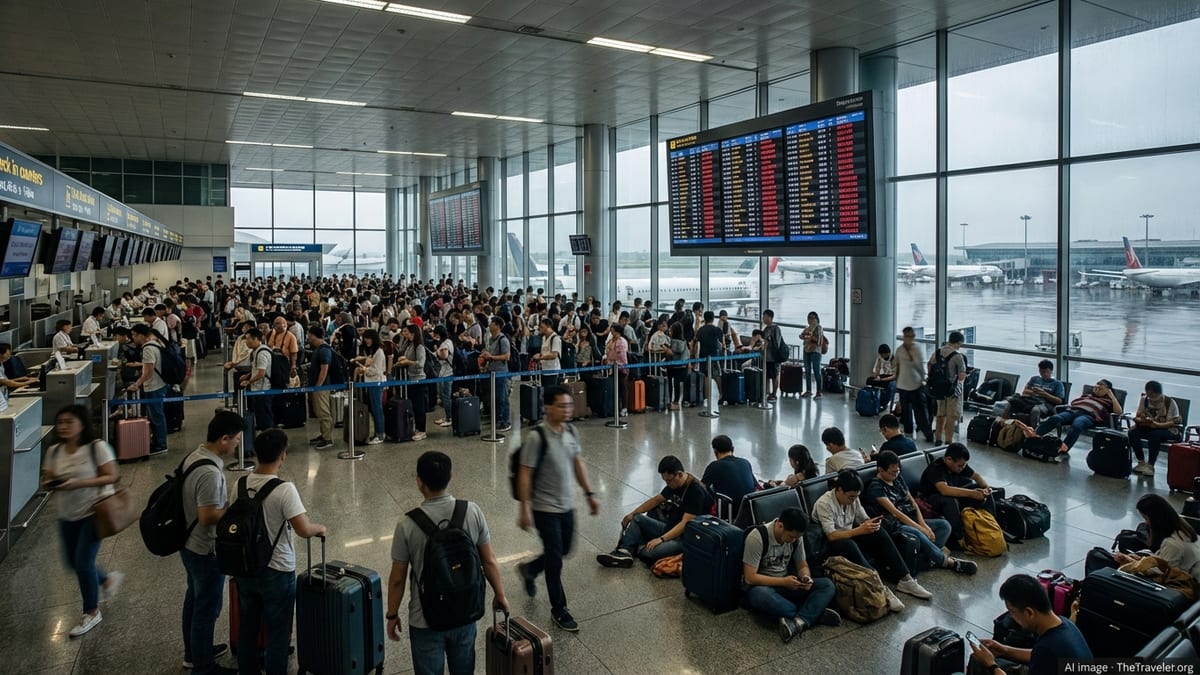
From Tet Gridlock in Hanoi to Regional Flight Backlogs
In Hanoi, what should have been a celebratory return from the Tet Lunar New Year break instead turned into a grinding ordeal for many travelers. As the official 2026 holiday period ended on February 22, hundreds of thousands of residents and visitors streamed back into the capital, clogging expressways and key gateways under persistent rain. Traffic volumes surged on major arteries into the city, with vehicles forced to slow on slippery roads while interprovincial buses and private cars queued for hours at bottlenecks on ring roads and bridges.
Authorities deployed traffic police and tapped a network of more than 1,800 AI-powered cameras to keep flows moving and prevent collisions. While those measures largely succeeded in averting major accidents, they could not fully shield returning tourists from delays. Many faced missed connections at bus stations and late arrivals at hotels and homestays, undercutting carefully timed itineraries in northern Vietnam.
The Tet squeeze did not occur in isolation. Operational data from airport boards and aviation analytics over February 10 and 11 already showed a dense cluster of delays across Southeast Asia, with more than 1,000 flights held up regionwide in just two days. Singapore’s Changi, Jakarta’s Soekarno Hatta and Philippine hubs in Manila and Cebu all reported snarled schedules, leaving transit passengers stranded in departure halls and forcing tour operators to rework multi-country itineraries on the fly.
For regional travelers routing in and out of Vietnam through major hubs, the combination of ground congestion in Hanoi and airborne gridlock further south turned what should have been an 11-day festive peak into a case study in cascading disruption.
Shanghai Pudong Strains Under Weather and Capacity Pressures
Shanghai Pudong International Airport, one of Asia’s busiest gateways, has faced its own turbulence in recent weeks. Severe winter weather across eastern and central China triggered widespread aviation disruption in early February, forcing the cancellation of dozens of flights and delaying hundreds more. Major carriers operating through Shanghai and neighboring hubs scrambled to reroute aircraft, rebook passengers and find accommodation for those stuck overnight.
Although Pudong is better resourced than many regional airports, the episode underscored how thin the margin for error has become as international arrivals rebound. The district has seen a sharp rise in inbound tourism since China eased entry rules, with more than a million foreign travelers entering via Pudong in the first half of 2025 alone. Investment in airport service desks, digital payment tools and tax-refund programs has made the gateway more attractive, but the recent spell of delays highlighted bottlenecks in check-in halls, immigration queues and baggage handling when weather knocks the schedule off balance.
For international visitors trying to stitch together multi-stop journeys that might include Hanoi or Philippine islands, disruptions at Pudong carry outsized consequences. Missed connections ripple through long-haul and regional networks alike, leaving passengers separated from luggage, shortening stays at onward destinations and, in some cases, prompting cancellations of pre-booked tours.
Tourism analysts say the latest turbulence at Pudong is not yet a crisis, but it is a warning. As volumes climb back above pre-pandemic levels, even short bursts of bad weather can quickly expose the structural constraints of terminals designed for a different era of travel.
Philippines: Storm Penha and a Fragile Tourism Grid
Nowhere have the vulnerabilities of tourism-dependent economies been more starkly displayed than in the Philippines. In early February, Tropical Storm Penha, known locally as Basyang, lashed Mindanao and the Visayas with heavy rain, floods and landslides. The storm made multiple landfalls across Surigao del Sur, Bohol, Cebu and Negros Oriental between February 4 and 6, leaving deaths, injuries and the displacement of tens of thousands in its wake.
While the human toll has rightly dominated headlines, the impact on tourism infrastructure has also been severe. River overflows, landslides and damage to key bridges and secondary roads temporarily cut off access to some coastal communities and island resorts. Motorized outrigger boats used for island-hopping tours were damaged in rough seas, while port operations slowed as authorities prioritized safety checks and relief shipments.
Penha struck a sector already on edge. Philippine tourism has been hit repeatedly in recent years by storms, earthquakes and prolonged power outages in destinations such as Siargao, Palawan and Siquijor. Energy security studies have documented how blackouts lasting days or weeks can wipe out peak-season bookings, as hotels and restaurants with limited backup generation are forced to close and visitors scramble to leave. The latest storm underscored how swiftly weather events can again freeze tourism flows, particularly when they collide with existing infrastructure deficits.
For small and medium-sized tourism businesses, the timing could hardly be worse. After a strong rebound in 2024, many operators had ramped up staffing and inventory ahead of the dry-season high months, only to face cancellations, extended closures and new repair bills as Penha moved through the archipelago.
Eleven Days That Exposed Systemic Weaknesses
Taken together, the 11-day span from February 10 to 20 has been a stress test for regional tourism systems. In Hanoi, the challenge was managing a predictable holiday return crush under difficult weather. At Shanghai Pudong, it was accommodating record passenger volumes while a bout of severe weather pushed flight operations to their limits. In the Philippines, it was absorbing yet another tropical storm across already fragile energy and transport grids.
What emerges is a picture of interconnected vulnerabilities. Flight delays in one hub reverberate through others. Weather that slows traffic in a capital city complicates last-mile journeys to airports and rail stations. Coastal resorts, still recovering from earlier shocks, find themselves once more cut off by damaged roads, downed power lines or temporarily closed ports.
For travelers, the experience has been one of uncertainty and frustration: last-minute schedule changes, extended waits in terminals, difficulty reaching accommodation providers, and unclear information about refunds or rebooking options. For destinations, the cost is measured not only in lost revenue but also in reputational damage at a time when competition for international visitors is intense.
Industry observers note that the recurring nature of these disruptions points to deeper structural issues rather than freak coincidence. Rapid tourism growth has not always been matched by investment in resilient infrastructure, redundancy in energy and communications networks, and the digital tools needed to coordinate responses across agencies and borders.
Can the Region Turn Chaos into a Tourism Reset?
In response to the latest turmoil, policymakers and industry leaders across the region are again talking about resilience. In Vietnam, Hanoi’s authorities have leaned heavily on digital management tools at major festivals and gateways, introducing QR-based ticketing, stricter controls on transport safety and enhanced monitoring of key waterways to better manage visitor flows. Those same tools could be expanded to intercity travel during peak holiday migrations, providing real-time crowd and traffic data for both officials and travelers.
In China, airline and airport operators are reviewing contingency plans for winter weather events, including the possibility of more flexible slot management and stronger passenger communication protocols when delays cascade. Given Pudong’s role as a primary entry point for international visitors, any improvement in its ability to absorb disruption without paralysing the system will be felt across the wider Asian tourism network.
In the Philippines, energy planners and tourism officials are under growing pressure to align infrastructure investments with visitor growth. Studies on previous island-wide blackouts and storm-related outages have proposed integrating energy resilience into tourism planning, from diversifying power supply on resort islands to ensuring that evacuation routes and critical communications remain live during extreme weather.
For now, travelers are left to navigate a landscape where itineraries can be upended by forces far beyond their control. But the bruising 11 days of disruption stretching across Hanoi, Pudong and Philippine gateways may yet serve a purpose if they galvanize a more hard-headed approach to building a tourism industry that can withstand the next shock rather than be brought to a standstill by it.