

More news on this day
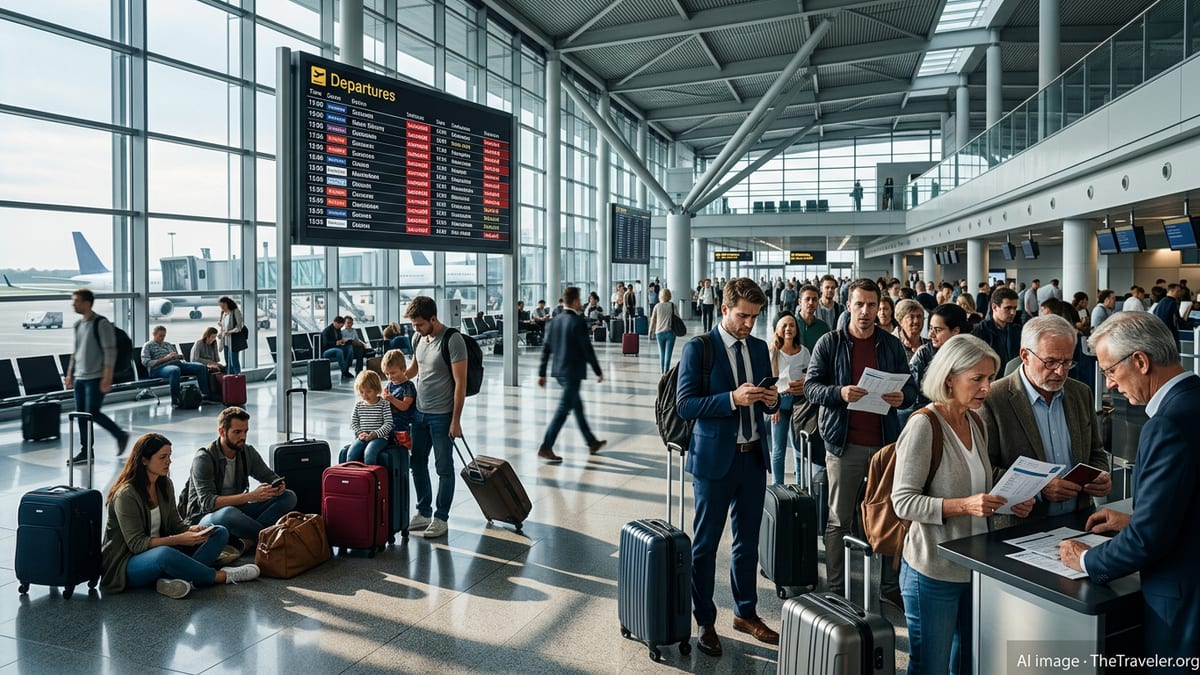
From New Year city breaks to long-planned spring getaways, a cascade of airline strikes in 2026 is colliding with war-driven airspace closures to create one of the most disruptive travel seasons in years, leaving passengers stranded in airports, out of pocket and unsure when they will finally get airborne.
Get the latest news straight to your inbox!
Lufthansa Walkouts Snarl Europe’s Hubs at a Critical Moment
Germany’s Lufthansa has become the focal point of Europe’s strike-hit skies, with pilots and cabin crew staging repeated stoppages that have crippled operations at Frankfurt and Munich, two of the continent’s most important hubs. A full-day walkout on February 12 forced the cancellation of hundreds of flights and disrupted travel for around 100,000 passengers, according to figures cited by the airline and unions. The knock-on effects were felt for days as aircraft and crews were left out of position and long-haul rotations fell apart.
Now unions representing Lufthansa pilots have called a fresh 48-hour strike for March 12 and 13 in a bitter dispute over pensions, targeting all departures from German airports on the carrier’s mainline and cargo divisions. The latest action comes despite mediation efforts after February’s stoppage and heightens pressure on a company already navigating war-related airspace closures over parts of the Middle East. In a sign of how geopolitics is reshaping industrial tactics, union leaders say flights to certain destinations in the region will be exempted on humanitarian grounds.
For travelers, the distinction is academic. Flight search data show sharply reduced availability on Lufthansa-operated services across Europe and on transatlantic routes around strike days, with many remaining seats priced significantly higher than in 2025. Tour operators report that clients connecting through Frankfurt to safaris, ski trips and cruises face rebookings that add one or even two overnight stays in hub cities, or force last‑minute diversions via secondary carriers.
Smaller German airports are also feeling the strain. With most Lufthansa group regional operations tightly integrated into the mainline schedule, cancelations cascade quickly from long-haul flights down to short domestic hops. Analysts warn that each new round of strikes chips away at traveler confidence just as European tourism is trying to regain momentum, and that repeated pension disputes risk hardening positions on both sides of the negotiating table.
New Year Strikes in France and Italy Set the Tone
The turmoil did not begin in Germany. The opening days of 2026 were already marred by industrial action across key holiday markets in France and Italy, catching leisure travelers in the middle of the peak New Year period. In France, easyJet cabin crew based in the country walked out on January 1 in a dispute over rosters and working conditions, forcing the low-cost carrier to cancel and consolidate flights precisely when ski traffic to the Alps and city breaks to Paris were at their height. Travel agents report families sleeping on terminal floors in Nice and Lyon after late-night cancellations left them with no viable onward options.
Italy has also seen a wave of strike notices involving airline staff and air traffic control workers since late January, intermittently impacting services on carriers such as easyJet and local operators. Although many of the actions have been short, often just a few hours, they have created pockets of severe disruption, particularly at Rome and Milan. The result is a climate of uncertainty in which travelers weigh the risk of industrial action alongside more traditional concerns like weather and congestion when choosing where and when to fly.
These early-year stoppages underscore how vulnerable peak leisure travel periods are to even modest walkouts. With aircraft running near capacity and spare planes and crews scarce, a single day of cancellations can take several days to unwind as airlines scramble to rebook passengers, reposition aircraft and comply with strict crew duty-time rules. That dynamic has set the template for the more severe disruptions now unfolding as larger network carriers such as Lufthansa enter open conflict with their unions.
Long-Haul Cabin Crew Strikes Ripple Across the Pacific
The disruption is not confined to Europe. In the Pacific region, a rare long-haul cabin crew strike at Air New Zealand in mid-February forced the airline to thin its schedule on key routes linking New Zealand with Asia and North America. The 48-hour action, centered on February 12 and 13, led to cancellations and reroutings that impacted thousands of travelers heading to or from Auckland, including many on once‑in‑a‑lifetime holidays and complex multi-stop itineraries.
Industry analysts note that long-haul widebody operations are particularly vulnerable to labor disputes. Each canceled flight removes not only several hundred seats from the market but also significant belly-hold cargo capacity that exporters, tour operators and logistics firms depend upon. With global aircraft supply still tight, airlines have limited ability to charter in extra capacity or quickly swap in spare jets to cover disrupted rotations. That leaves passengers competing for a small pool of alternative seats, often at sharply higher prices and with much longer journey times.
For travelers originating outside New Zealand, the knock-on effects have been felt as far as Vancouver, Los Angeles and key Asian gateways. Tour companies report that some customers have chosen to postpone trips entirely rather than accept complex reroutings involving extra stops and overnight layovers. The episode has also emboldened labor groups elsewhere to press their case more forcefully, citing the Air New Zealand action as proof that targeted strikes on strategic long-haul routes can yield leverage quickly.
War, Airspace Closures and Strikes Create a Perfect Storm
Overlaying these localized disputes is a broader aviation crisis driven by the war in Iran and cascading airspace closures across the Middle East, which began in late February. Major Gulf hubs including Dubai, Abu Dhabi and Doha temporarily suspended large portions of their operations as airlines such as Emirates, Etihad and Qatar Airways halted flights or rerouted around conflict zones. Aviation tracking data suggest that tens of thousands of flights have been canceled or diverted since February 28, with global traffic squeezed into a narrow corridor over the southern Caucasus.
This sudden loss of airspace and hub capacity has collided head-on with strike action at European and Asia-Pacific carriers, severely limiting rerouting options for displaced passengers. Traditionally, travelers stranded by European strikes could be rebooked via the Gulf on alternative airlines. In 2026, many of those workarounds have vanished. When a Lufthansa flight to Asia is canceled due to a pilot walkout, there may be no viable same-day alternative via Dubai or Doha, forcing passengers to accept multi-day delays or complete itinerary changes.
For holidaymakers, the impact is deeply personal. Travelers en route to honeymoons in the Maldives, ski trips in Japan or family reunions in India have found themselves marooned at European hubs with little clear information about when or how they will reach their destinations. Some have turned to rail or long-distance buses to salvage parts of their journeys, while others abandon trips altogether. Industry bodies warn that if the combination of strikes and conflict-related restrictions persists into the summer high season, the economic impact on tourism-dependent destinations could be severe.
Rising Costs, Passenger Rights and the Search for Stability
As airlines brace for further industrial action, the financial consequences for travelers are mounting. Average fares on many Europe-Asia and Europe-Pacific routes have surged as capacity shrinks, while flexible tickets that allow for changes have become more expensive. Travel insurers report a spike in claims linked to strike-related delays and cancellations, and some underwriters are now tightening wording around industrial action, prompting confusion among passengers about what is and is not covered.
In Europe, consumer advocates are reminding passengers that they may be entitled to compensation and assistance when flights are canceled or heavily delayed by strikes involving an airline’s own staff, under existing passenger rights rules. However, the picture becomes more complicated when disruptions are caused or compounded by external events such as war and airspace closures, which are generally considered extraordinary circumstances. Legal experts expect a wave of disputes as travelers test the boundaries of what counts as compensation-worthy disruption in a season marked by overlapping crises.
Behind the immediate chaos lies a deeper debate about the sustainability of the current aviation model. Unions argue that years of cost-cutting have stretched staffing and rosters to breaking point, leaving workers with little choice but to strike to secure better pay and more predictable schedules. Airlines counter that they face rising fuel bills, higher financing costs and geopolitical risks that leave limited room for concessions without jeopardizing long-term investment and connectivity.
For now, passengers remain caught in the middle. With more strike ballots scheduled in the coming weeks and no quick resolution to the Middle East conflict in sight, travel experts are urging would‑be holidaymakers to build extra flexibility into their plans, allow generous connection times, and consider backup options for critical trips. The hope across the industry is that 2026 will not be remembered as the year global aviation ground to a halt, but as the moment airlines, workers and regulators were forced to rethink how to keep people moving in an increasingly unstable world.