

More news on this day
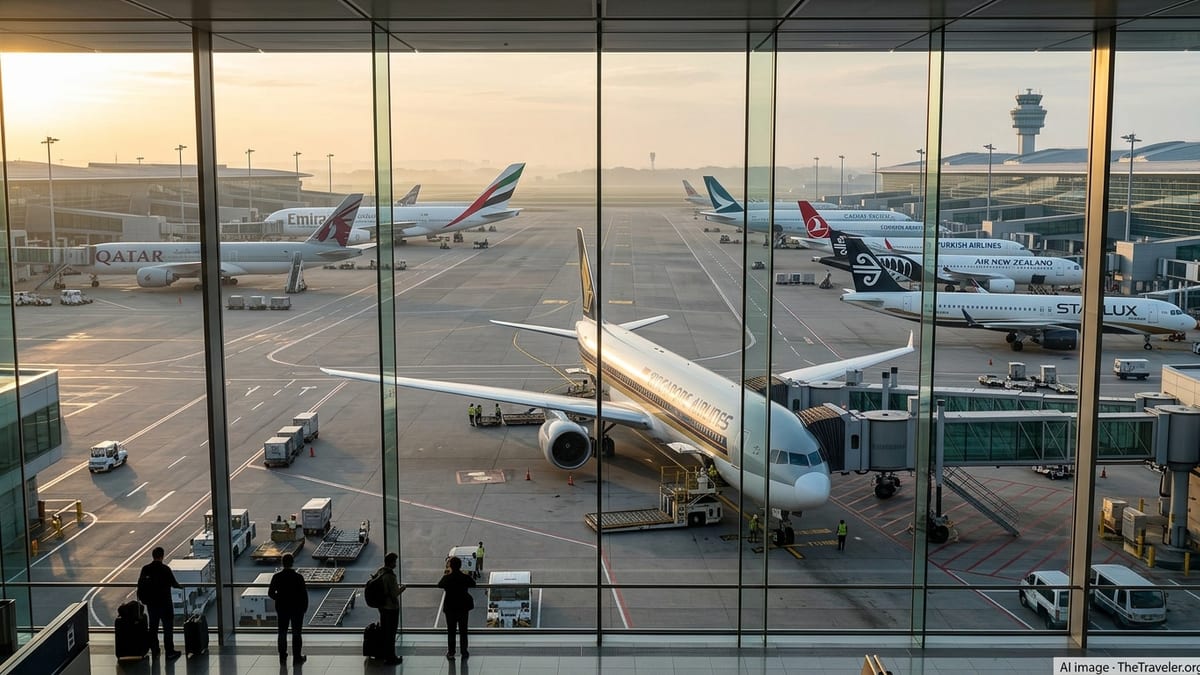
A new generation of premium carriers, led by Qatar Airways, Emirates, Cathay Pacific, Singapore Airlines, Turkish Airlines, Air New Zealand and Taiwan’s STARLUX Airlines, is setting a higher bar for global aviation, with ripple effects that are likely to transform tourism flows, hotel development and traveler expectations in 2026.
Get the latest news straight to your inbox!
Award Leaders Redefine What It Means To Be a “Best Airline”
Recent industry rankings and passenger surveys show a tight cluster of carriers consistently at the top of global league tables, with Qatar Airways, Singapore Airlines, Cathay Pacific, Emirates, Turkish Airlines, Air New Zealand and STARLUX Airlines all earning high marks for cabin experience, reliability and innovation. Skytrax’s World Airline Awards and other independent ratings highlight an intensifying focus on premium cabins, customer service and seamless digital journeys across this group, indicating that being a “best airline” in 2026 is now measured as much by end-to-end experience as by punctuality and safety.
Qatar Airways has repeatedly secured the World’s Best Airline title at the Skytrax awards, reinforcing the influence of its long-haul network out of Doha and its highly rated business-class product on perceptions of what full-service travel should look like. Singapore Airlines and Cathay Pacific, frequently ranked in the very top tier, continue to leverage their strategic positions at Changi Airport and Hong Kong International Airport to offer extensive connectivity across Asia, Europe and North America, giving them an outsized role in shaping long-haul passenger flows.
Emirates and Turkish Airlines, meanwhile, have turned their respective hubs in Dubai and Istanbul into global crossroads, expanding fleets and route maps to capture demand from both mature and emerging tourism markets. Air New Zealand and STARLUX Airlines complement this group by anchoring the Pacific and Taiwan respectively, using smaller but agile networks and a strong emphasis on passenger comfort to punch above their weight in global rankings and reviews.
Taken together, these seven carriers anchor a new competitive benchmark for full-service airlines. Their investments in hard product, soft service and loyalty ecosystems are already influencing how other airlines configure cabins, price fares and think about partnerships, and those shifts are expected to become even more visible through the 2026 northern summer and into the following peak seasons.
Premium Cabins and Service Upgrades Drive High-Yield Tourism
One of the clearest trends emerging from the leading airlines is an aggressive push upmarket in premium cabins. Qatar Airways, Emirates, Singapore Airlines and Cathay Pacific have all invested heavily in business and first-class suites, high-definition in-flight entertainment and elevated dining, positioning their long-haul services as extensions of luxury hotels in the sky. Industry coverage shows that such products attract high-yield business travelers and affluent leisure passengers who are more likely to book five-star hotels, private transfers and curated experiences at their destinations.
Turkish Airlines has modernized its long-haul business-class offering and used its extensive route network to channel premium travelers into Istanbul, which in turn benefits the city’s high-end hospitality sector. Air New Zealand has announced and begun rolling out new long-haul cabin concepts on select routes, including updated premium economy and lie-flat products that target both business and long-stay leisure demand into and out of the South Pacific. STARLUX, positioned as a boutique luxury carrier, has focused on spacious business-class cabins, refined design and attentive service on routes linking Taipei with North America and key Asian gateways, carving out a niche among travelers who prioritize comfort on transpacific journeys.
As more travelers encounter these upgraded cabins, expectations for long-haul comfort are rising. Hotel and resort groups in hub cities such as Doha, Dubai, Singapore, Hong Kong and Auckland are responding by aligning their premium offerings with the standards set onboard, from wellness-focused arrivals to fast-track airport transfers and bundled air-and-stay packages. In 2026, tourism boards and destination marketing organizations are expected to deepen their collaboration with these airlines to capture the spending of high-value visitors, especially in the luxury and meetings segments.
The emphasis on premium experience is also changing travel patterns. With cabin products that turn overnight flights into workable or restful spaces, travelers are more willing to consider one-stop itineraries via major hubs in exchange for superior service. That flexibility expands options for secondary and tertiary destinations, which can be reached on connecting flights while still benefiting from the draw of a flagship long-haul product.
Hubs, Connectivity and the New Geography of Global Tourism
Network design and hub strength are central to how these carriers will shape tourism in 2026. Qatar Airways leverages Doha’s Hamad International Airport as a purpose-built transfer hub, offering tightly timed connections between Europe, Africa, Asia and the Pacific. Reports on passenger flows suggest that this connectivity has helped redirect some long-haul traffic away from traditional European hubs and toward Gulf stopovers, with knock-on benefits for Qatar’s hotel and attractions sectors.
Emirates and Turkish Airlines follow similar strategies, using Dubai and Istanbul to connect city pairs that do not support non-stop service. Emirates in particular has expanded its fleet with additional widebody orders, indicating expectations of continued growth in long-haul demand via the carrier’s East-West bridge. Turkish Airlines, with a network spanning Europe, Central Asia, Africa and the Americas, has turned Istanbul Airport into a rising global hub, helping open new city pairs and supporting tourism in emerging destinations from the Balkans to Central Asia.
In the Asia-Pacific region, Singapore Airlines and Cathay Pacific play pivotal roles in channeling visitors through Southeast and Northeast Asia. Changi Airport’s multi-terminal complex and Hong Kong’s extensive regional connectivity enable these carriers to serve as gateways not only to their home cities but to neighboring destinations in Indonesia, Malaysia, mainland China and beyond. Air New Zealand connects North America and Asia with the Pacific and Australasia, while STARLUX adds new routing choices into Taiwan and selected North American and Southeast Asian cities.
For global tourism, this web of connectivity means greater choice and more competitive fares, but also shifting demand patterns. Destinations with strong partnerships and marketing campaigns aligned with these airlines can tap into their hub networks to attract visitors from markets that previously required multiple connections. As airlines continue to refine schedules for 2026, industry analysts expect to see more capacity directed toward leisure-heavy routes, seasonal services to resort destinations and increased frequencies to secondary cities that show strong tourism potential.
Sustainability, Fleet Renewal and the Hospitality Ripple Effect
Environmental performance is emerging as another axis on which leading airlines compete. Qatar Airways, Singapore Airlines, Cathay Pacific, Emirates, Turkish Airlines, Air New Zealand and STARLUX have all publicized investments in newer, more fuel-efficient aircraft types, use of sustainable aviation fuel on selected routes and participation in carbon reduction initiatives. These measures remain only a partial answer to aviation’s climate challenge, but they form a growing part of the value proposition for travelers and corporate clients that are scrutinizing emissions profiles.
Fleet renewal has direct implications for route economics and tourism development. More efficient aircraft, such as the latest generation of widebodies and single-aisle long-range jets, can open routes that were previously uneconomical, particularly to island nations, remote leisure destinations and smaller markets. Air New Zealand’s long-haul strategy, for example, relies heavily on aircraft capable of flying ultra-long sectors to and from New Zealand while maintaining manageable operating costs. Similar dynamics apply to STARLUX’s transpacific expansion and to Turkish Airlines’ growth into Africa and the Americas.
Destination marketing organizations and hotel groups are increasingly aligning their sustainability narratives with those of their airline partners. Resorts and urban hotels connected to these major carriers’ hubs are promoting greener building standards, local sourcing and lower-impact excursions, appealing to travelers who want to offset the environmental footprint of long-haul flights. In 2026, as more corporate travel policies incorporate sustainability criteria, destinations that can demonstrate credible collaboration with efficient airlines may gain a competitive edge in winning conferences and incentive travel.
The hospitality sector is also adapting operationally. As airlines push digital check-in, biometric boarding and real-time disruption management, hotels and ground operators are moving toward frictionless arrivals, dynamic pricing and integrated loyalty benefits. Travelers flying in premium cabins with these top airlines increasingly expect similar levels of personalization on the ground, from tailored room preferences to coordinated airport transfers, nudging the industry toward a more seamless, data-driven ecosystem.
What Travelers Can Expect in 2026
For passengers, the combined impact of these shifts is likely to be most visible from late 2025 into 2026 as new cabins roll out across more routes, schedules are adjusted for peak leisure demand and loyalty partnerships deepen. Travelers booking with Qatar Airways, Emirates, Cathay Pacific, Singapore Airlines, Turkish Airlines, Air New Zealand and STARLUX can generally expect higher in-flight comfort standards, more refined entertainment options and increasingly sophisticated digital tools for managing trips.
Economy-class travelers are also poised to benefit, as competition at the top end often filters down. Wider seat choices, upgraded catering on select routes and enhanced connectivity at hubs are gradually improving the experience even on lower fares. Meanwhile, expanded route networks will open up new combinations of multi-stop itineraries, enabling travelers to combine city breaks with beach stays or nature escapes in ways that were less practical a decade ago.
For destinations and the hospitality industry, these airlines represent both an opportunity and a challenge. Those that can align infrastructure, service standards and marketing with the expectations set onboard will be well positioned to capture high-value visitors. Cities and regions that lag on airport capacity, hotel quality or sustainability credentials may find it harder to secure additional capacity from these leading carriers as they prioritize markets that support premium yields and brand alignment.
As 2026 approaches, the strategies of Qatar Airways, Emirates, Cathay Pacific, Singapore Airlines, Turkish Airlines, Air New Zealand and STARLUX offer a preview of how the next phase of global aviation may look. The interplay between their networks, products and partnerships is set to reshape not only how people fly, but how and where they travel once they land.