

More news on this day
Once marketed as the safest shortcut between East and West, the United Arab Emirates is now at the center of a volatile regional conflict and tightening domestic rules that are turning glossy luxury breaks into complex, high-stakes journeys for international tourists.
Get the latest news straight to your inbox!
War in the Gulf Turns a Stopover Hub into a Flashpoint
For years, Dubai and Abu Dhabi built their reputations on seamless connections and ultra-luxury stays, positioning their airports as stress-free hubs for travelers linking Europe, Africa and the Americas with Asia and Australia. That promise has been tested sharply since late February 2026, as the widening war between Iran, the United States and Israel has pushed the UAE from neutral crossroad to frontline airspace.
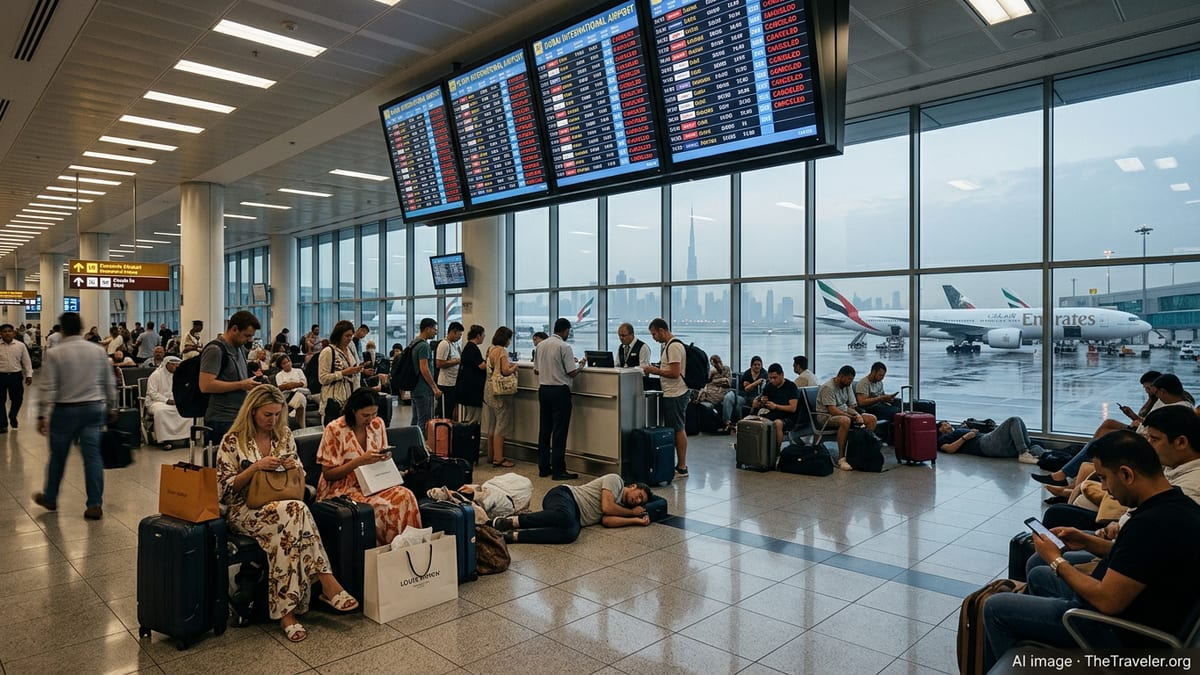
Following strikes on Iran at the end of February, regional airspace closures rippled across the Middle East. Published aviation data and news coverage show that flights over the United Arab Emirates dropped to near zero as the government announced a temporary and partial shutdown of its skies, effectively freezing movements through Dubai and Abu Dhabi at the height of the winter travel season.
The impact quickly spread far beyond the Gulf. Analysis by aviation firms cited in international reports indicates that the three dominant Gulf carriers, together normally moving around 90,000 connecting passengers a day through Dubai, Abu Dhabi and Doha, were forced to cancel or divert hundreds of flights. Travelers bound for beach resorts in Ras Al Khaimah or shopping weekends in Dubai found themselves stranded in Europe, South Asia or on the tarmac at remote diversion airports with little clarity on when routes would reopen.
Subsequent retaliatory attacks deepened the uncertainty. Publicly available tallies of canceled services suggest that tens of thousands of flights across the region have now been affected or rerouted since the conflict escalated, with Dubai’s status as a global super-hub turning into a chokepoint that can paralyze itineraries from Sydney to São Paulo in a matter of hours.
Luxury Towers Under Fire and a New Kind of Risk
Even travelers who made it into the UAE during recent weeks encountered a far more fragile sense of safety than the country’s billboards typically portray. News photography and local coverage documented damage to parts of Dubai’s high-end Creek Harbour district, after Iranian drones and missiles targeted locations across the emirate in what authorities later described as minor incidents.
Videos circulating on social media, and later analyzed by international outlets, showed a charred upper floor of a residential and hotel tower in the waterside neighborhood, a flagship luxury development advertised globally to tourists and investors. In separate reporting, analysts noted a drone strike that damaged a facade at the Dubai International Financial Centre Innovation Hub and debris near major urban highways.
While official statements have emphasized that the country remains stable and that air defenses intercepted most incoming projectiles, the psychological impact on visitors has been significant. Travelers expecting rooftop infinity pools and desert sunsets instead reported air-raid alerts on their phones, extended hours in hotel corridors away from windows, and frustration at the limited detail released by local media in the immediate aftermath of attacks.
Security experts point out that even localized damage in a place as dense and vertical as Dubai carries outsized risks. Many of the country’s most expensive hotels, beach clubs and shopping centers sit under prominent flight paths or beside strategic infrastructure, blurring the old assumption that tourist districts are safely removed from regional tensions.
Strict Laws, Viral Posts and Detention Fears
Even before the current conflict, the UAE’s legal framework around behavior, speech and online activity had quietly become one of the biggest risks for unwary holidaymakers. Travel advisories from foreign governments and legal briefings distributed by rights groups warn that what counts as ordinary conduct in many countries can carry serious penalties in Emirati courts.
Federal cybercrime and penal laws, updated in recent years, criminalize broad categories of speech, from defamation and “rumors” to criticism of state institutions and religion. Human rights organizations have documented cases in which residents and visitors were investigated or prosecuted for social media posts, including material shared from outside the country before arrival. Local media have also reported arrests of tourists following arguments filmed in shops or car rental offices, underscoring that raised voices can be interpreted as offenses.
The war has intensified that scrutiny. Recent coverage in regional and niche media describes warnings sent to content creators and influencers in Dubai, cautioning that posting footage or commentary about missile interceptions, airport disruptions or security deployments could trigger criminal complaints. Separate investigations by international newspapers note that at least 21 people have faced cybercrime charges since late February for sharing videos of explosions or debris from attacks.
The legal minefield extends beyond speech. The UAE maintains some of the world’s strictest drug and customs rules. Reports in Gulf newspapers detail cases of visitors detained on arrival in Dubai for carrying prescription medication later classified as psychotropic or controlled, even when the drugs were in original packaging. Official guidance typically limits visitors to small personal quantities, and many medicines that are routine elsewhere require prior approval before entry.
From Airport Floods to Canceled Honeymoons
Not all risks in the UAE are man-made. In April 2024, the country experienced its heaviest rainfall in decades, leading to severe flooding across Dubai, Sharjah and parts of the northern emirates. Meteorological summaries describe a rare low-pressure system that stalled over the Persian Gulf, dumping record amounts of rain on desert infrastructure designed around heat rather than storms.
Images from that week showed vehicles submerged on Sheikh Zayed Road and waterlogged runways at Dubai International Airport. Arrivals were temporarily diverted, departures delayed for hours, and stranded passengers slept on luggage trolleys as ground crews struggled to clear standing water. Travel advisories from several countries urged citizens to postpone nonessential trips as hotels faced power outages and access roads were cut.
The floods highlighted a vulnerability that climate researchers say is only likely to grow. As intense rainfall events become more frequent across the Gulf, ultra-modern airports, coastal resorts and artificial islands face heightened exposure to flash flooding and storm surges. For luxury travelers, that can translate into sudden cancellations, insurance disputes and unexpected extra nights at premium rates, with limited recourse once storms hit.
Combined with wartime airspace closures, these weather shocks have widened the gap between marketing images of frictionless travel and the on-the-ground reality of a hub city that can quickly become overwhelmed by events far beyond any individual tourist’s control.
When One Missed Flight Becomes a Global Logjam
The UAE’s success as an aviation crossroads is precisely what now magnifies the consequences when things go wrong. During the most recent waves of fighting in early March 2026, data compiled by air traffic trackers and cited by news agencies indicated that hundreds of thousands of travelers were stranded worldwide as Dubai, Abu Dhabi and Doha sharply curtailed operations or closed.
Because so many long-haul itineraries rely on a single Gulf connection, a canceled leg into Dubai can cascade through multiple continents. A family flying from Johannesburg to Paris, backpackers en route from Bangkok to Toronto and business travelers connecting from Sydney to New York may all be depending on the same overnight bank of flights through Terminal 3. When war, floods or technical incidents shut that chokepoint, hotel bookings, tours and even connecting cruises across the globe are thrown into doubt.
The 2026 evacuations from Gulf states added another layer of complexity. Public documents summarizing the crisis describe governments chartering special flights to remove citizens from the UAE and neighboring countries, while routine commercial services remained limited or suspended. That left tourists competing for scarce seats, trying to rebook via alternative hubs already stretched by diversions and crew shortages.
Travel analysts warn that these dynamics are unlikely to fade quickly. As long as regional tensions remain high and climate shocks intensify, the same features that made a UAE stopover so attractive are also what risk turning a dream luxury escape into a global travel nightmare, with legal, logistical and safety consequences that can follow passengers long after they finally make it home.