

More news on this day
The United Arab Emirates is marketing itself as a frictionless playground of private pools, designer shopping and record-breaking skylines, but a convergence of strict cybercrime laws, regional conflict and sheer passenger volume means a seemingly perfect luxury break can quickly tip into a costly global travel headache.
Get the latest news straight to your inbox!
A Boom Destination at the Center of Global Air Traffic
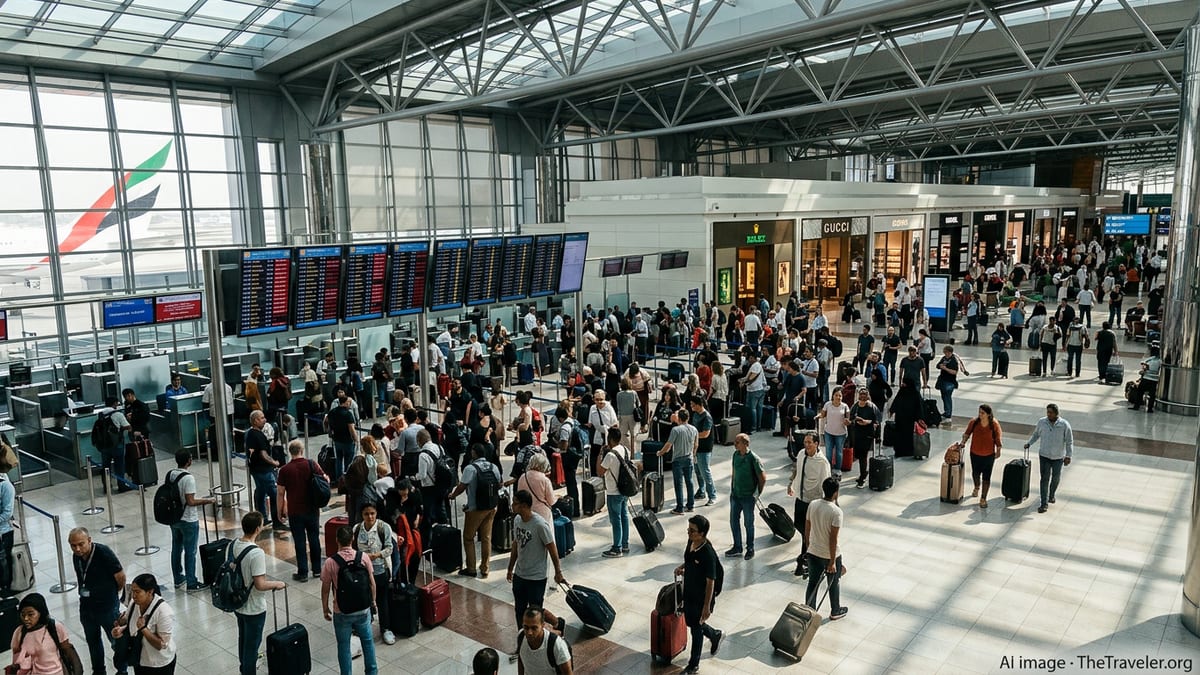
The UAE, and Dubai in particular, sits at the heart of modern long-haul travel. Dubai International Airport has consolidated its position as the world’s busiest hub for international passengers, handling around 95 million travelers in 2025 according to published airport figures. The emirate also recorded close to 20 million overnight visitors that year, reflecting the intense global demand for its luxury resorts, malls and branded experiences.
This scale of traffic has clear consequences for visitors. At peak periods, even business- and first-class travelers can face long queues at immigration, pressure on airport services and tight connection windows. Reports from aviation and tourism analysts note that Dubai is now operating close to its physical capacity, increasing the risk that any disruption, from regional weather to security incidents, can ripple rapidly through global networks.
For many tourists, the UAE is not only a final destination but also a critical transfer point between Europe, Asia, Africa and Australasia. When something goes wrong with a flight into or out of the Gulf, knock-on effects can strand passengers far from home, complicating everything from insurance claims to rebooked itineraries built around non-refundable luxury hotel and dining reservations.
At the same time, Dubai’s rapid growth as a luxury lifestyle hub, documented in recent tourism and real estate data, has pushed prices for accommodation and services sharply higher. That magnifies the financial stakes if travelers are delayed, re-routed or unexpectedly forced to extend their stay during a disruption.
War, Shipping Chokepoints and the Fragility of Gulf Travel
The UAE’s appeal as a sun-soaked stopover is inseparable from its geography, and that geography is currently under severe strain. Coverage from economic and maritime analysts in early March 2026 describes how conflict in the wider Middle East and the effective blocking of the Strait of Hormuz have brought much regional trade to a standstill, with cargo vessels diverting, ports slowing and insurance and freight costs surging.
While tourist flights into the UAE continue, aviation and logistics experts note that the Gulf acts as a major “sea-air” bridge linking Asia and Europe. When sea routes are disrupted, pressure often shifts onto air corridors and airports such as Dubai and Abu Dhabi. Airlines may adjust schedules, reroute aircraft or consolidate services, changes that can cascade into missed connections for passengers heading onward to Africa, South Asia, Europe or North America.
Travel industry commentary suggests that travelers with complex, multi-stop luxury itineraries built around the UAE hub are particularly exposed. If a connecting sector is altered or canceled at short notice due to regional tensions, travelers can suddenly find themselves paying premium last-minute rates to secure rooms, rebook excursions or purchase replacement tickets on other carriers.
Beyond the immediate region, analysts are warning that higher transport and insurance costs in the Gulf can feed into rising prices for everything from imported food to high-end retail goods. For visitors expecting a carefree luxury escape, that raises the possibility of encountering surcharges, revised excursion pricing or limited availability for marquee experiences booked months in advance.
Cybercrime, Social Media and Everyday Tourist Behavior
Alongside disruption risks, some of the sharpest shocks for visitors arise from the UAE’s strict legal environment around speech, public morality and online activity. Human rights reporting for 2024 and 2025 highlights the broad application of the country’s cybercrime and penal codes, including cases where residents and visitors faced prosecution for peaceful social media posts deemed critical or offensive.
Regional press coverage this month further underscores how wartime communication rules can intersect with tourism. In one Gulf country, reports describe more than 20 people charged with cybercrime after sharing images or videos of intercepted missiles and debris. Public statements by prosecutors in the region have warned that photographing or distributing images of military incidents or damage can be treated as a serious offense intended to prevent the spread of “misleading” or panic-inducing content.
Although enforcement practices vary, publicly available travel advisories stress that what feels like routine behavior to many tourists, such as filming from a hotel balcony, posting critical comments about local services or sharing images of security responses at airports, can trigger legal consequences. Visitors may not appreciate that social media activity conducted from a device on UAE territory, or in some cases content posted before arrival but accessible in the country, can fall within the scope of local laws.
The potential implications extend well beyond a deleted post. Reports from consular and legal experts point out that cybercrime cases can involve detention, confiscation of electronic devices and travel bans pending investigation. For a traveler expecting a seamless luxury spa break or business-class shopping trip, becoming entangled in a legal process can mean missed flights, canceled hotel stays and rapidly escalating costs for representation and accommodation.
Hidden Legal Tripwires: Lifestyle, Medication and Morality Rules
In contrast to its glossy marketing, the UAE retains conservative legislation on behavior, relationships and substances. Government travel advisories updated in early 2026 emphasize that penalties for drug-related offenses, including possession of small quantities, can be severe, with mandatory minimum sentences and possible life imprisonment. These laws can apply even when travelers are only transiting through an airport in the country.
Advisories also flag that some prescription medications common in Europe or North America may be controlled or require special approvals. Travelers who arrive with strong painkillers, psychiatric medication or certain stimulants without proper documentation, or in quantities viewed as excessive, risk confiscation, fines or legal difficulties. In an era of tight connections and baggage screening, misunderstandings over medical supplies can quickly derail onward travel plans.
Publicly available guidance further notes that behavior that may be unremarkable elsewhere can attract penalties. Displays of affection in public, disputes filmed on smartphones, comments judged to insult religion or culture, or clothing considered immodest in certain settings have all been cited in coverage of cases involving foreigners. Alcohol consumption, while widely available in hotels and licensed venues, is still governed by local rules that vary by emirate, and being intoxicated in public outside licensed areas can lead to arrest.
For luxury travelers, these rules intersect directly with the experiences they are often sold: beach clubs, high-end brunches, influencer-style content creation and late-night nightlife. Without careful attention to local law, a celebration can escalate into a legal issue, with possible passport confiscation or court dates. That in turn can disrupt not only the UAE stay but also subsequent flights, cruises or tours across the region and beyond.
What Cautious Tourists Can Do Before Booking a Luxury UAE Escape
Travel and legal experts consistently recommend that visitors treat the UAE more like a complex hub state than a simple resort destination. Before booking, travelers are advised to review the latest government travel advisories from their own country, paying particular attention to sections on local laws, cybercrime, photography, medications and behavior in public places.
Insurance specialists suggest checking fine print on coverage for legal assistance, missed connections and extended hotel stays caused by regional disruption or security incidents. Given the Gulf’s central role in global travel, a canceled or delayed flight through a UAE hub can strand travelers thousands of miles from home, increasing the value of policies that cover additional accommodation and rebooking costs.
Seasoned travelers also recommend limiting sensitive online activity while in the country, securing devices with strong passcodes, and avoiding posting or sharing material related to politics, religion, military activity or critical commentary about local institutions. Many advisories stress that tourists should refrain from photographing government buildings, military sites, critical infrastructure or any incident involving security forces.
For those still drawn to the UAE’s luxury appeal, the message from recent reporting and official guidance is less about avoiding the destination entirely and more about recalibrating expectations. A high-end break in Dubai or Abu Dhabi can still deliver the advertised mix of warm seas, gourmet dining and effortless connections, but only for travelers who recognize that the same factors making the UAE a global hub also expose them to unique legal and logistical risks if something goes wrong.