

For years, travelers trying to string together Ghana, Côte d’Ivoire, Senegal or Sierra Leone on one trip have faced a patchwork of schedules, long layovers in Europe and sky-high fares. Now, a new wave of West African airline investment, anchored by the launch of Air Sierra Leone and a bold long-haul push by Air Côte d’Ivoire, is quietly reshaping how multi-country itineraries across the region — and beyond — will work.
A New Flag Carrier Joins the Map
In January 2025, Sierra Leone formally joined the club of African nations with their own operating flag carrier when Air Sierra Leone launched its maiden commercial flight from Freetown to Lagos. The startup, founded in 2024, began modestly with a single aircraft and just a handful of routes, but its arrival fills one of the most conspicuous gaps on the West African aviation map. For years, Sierra Leonean travelers relied almost entirely on foreign airlines or circuitous routings via neighboring hubs, making multi-country trips around the region slow, fragmented and expensive.
The new carrier’s early strategy is focused squarely on regional connectivity. Lagos, one of Africa’s busiest aviation markets, was chosen as the first destination to plug Sierra Leone directly into a major West African and global hub. For visitors planning to stitch together Freetown, Nigeria’s megacity, and other regional capitals in a single journey, that direct link immediately removes one of the most frustrating bottlenecks: the need to double back through faraway hubs or endure overnight stops in third countries.
Although Air Sierra Leone’s current network is small, its significance lies in what it signals. The government-backed airline has made clear that it views the carrier as a tool of economic diplomacy: a way to court investors, grow tourism and reinsert Freetown into the mainstream of West African business and leisure travel. That policy ambition is already feeding into discussions about additional regional destinations that would allow travelers to combine Sierra Leone’s beaches and history with neighboring cultural and safari circuits in a single, coherent itinerary.
For international travelers, the very existence of a local flag carrier also changes the risk calculus. A branded national airline tends to bring more predictable schedules, integrated ticketing agreements and clearer passenger protections than scattered charter operators. Those factors, in turn, make it easier for global tour operators and online travel agencies to package multi-country trips that include Sierra Leone and its neighbors for the first time in years.
Abidjan’s Rise as the New West African Super-Connector
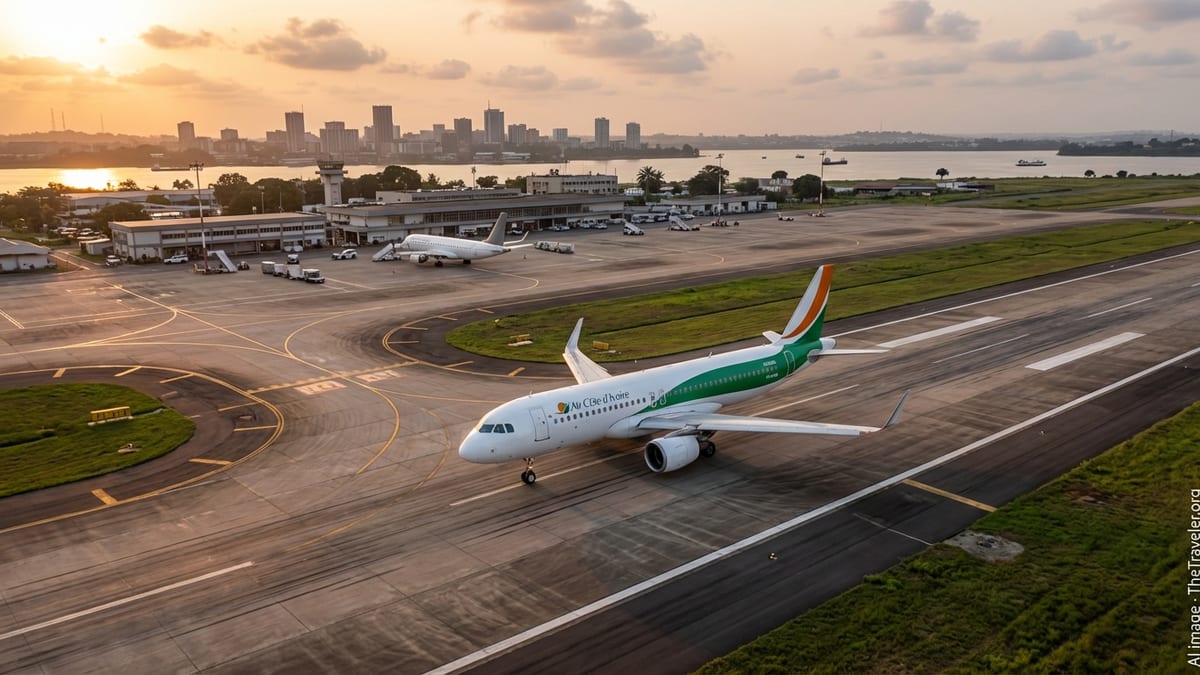
While Freetown adds its name to the route map, Abidjan is quietly positioning itself as the region’s next heavyweight hub. Air Côte d’Ivoire, already a dominant player in West African regional traffic, is in the middle of its most ambitious growth phase yet. With passenger numbers at Abidjan’s Félix Houphouët-Boigny International Airport rising sharply between 2020 and 2024, Côte d’Ivoire’s authorities have publicly embraced the goal of turning the city into a fully fledged regional aviation hub linking West Africa with Europe, the Middle East and North America.
To underpin that strategy, Air Côte d’Ivoire has committed significant investment to expand its fleet and network. The carrier is adding widebody Airbus A330-900neo aircraft, financed through regional and development lenders, specifically to open long-haul routes from Abidjan. Alongside a rapidly growing narrow-body fleet that already links Abidjan to more than two dozen African destinations, this long-haul expansion will give travelers a true hub-and-spoke alternative to the long-established giants in Addis Ababa, Casablanca or Dakar.
In practical terms, this means a traveler could soon fly from New York or Paris to Abidjan, connect onto a short regional hop to Freetown, Monrovia, Conakry or Bamako, and then loop back through Abidjan to continue on to another West African capital or back to Europe or North America. Instead of multiple tickets across competing airlines and unpredictable overnight stops, one booking through a single West African hub becomes increasingly realistic. That is a structural change in how multi-country trips can be planned.
Crucially for travelers, Abidjan’s hub model is being built with connecting passengers in mind. Flight timings are being designed to create workable banks of arrivals and departures, reducing the long, disjointed layovers that have plagued West African itineraries for decades. As more regional spokes come online, that will further compress total journey times for those trying to string two, three or even four countries into one trip.
Long-Haul Routes That Rewire Regional Itineraries
The most visible sign that West Africa’s air network is entering a new era is the rollout of non-stop intercontinental routes anchored in the region itself. Air Côte d’Ivoire has already begun operating a near-daily service between Abidjan and Paris Charles de Gaulle, using its new A330-900neo aircraft with a four-class cabin. That route is explicitly positioned as a bridge not just between Côte d’Ivoire and France, but between Paris and a wider constellation of West African cities connected via Abidjan.
Further expansion plans include additional European and Middle Eastern destinations, and even prospective services to North American gateways. For multi-country visitors, each new long-haul link acts like a new on-ramp into the region. A traveler flying from Europe could enter Africa via Abidjan instead of more traditional hubs, then branch out to destinations as varied as Accra, Freetown, Cotonou or Niamey, all within a few hours’ flying time. The ability to circle back through the same hub at the end of the trip simplifies ticketing, baggage handling and schedule changes.
These changes coincide with a broader wave of new Africa routes from global carriers. U.S. airlines have announced fresh services into West Africa, including new links from Washington to Dakar and expanded frequencies to Accra. European operators are adding capacity into coastal hubs, while Gulf carriers continue to connect West African cities to their global networks. As these routes layer on top of Air Côte d’Ivoire’s growing long-haul footprint, the region begins to function less like a cul-de-sac and more like a crossroads.
For travelers, this rewiring of long-haul access has a clear ripple effect on multi-country planning. It reduces the need to backtrack through a single European gateway, cuts down on overnight hotel stays purely for connection purposes and allows for more creative routing. It becomes entirely plausible, for example, to start a trip in Freetown, continue on to Abidjan and Accra, and fly home from Dakar or Lagos, all through relatively straightforward connections.
From Patchwork to Network: What It Means for Your Itinerary
Until recently, planning a multi-country trip across West Africa involved stitching together a messy patchwork of regional airlines, charter operators and distant hubs. Flights between neighboring capitals often required detours through Europe or North Africa, with little coordination between carriers and limited options for through-ticketing. The result was high fares, long total journey times and considerable uncertainty around delays or cancellations.
The arrival of Air Sierra Leone and the expansion of Air Côte d’Ivoire’s hub in Abidjan mark the beginning of a shift from patchwork to network. With more destinations linked by a small number of strong regional carriers, itineraries can be built around predictable connection banks, integrated booking systems and clearer interline agreements. For the traveler, this translates into fewer tickets, fewer separate check-ins and a drastically lower risk of being stranded in transit if one flight goes off schedule.
Another subtle but important change is the move toward pricing that reflects a genuine network. As airlines gain the ability to sell multi-sector journeys across their own or partner networks, they have more incentive to offer competitive through-fares for itineraries that cover two or three countries. Instead of paying a premium for each leg, travelers are more likely to see bundled fares that reward them for staying within a carrier’s network. This could make ambitious routes like Freetown–Abidjan–Accra–Dakar financially realistic for a broader range of visitors.
The network effect also improves flexibility. If a traveler needs to adjust their route mid-trip, having several daily departures from a single hub to multiple regional destinations offers options that simply did not exist when only one or two foreign carriers served each city. In practice, that flexibility may be the difference between salvaging a complex itinerary when plans change and having to abandon part of it entirely.
New Opportunities for Themed and Niche Travel
As connectivity improves, the biggest winners may be travelers seeking themed or niche itineraries that link several countries. West Africa is rich with shared histories and complementary landscapes, but until now it has been logistically difficult to follow those threads across borders. With Freetown, Abidjan, Accra, Dakar and Lagos drawing closer together in flight time and scheduling, multi-country journeys based on culture, history or nature become easier to execute.
History-focused travelers, for example, can more realistically plan a route that connects key Atlantic heritage sites in Sierra Leone, Ghana and Senegal in a single trip, without having to loop repeatedly through Europe. Wildlife and birding enthusiasts can combine coastal reserves, mangroves and inland parks across Côte d’Ivoire, Guinea and Sierra Leone, tying them together through short regional hops instead of long-haul detours. Surf and beach travelers eyeing the Atlantic coast now have more reason to keep moving rather than staying fixed in a single resort country.
Improved air links also open the door for specialist tour operators to design products that were previously too fragile to market. Group itineraries that depend on smooth, timed connections become more viable when operated through a coherent network with backup options. That, in turn, can bring more diverse visitor segments into the region, from students and researchers to culinary travelers and diaspora groups revisiting several ancestral or family-linked countries in one journey.
Crucially, the new airlines are not just selling seats but a story about regional integration. Air Sierra Leone and Air Côte d’Ivoire both position themselves as tools for knitting together markets, cultures and communities across borders. For travelers, that narrative translates into more thoughtfully coordinated schedules, cross-border marketing campaigns and partnership deals with hotels and ground operators that span multiple countries, making it easier to book complex trips in one go.
Harnessing Technology to Smooth the Journey
Behind the scenes, much of this new connectivity rests on technology as much as on aircraft. Regional airlines are signing partnerships with global distribution systems that place their inventory in front of tens of thousands of travel agents worldwide, making it far easier to discover and book multi-leg itineraries that include smaller West African cities. For years, one of the biggest obstacles to planning multi-country trips in the region was simply not being able to see all the options in a single search. That barrier is beginning to fall.
As carriers like Air Côte d’Ivoire and Air Sierra Leone deepen their technology partnerships, they can offer real-time inventory, through-check of baggage on interline routes and more robust customer-service tools when disruptions occur. For frequent travelers and corporate clients, this means that complex itineraries can be managed, modified or rebooked with a degree of transparency that was rare even five years ago in the region.
Digital innovation is also reshaping the airport experience. Abidjan’s hub is rolling out upgraded terminal infrastructure, improved security screening flows and better signage designed with connecting passengers in mind. As more travelers use Abidjan as a transfer point rather than just an origin or destination, these small improvements can dramatically reduce missed connections and travel fatigue on multi-country trips.
Mobile-first booking and check-in tools are spreading rapidly through the regional market, aligning West African carriers with the expectations of international travelers accustomed to managing their journeys from their phones. When combined with expanding route maps and more reliable schedules, these digital upgrades help close the perception gap between West African airlines and more established global brands, encouraging travelers to trust the region’s carriers with their most complex itineraries.
What Travelers Should Watch in the Next Two Years
For anyone planning a multi-country journey through West Africa in the near future, the next two years will be a period of rapid change. Air Sierra Leone is expected to add more regional destinations beyond its initial trio, while Air Côte d’Ivoire moves ahead with further long-haul launches as additional A330-900neo aircraft join the fleet. Each new city and each additional frequency alters the calculus of what is possible in a single trip.
Travelers should pay particular attention to evolving connection patterns through Abidjan and Lagos, where regional and international airlines increasingly intersect. New evening or early-morning departures can unlock same-day connections that were previously impossible, shaving entire days off multi-country itineraries. As airline schedules settle into more stable seasonal patterns, tour operators will be better placed to lock in departure dates that reliably link three or more countries.
Regulatory changes will also play a quiet but important role. Progress on implementing African open-skies initiatives, improvements in visa-on-arrival policies and more consistent airport security standards can all either reinforce or undermine the benefits of new air links. For now, the trend line in West Africa is moving in favor of greater regional mobility, but travelers still need to monitor entry requirements and transit rules carefully when designing multi-country routes.
Above all, the emergence of a new flag carrier in Sierra Leone and the ambitious hub strategy in Côte d’Ivoire represent a turning point. Where West Africa once forced travelers to choose a single country or accept a tangle of flights and layovers, it is rapidly evolving into a region that invites longer, deeper, more connected journeys. For those willing to look beyond the traditional tourism giants, the next wave of airline growth could make that long-imagined multi-country West African itinerary not just feasible, but unexpectedly smooth.