

More news on this day
A bizarre collision of loyalty-points fraud, identity confusion and aviation security procedures recently turned an ordinary transatlantic Air Canada flight into a NORAD event, after an Aeroplan account theft resulted in two passengers traveling under the same identity on different aircraft.
Get the latest news straight to your inbox!
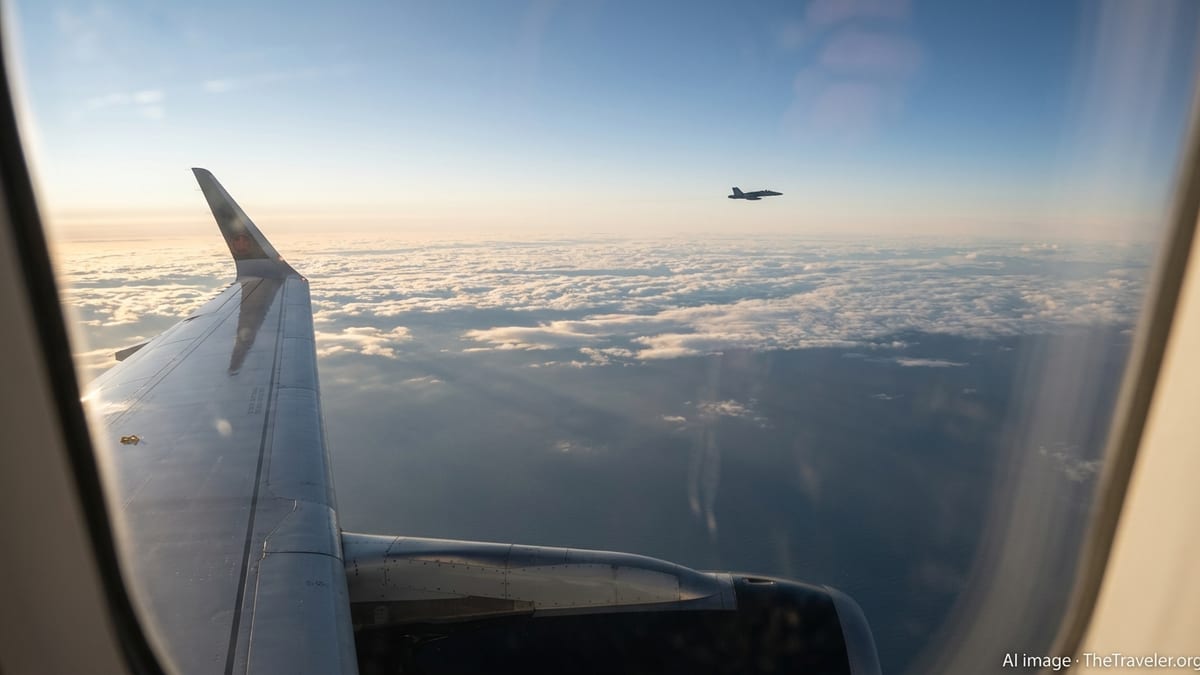
Aeroplan Fraud Case Escalates Into Mid‑Air Security Incident
Recent coverage in Canadian and aviation forums describes how an apparent Aeroplan account takeover led to a highly unusual security scare on a flight bound for Montreal. Reports indicate that a fraudster allegedly accessed another traveler’s Aeroplan loyalty account and used stored details to book a ticket in that person’s name. The genuine account holder was also flying that day on a separate itinerary, creating an improbable but serious identity clash in airline systems.
Publicly available information suggests that the mismatch surfaced only after one aircraft was already airborne over the Atlantic and the second passenger attempted to board a different flight. Airline systems reportedly flagged that the same identity appeared on two separate manifests at roughly the same time, a scenario treated as a potential security risk rather than a routine loyalty-program issue.
According to coverage shared in Aeroplan and Canadian aviation communities, the airliner already en route to Montreal was treated as the higher-risk element, because someone onboard might have been traveling under a stolen identity. That concern, once relayed through established channels, ultimately brought the incident to the attention of North American air defense.
How an Identity Clash Reaches NORAD
NORAD, the bi-national North American Aerospace Defense Command run by Canada and the United States, routinely monitors civil air traffic over the continent and the approaches to North American airspace. When a commercial flight is suspected of being compromised or potentially hijacked, defense procedures allow for the deployment of fighter aircraft to visually verify the situation and remain ready to intervene if required.
In this case, Canadian media reports and online discussions indicate that two CF‑18 fighter jets were dispatched to meet the transatlantic flight as it approached Canadian-controlled airspace over the North Atlantic. The jets reportedly conducted a standard visual inspection, flying alongside the airliner and staying in proximity as it continued toward its destination.
A fighter escort of this kind does not typically signal that a hijacking is underway. Instead, it reflects a precautionary posture when aviation and security officials cannot fully rule out a threat. The identity anomaly linked to the Aeroplan account theft appears to have been enough to trigger heightened caution, even though passengers on board continued their flight without incident.
Why Loyalty Programs Now Matter to Aviation Security
The episode underscores how tightly loyalty programs such as Aeroplan are now woven into airline operations and security. Frequent flyer profiles often store personal data, passport information and travel patterns. When that information is abused, the problem no longer stays confined to missing miles or unauthorized redemptions; it can migrate into the realm of identity fraud and border security.
Recent discussions in traveler communities describe Aeroplan as increasingly integrated with real-time check-in and manifest systems, including near-instant posting of flights and tighter cross-checks between reservations and loyalty profiles. These enhancements were designed to improve the customer experience and reduce accounting delays, but they also mean anomalies can surface quickly and be interpreted as possible red flags.
In the reported case, the overlapping itineraries tied to one identity appear to have presented just such a red flag. From the perspective of security screening, two people purporting to be the same traveler on different aircraft can resemble a classic identity-substitution scenario. Even if the trigger point is loyalty-points misuse, the downstream response follows established aviation security logic rather than consumer fraud protocols.
The North Atlantic: Highly Managed, Not Radarlit
To many passengers, the idea of a fighter escort over the Atlantic might sound like something ripped from a film script. In reality, the North Atlantic corridor is among the most structured airspaces in the world, with aircraft following pre-planned tracks and communicating position reports via long-range radio and data links rather than continuous radar coverage.
Pilot and air traffic control explanations shared in aviation forums note that much of the mid-ocean area still lacks conventional radar. Instead, flights follow organized track systems, check in with oceanic control centers and report their positions at set intervals. This system works efficiently but also means that when an aircraft is tagged as a potential security concern, visual confirmation from high-performance jets can be a practical way to assess the situation as it nears land.
Against this backdrop, the decision to send fighters to meet an otherwise normal Air Canada service reflects how seriously anomalies are treated once flagged in the network. Even if the event ultimately proves benign, the cost of a scrambled pair of jets is weighed against the risk of allowing an unverified aircraft to approach densely populated regions without additional scrutiny.
What Travelers Can Learn About Protecting Their Miles
For Aeroplan members and other frequent flyers, the episode is a stark reminder that loyalty accounts have evolved into full-fledged digital identities. Travel forums have long warned that stolen points can be cashed out through gift cards or premium tickets, but this case illustrates a newer risk: that account misuse can create identity conflicts with implications far beyond a lost balance.
Specialists in loyalty security generally recommend treating mileage accounts with the same care as online banking, including strong, unique passwords, multi-factor authentication where available and regular monitoring for unfamiliar redemptions. Travelers are also encouraged to verify contact information and document numbers on file, since outdated details can complicate the resolution of any identity-related issues that do arise.
The Montreal-bound incident appears to have ended safely, with the flight continuing under escort and landing without disruption. Yet it has already become a reference point in discussions about how digital travel identities intersect with national defense. For many passengers, the idea that a stolen pot of Aeroplan miles could help trigger a NORAD response over the Atlantic will likely prompt a second look at just how secure their own points really are.