

More news on this day
The once time consuming ritual of planning a vacation is being rapidly reengineered in 2026 as artificial intelligence moves from novelty chatbot to always on travel concierge, quietly stitching together flights, hotels, activities and real time updates in the background.
Get the latest news straight to your inbox!
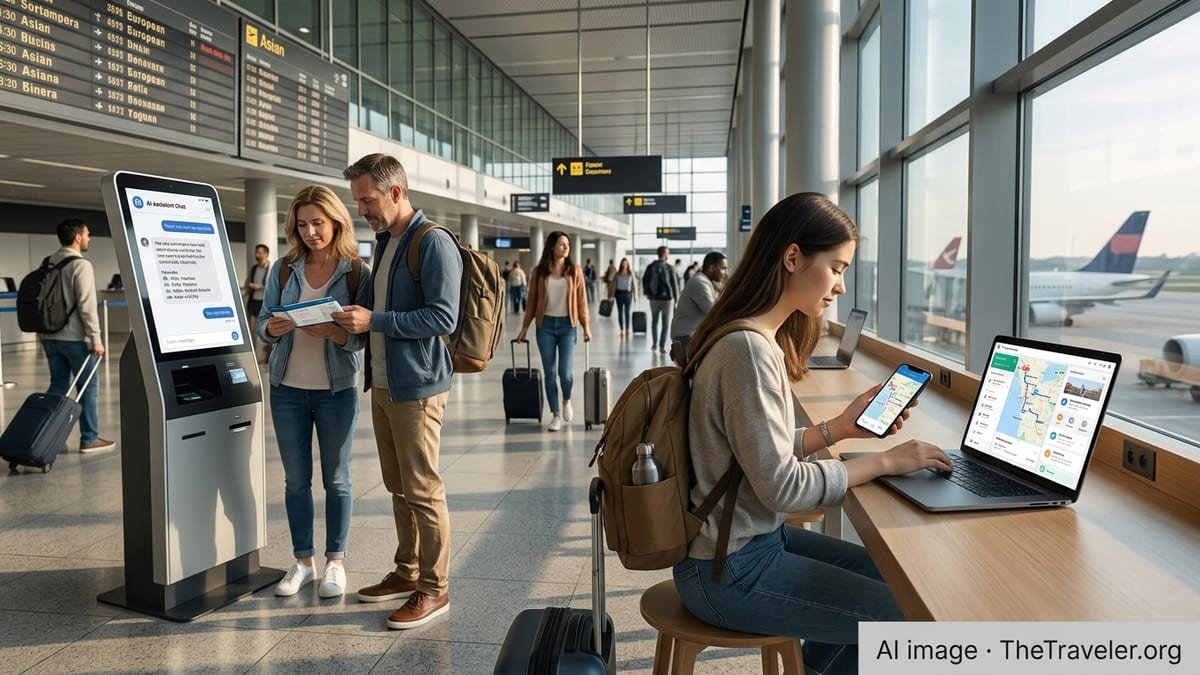
AI Assistants Move From Inspiration to End-to-End Trip Design
Trip planning tools built on large language models have evolved significantly in the last two years, shifting from simple destination suggestion to full itinerary design. Platforms such as Booking.com, Expedia Group and newer AI native services are now using a mix of conversational interfaces, historic pricing data and real time inventory to assemble day by day plans that once required hours of manual comparison.
Booking.com’s AI Trip Planner, for example, has expanded from its initial beta to broader markets, using the company’s existing recommendation engines alongside generative AI to refine routes, accommodations and activities as travelers chat in natural language. Publicly available coverage indicates that the tool is increasingly integrated across the app experience, helping users move from inspiration to booking without switching channels.
Expedia Group has taken a similar direction with its “Romie” AI travel buddy and related assistants, described in company updates as designed to reduce confusion during planning, booking management and customer service. Recent product releases emphasize hyper personalisation, allowing users to ask for options that match their loyalty status, preferred airlines or flexible stopover rules, while the system quietly checks fares, availability and typical disruption patterns.
Alongside the major online travel agencies, a wave of independent AI planners has emerged that focus solely on itinerary generation and then redirect bookings to partner sites. These services typically blend natural language prompts with map based interfaces, allowing users to edit routes, drag activities to new days and set hard constraints on budget or accessibility, while the AI rebalances the schedule in seconds.
Google’s Gemini Ecosystem Turns the Browser and Maps Into Travel Hubs
On the infrastructure side, Google is pushing its Gemini AI deeper into everyday tools that travelers already use. In 2025 the company began rolling out vacation planning features across Search, Maps and Gemini, aimed at helping users compare neighborhoods, surface “hidden gem” attractions and turn open ended prompts like “a four day food focused trip to Lisbon in October” into structured outlines.
More recently, Gemini has been woven into Chrome on desktop and mobile, with coverage describing how the assistant can read across multiple tabs to summarize fare rules, cancellation policies and hotel inclusions. For travelers, that means less time switching between comparison sites and more guided answers to questions such as how a basic economy ticket differs across airlines on a given route.
In navigation, Gemini features are being tested inside Google Maps in regions where the model is live. Early reports indicate that users can ask conversational questions about areas they are viewing on the map and receive route suggestions that combine transit, walking and rideshare, along with context such as typical crowding at landmarks or seasonal opening hours. This shift turns Maps from a static direction tool into a flexible trip companion that can replan when weather or local conditions change.
Google’s broader AI roadmap also points toward more proactive travel support. Gemini’s “Scheduled Actions,” rolling out through its app to paying subscribers, allow users to set recurring tasks such as weekly price monitoring on saved routes or automatic digests of upcoming trips drawn from email confirmations. Industry analysts view this as a step toward fully agentic systems that can watch for fare drops or disruption alerts and then prompt travelers with suggested changes.
Agentic Travel AI Promises Proactive, Not Just Reactive, Planning
Behind the consumer interfaces, research groups and industry labs are experimenting with multi agent planning systems that treat a trip as a complex optimization problem rather than a static list of bookings. Recent academic work on frameworks such as DeepTravel, Vaiage and HiMAP Travel describes travel agents that can break down a user’s request into subgoals, call multiple external tools for prices and schedules, and then iteratively refine an itinerary based on constraints.
These systems are designed to manage long horizon decisions, such as multi country rail journeys or multi city business trips with tight timing. Instead of producing a single draft plan, they simulate alternatives, check feasibility against timetables and visa rules, and adjust for user stated priorities such as minimizing carbon emissions or avoiding red eye flights. Although still largely in research and early pilot stages, they highlight the direction commercial tools are likely to take as models improve.
Technology companies are also testing more autonomous booking features on top of these planning engines. Public announcements around Google’s AI Mode in Search and forthcoming “Gemini Agent” experiments refer to automated workflows that could, in time, handle multi step tasks such as filling passenger details, selecting seats according to preferences and applying voucher credits, subject to user approval at key points.
Industry observers note that these developments move travel AI from a reactive answer engine, waiting for questions, to a proactive assistant that monitors context and acts when thresholds are met. In practice, that could mean flagging that a preferred hotel chain has opened a new property along a frequently traveled route or suggesting a weekend trip when fares from a home airport fall below a historic average.
From Stress Relief to New Friction: Privacy, Bias and Reliability Concerns
While marketing around “Travel 2.0” emphasizes stress free planning, the rapid spread of AI assistants also introduces new tensions. Because modern travel agents rely heavily on personal data to fine tune recommendations, including past trips stored in email, location history and even shared photos, consumer advocates are calling for clearer controls and default limits on how long travel behavior is retained.
Reports on Gemini’s deep integration with the wider Google ecosystem, for example, highlight both the convenience of context aware suggestions and the discomfort some users feel when an assistant appears to “remember” journeys taken years ago. Similar questions are being raised about independent AI travel apps that combine passport details, payment methods and real time location tracking to deliver tailored alerts.
Bias and transparency are additional points of scrutiny. Because AI systems learn from historic booking data and user behavior, they may reinforce existing patterns, such as over promoting already crowded destinations or steering budget travelers toward neighborhoods with limited local benefit. Several tourism boards and city marketing organizations are beginning to study how AI recommendation engines shape visitor flows and are experimenting with providing open data feeds so assistants can nudge travelers toward under visited areas and off peak times.
Reliability remains a practical concern, especially when models are asked to infer visa requirements, local regulations or live transportation disruptions. Public guidance from travel industry groups now commonly stresses that AI itineraries should be treated as a starting point, with critical details cross checked against official airline, rail and government channels before departure.
How Travelers Are Actually Using AI in 2026
Despite the experimental nature of many new tools, usage patterns in 2026 suggest that travelers are already folding AI into everyday decisions. Online forums and consumer tech coverage point to common use cases such as crafting packing lists tuned to weather forecasts, optimizing weekend getaways around limited vacation days, and translating complex fare rules into plain language.
AI is also being used to compress the research phase that once spanned dozens of tabs and reviews. Travelers can now paste in screenshots of social media posts, conference agendas or family group messages and ask an assistant to extract dates, locations and constraints, then return a short list of realistic itinerary options. Services like Trip Planner AI and messaging based tools such as GuideGeek illustrate this shift toward conversational, mobile first planning.
On the ground, real time translation, image based search and map integrated chatbots are changing how visitors move through unfamiliar cities. Travelers increasingly rely on assistants to locate late night pharmacies, navigate public transit ticketing systems and adapt restaurant plans when a venue is unexpectedly closed. As AI features spread into airline apps, hotel chains and local tourism sites, the line between planning and in trip support continues to blur.
For now, many travelers are taking a hybrid approach: letting AI draft and monitor, while retaining final control over bookings and key decisions. With major platforms and research groups investing heavily in agentic travel systems, 2026 is shaping up as a pivotal year in which vacations are not just searched and booked online, but co designed with AI in the background.