

More news on this day
As travelers turn to artificial intelligence tools and social media feeds instead of traditional search engines to plan their next getaway, hotel brands are rapidly rethinking how they market, distribute and even design their guest experience.
Get the latest news straight to your inbox!
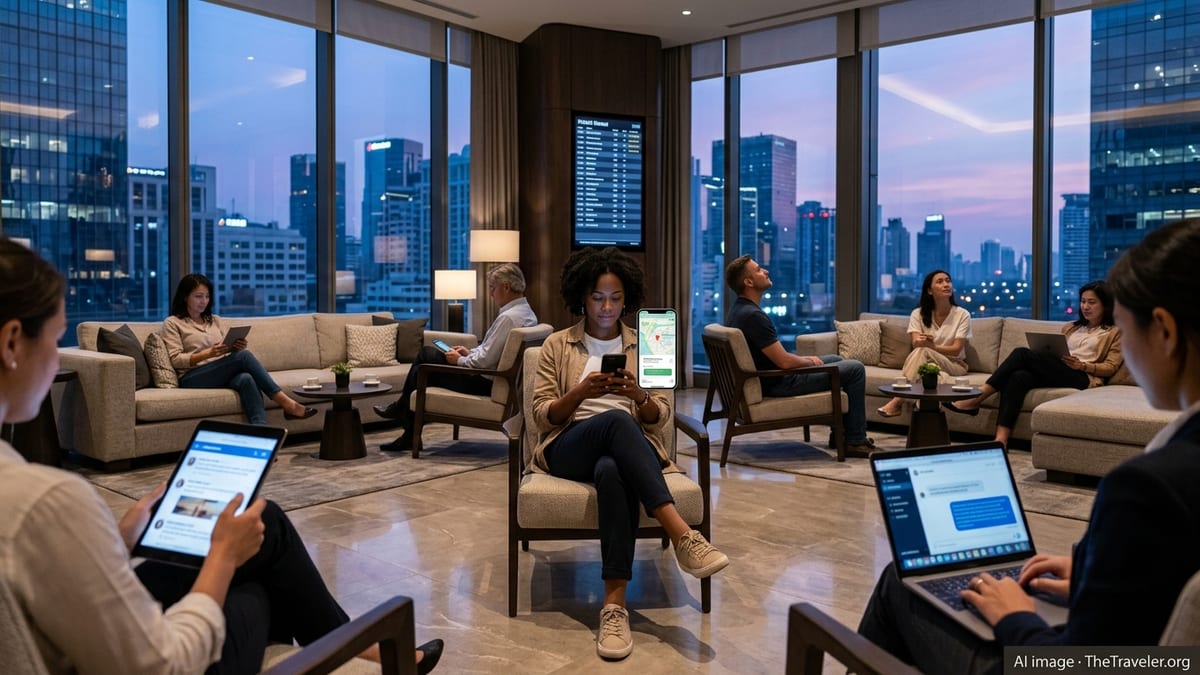
AI Assistants Move to the Center of Trip Planning
Research from travel platforms and industry surveys indicates that a growing share of travelers are experimenting with large language models and generative AI tools to research destinations, compare options and sketch out itineraries. Chat-based assistants are shifting the starting point of travel planning away from conventional search and toward conversational interfaces that can combine destination ideas, price data and user preferences in a single exchange.
Online travel agencies and metasearch platforms have moved quickly to embed these capabilities. Expedia Group has rolled out AI agents and dynamic travel guides across brands such as Expedia and Hotels.com, using generative models to surface real-time pricing, guest reviews and contextual imagery inside its apps. Publicly available information shows that the company is also integrating its services into external AI environments so that assistants can call up hotel options and other trip components directly within a chat.
Other major intermediaries are following a similar path. According to published coverage, Booking.com, Tripadvisor and newer AI-native tools such as GuideGeek and Tryp.com are all testing or deploying assistants that can propose personalized routes, filter accommodations and refine suggestions based on budget, season and travel style. Early academic research on specialized travel-planning agents suggests that travelers value the ability to iterate on plans in natural language and to offload the complexity of multi-stop itineraries to automated systems.
For hotels, this means that visibility increasingly depends on being discoverable inside AI-powered journeys rather than only in traditional web search or static listing pages. Brand presence within these ecosystems has become a strategic priority, especially as some reports indicate that traffic arriving from generative AI environments can convert to bookings at higher rates than other channels.
Social Media Feeds Shape Demand and Discovery
While AI assistants handle the functional side of planning, social platforms remain a powerful engine of inspiration and demand. Trend reports from major travel brands note that travelers are using TikTok and Instagram not just to dream about destinations but to search for specific hotels, neighborhoods and experiences, often using short-form video as a substitute for guidebooks or long reviews.
Hospitality marketers are responding by concentrating budgets on fewer, more targeted social campaigns that can translate directly into bookings. Coverage in travel trade media describes how some hotel and hostel groups have shifted from broad influencer giveaways to structured creator programs that encourage guests and partners to produce authentic content. Campaigns built around TikTok sounds or visual trends have generated measurable spikes in reservations, including from demographics such as teachers organizing school trips who might not have been a focus of earlier influencer efforts.
At the same time, social platforms are becoming more tightly integrated with commerce and recommendation engines. Expedia Group, for example, has introduced features that can interpret Instagram Reels and connect them to relevant travel recommendations, illustrating how user-generated content can feed directly into AI-enhanced planning flows. Hotels featured in popular clips can see sudden surges in interest, making social discoverability and content format choices a critical part of distribution strategy.
This convergence of social discovery and AI curation is reshaping how travelers form shortlists. Instead of comparing dozens of hotel websites, many users now move from a trending video or creator post to an AI or OTA assistant that translates that inspiration into specific dates, neighborhoods and price points.
How Hotels Are Rewiring Technology and Distribution
To keep pace, hotel groups are investing in both front-end and back-end technology. Larger brands and chains are experimenting with AI-powered chatbots on their own sites and apps that can answer detailed questions about amenities, room types and policies by drawing on existing descriptions and guest reviews. Industry reports describe tools that can tell prospective guests whether a pool provides towels or whether Wi-Fi coverage is reliable in all rooms, reducing friction at the research stage.
Many hotels are also working with technology partners to ensure their inventory, rates and content can be easily consumed by AI systems. This includes upgrading property management and channel management software so that room types, availability and rich media are structured in ways that external assistants can parse. Travel technology firms highlight that hotels increasingly seek direct connections and standardized data formats that make it easier for online agencies, metasearch engines and conversational agents to surface accurate information.
On the distribution side, some chains are leaning more deeply into partnerships with global platforms that are embedding their own AI agents. Publicly available earnings commentary from major intermediaries indicates that hotel partners benefit when these agents can cross-sell rooms, activities and transport in a single flow, even if the booking ultimately takes place on the intermediary’s site. Independent hotels, meanwhile, are weighing whether to prioritize direct channels or to rely more heavily on third parties that have the scale to integrate quickly into new AI interfaces.
This technological rewiring is not only about sales. Hotels are testing AI tools behind the scenes to forecast demand, optimize pricing and personalize communications, aiming to match the speed at which travelers can now compare options through automated planning tools.
Marketing Shifts: From Keywords to Conversations
As planning moves into chats and social feeds, hotel marketing strategies are evolving away from a heavy focus on traditional search keywords and display ads. Industry analysts note a shift toward content that is designed to be machine-readable and context-rich, so that AI models can accurately summarize what a property offers and when it is the right fit for a given traveler profile.
This includes rewriting descriptions to emphasize experience-based elements, such as proximity to specific neighborhoods or types of activities, and ensuring that imagery clearly reflects room layouts, common spaces and surroundings. Because generative tools often pull from public descriptions and reviews, hotels are paying closer attention to reputation management and encouraging detailed guest feedback that can feed into AI summarization.
At the same time, marketing teams are experimenting with prompts and scenarios that reflect how real travelers ask questions of chat-based tools, such as family-friendly weekend suggestions or remote-work stays with strong connectivity. By aligning content with these natural-language queries, hotels hope to increase the likelihood that AI assistants will include their properties in recommended shortlists.
Social media strategies are being refined in parallel. Rather than chasing every platform, some hotel brands are concentrating on a smaller number of channels where they can combine creator partnerships, paid amplification and shoppable formats. Performance is increasingly measured not only in likes or follows, but in how often content inspires searches or appears as an example in AI-generated itineraries.
Balancing Automation With Trust and Human Service
The rapid spread of AI planning tools has also raised questions about reliability, bias and trust. Published coverage and consumer discussions point to ongoing concerns about outdated information, hallucinated attractions or mismatched recommendations that may not reflect current local conditions. Many travelers still cross-check AI-generated itineraries against review platforms and official tourism information before committing to a booking.
Hotels are responding by emphasizing transparency and human backup. Some brands position AI chat tools as a first layer of assistance, backed by staff who can step in to confirm details, handle special requests or resolve issues. Others highlight opportunities to contact the property directly after using an AI assistant, reinforcing that behind the algorithms are teams that understand local nuances and individual needs.
Training staff to interpret AI-driven inquiries is becoming another part of the operational response. Front-desk and reservations teams increasingly field questions that originate in conversations with third-party assistants, requiring them to understand what guests have already been told and to correct any inaccuracies without undermining confidence.
For now, industry observers suggest that the most effective hotel strategies treat AI and social media as amplifiers rather than replacements for traditional hospitality. Generative tools may shape how travelers discover and compare options, but ultimately guests still expect responsive service, accurate information and experiences that match the promises surfaced by their feeds and assistants.