

More news on this day
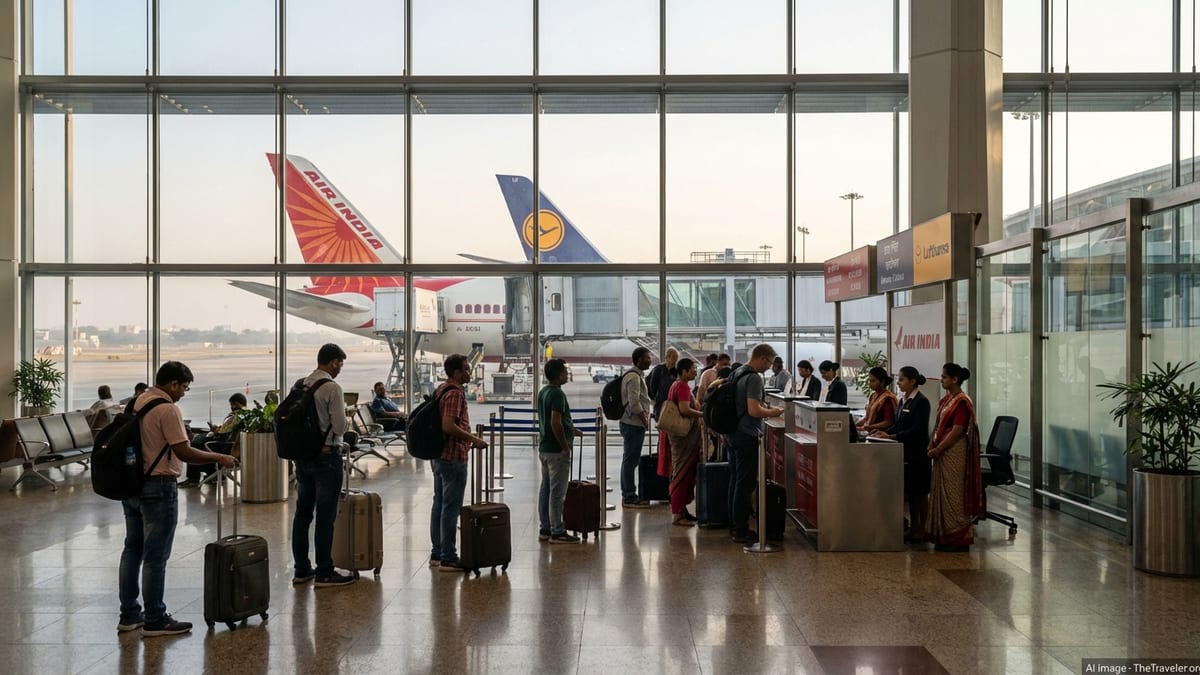
A sweeping new partnership framework between Air India and the Lufthansa Group is poised to reshape how travelers move between India and Europe, promising tighter schedule coordination, more destinations on a single ticket, and a smoother journey across two of aviation’s fastest-growing markets.
A Landmark Step Beyond Traditional Codeshares
The memorandum of understanding signed on February 17, 2026 between Air India and the Lufthansa Group goes noticeably further than the pair’s previous collaborations. Rather than simply placing codes on each other’s flights, the new framework lays the groundwork for a joint business agreement on India Europe routes, aligning planning, sales and customer experience across multiple airlines in both groups.
The deal brings together Air India and its low-cost arm Air India Express with Lufthansa Group carriers including Lufthansa, Swiss International Air Lines, Austrian Airlines, Brussels Airlines and ITA Airways. For travelers, that means the potential for a much more integrated network, where itineraries feel like a single airline journey even when several carriers are involved.
Crucially, this partnership builds on the significant expansion of codeshares that the two groups completed in early 2025. That earlier move took their combined network to nearly 100 routes across 12 Indian and 26 European cities, dramatically increasing choice for passengers connecting between the subcontinent and Europe. The new MoU effectively upgrades that commercial relationship into a platform for deeper cooperation.
Subject to regulatory and competition approvals, the partners intend to pursue coordinated flight schedules, joint sales initiatives and closer cooperation on frequent flyer benefits. For travelers used to piecing together multi-airline itineraries with mismatched timings and policies, the prospect of a single, cohesive framework is a substantial shift.
More Destinations, More Frequencies and Fewer Painful Layovers
At the heart of the partnership is a promise of more options between India and Europe, and a reduction in the friction points that often make long-haul connecting journeys tiring. Under the expanded codeshare model already in place, Air India customers can access a wide range of European cities beyond major hubs such as Frankfurt, Vienna and Zurich, while Lufthansa Group customers tap into Air India’s domestic and regional network across India and parts of the Asia Pacific.
Additional coordination under the new MoU could translate into tighter connections, more evenly spaced departures throughout the day and more consistent capacity on high-demand city pairs. Travelers heading from secondary Indian cities such as Ahmedabad, Kochi or Bhubaneswar to European business centers like Munich, Brussels or Milan may see better-timed options that reduce overnight layovers and long waits at hub airports.
The agreement also helps consolidate capacity on key trunk routes linking Delhi and Mumbai with German and Swiss hubs. Already, passengers flying between Delhi and Frankfurt, for example, benefit from three daily frequencies operated by Air India and Lufthansa combined, sold under both carriers’ flight numbers. A joint business framework makes it easier to deploy aircraft and schedules where demand is strongest, especially during the busy summer and winter peak seasons.
For Indian travelers in smaller markets, this can be a game-changer. Rather than backtracking through non-optimal hubs or juggling multiple tickets, passengers will increasingly be able to choose itineraries that keep total travel time, transfer distance and connection risk to a minimum, while still earning and redeeming miles consistently across the journey.
Strengthening India Europe Trade and Tourism Flows
The move comes at a moment when economic and people-to-people ties between India and Europe are deepening rapidly. India and the European Union together account for nearly a quarter of global gross domestic product, with the EU now India’s largest trading partner in goods and merchandise. Bilateral trade in goods alone surpassed 120 billion euros in 2024, underscoring the intensity of business travel, logistics links and corporate ties between the two regions.
Air connectivity is a key enabler of that relationship. As Indian companies expand their footprint in European markets, and European multinationals grow their presence in Indian cities beyond Delhi and Mumbai, demand is rising for reliable, frequent and time-efficient air services. The Air India Lufthansa framework aims to support that need by ensuring better coverage of both primary and secondary cities on either side.
Tourism flows are another powerful driver. Europe remains a top long-haul destination for Indian leisure travelers, from first-time visitors heading to Paris or Rome to repeat travelers exploring Alpine trails, Baltic capitals or Central Europe. At the same time, India’s cultural and natural attractions are drawing more European visitors, many of whom are now looking beyond the Golden Triangle to regional destinations such as Goa, Kerala and the Himalayan states.
By integrating networks across six airlines and aligning schedules around key hubs in Germany, Austria, Switzerland, Belgium and Italy, the new partnership is designed to make it easier and more affordable to reach these destinations. For tourism boards and travel companies on both continents, the framework opens opportunities for more multi-country itineraries, seasonal charters and joint marketing campaigns centered on seamless air access.
Why This Partnership Matters in a Competitive Global Market
The Air India Lufthansa tie-up also needs to be viewed against the backdrop of an intensely competitive global aviation landscape, particularly on Europe Asia corridors. Gulf carriers and Turkish airlines have leveraged their centrally located hubs to capture a large share of traffic between India and Europe, often offering attractive fares and convenient one-stop itineraries via the Middle East or Istanbul.
For European and Indian full-service carriers, deeper cooperation is one of the few viable ways to compete with those super-connectors while keeping operations sustainable under tightening environmental and cost pressures. European airlines, including Lufthansa Group, face rising costs related to sustainable aviation fuel mandates and carbon compliance that do not apply in the same way to all their global rivals.
By pooling capacity, coordinating schedules and jointly managing pricing strategies on India Europe routes, Air India and Lufthansa Group can use their combined scale more effectively. That may help them keep fares competitive, invest in product upgrades and sustain direct non-stop services on key city pairs that might otherwise struggle against one-stop alternatives via other hubs.
For travelers, the practical impact is significant. A strong, coordinated India Europe network built around Star Alliance carriers offers an alternative pathway that combines non-stop segments, consistent service standards and global frequent flyer reciprocity. The more attractive that proposition becomes, the more pressure it puts on rivals to match schedules, service and connectivity, ultimately benefiting passengers across the market.
Deeper Integration of Frequent Flyer and Customer Experience
Alongside network and schedule coordination, the new framework explicitly emphasises closer collaboration on frequent flyer programs, digital infrastructure and the broader customer journey. Both Air India and Lufthansa Group are members of Star Alliance, which already enables mileage accrual and redemption across their networks, as well as shared benefits such as priority check in and extra baggage for elite members.
The next stage is to smooth out the friction that can still arise when itineraries are split across multiple carriers. That includes aligning policies on rebooking during disruptions, improving through-checking of baggage across more complex routings, and enhancing digital handshakes so that customers can see the full status of their journey in a single app or website, even when flying different airlines.
For frequent travelers, particularly corporate road warriors shuttling repeatedly between Indian and European cities, these refinements can matter as much as schedule options. A missed connection or a last-minute aircraft swap is less painful when partner airlines work from a shared playbook on re-accommodation and support. The proposed joint business structure creates the governance needed to design and enforce that kind of coordinated response.
Onboard, passengers can also expect a gradual convergence in product quality as Air India accelerates cabin refurbishments and fleet renewal under its broader transformation program, and as Lufthansa Group rolls out new long-haul cabins. While each brand will retain its distinct identity, the shared objective is to ensure that a journey stitched together across two or three carriers does not feel sharply uneven in comfort or amenities.
A Key Plank in Air India’s Global Ambitions
For Air India, the strategic importance of this partnership extends beyond the immediate India Europe corridor. Since returning to Tata group ownership in 2022, the airline has embarked on an ambitious five-year overhaul, combining a record order for 470 new aircraft with a rapid expansion of codeshare and interline agreements worldwide.
In the last two years, Air India has strengthened partnerships with carriers ranging from Singapore Airlines in Southeast Asia to airBaltic in Northern Europe, while pursuing more than ten additional codeshare deals across North America, Europe and Africa. The goal is to position the airline as a global connector that can take passengers from any major Indian city to almost any point worldwide using a mix of its own metal and partner flights.
The Lufthansa Group alliance sits at the center of that network-first strategy. Germany, Austria, Switzerland, Belgium and Italy serve as crucial gateways between India and both continental Europe and the Americas. By building a robust, integrated partnership across these markets, Air India gains a powerful platform through which it can feed traffic onwards to North America, the Baltic region, Central Europe and beyond, whether via Lufthansa, Swiss, Austrian or other group carriers.
In return, the German group gains stronger access to India’s fast-growing aviation market, which is projected to become one of the world’s largest by passenger numbers over the coming decade. Tapping that growth efficiently requires a strong local partner with deep domestic reach and an expanding long-haul footprint, a role that the revitalised Air India is increasingly positioning itself to play.
What Travelers Should Watch for Next
While the memorandum signed in February 2026 outlines an ambitious vision, many of the most impactful changes for travelers will roll out gradually as regulators review the proposal and as the partners align systems and schedules. In the near term, passengers can expect incremental additions to codeshare routes, particularly to secondary European cities, and more coordinated timings on some of the busiest India Europe city pairs.
Over time, if full joint business approval is granted in key jurisdictions, the carriers may move toward deeper revenue-sharing on specific routes, more harmonised fare structures and tighter alignment of corporate sales programs. For multinational companies with offices in India and Europe, that could translate into more flexible corporate deals spanning multiple airlines under a single commercial framework.
Travelers will also want to watch how digital integration evolves. Enhancements such as unified disruption notifications, integrated seat selection across partner segments and more transparent upgrade options could make multi-carrier bookings feel as straightforward as a single-airline ticket. That is particularly relevant as Air India continues to modernise its reservations, loyalty and customer service platforms.
Ultimately, the test of whether this partnership is truly a game-changer will be felt not in boardroom announcements but at airport gates and check-in desks. If, in a few years, passengers flying between mid-sized Indian cities and secondary European destinations find that their journeys are faster, smoother and better supported end to end, the Air India Lufthansa alliance will have delivered on its promise to transform the India Europe travel experience.