

More news on this day
Airbnb’s rapid expansion beyond big-city apartments into cabins, farm stays, lake houses and village homes is reshaping travel patterns, channeling millions of guests and billions in spending into rural regions that once sat far from the tourism map.
Get the latest news straight to your inbox!
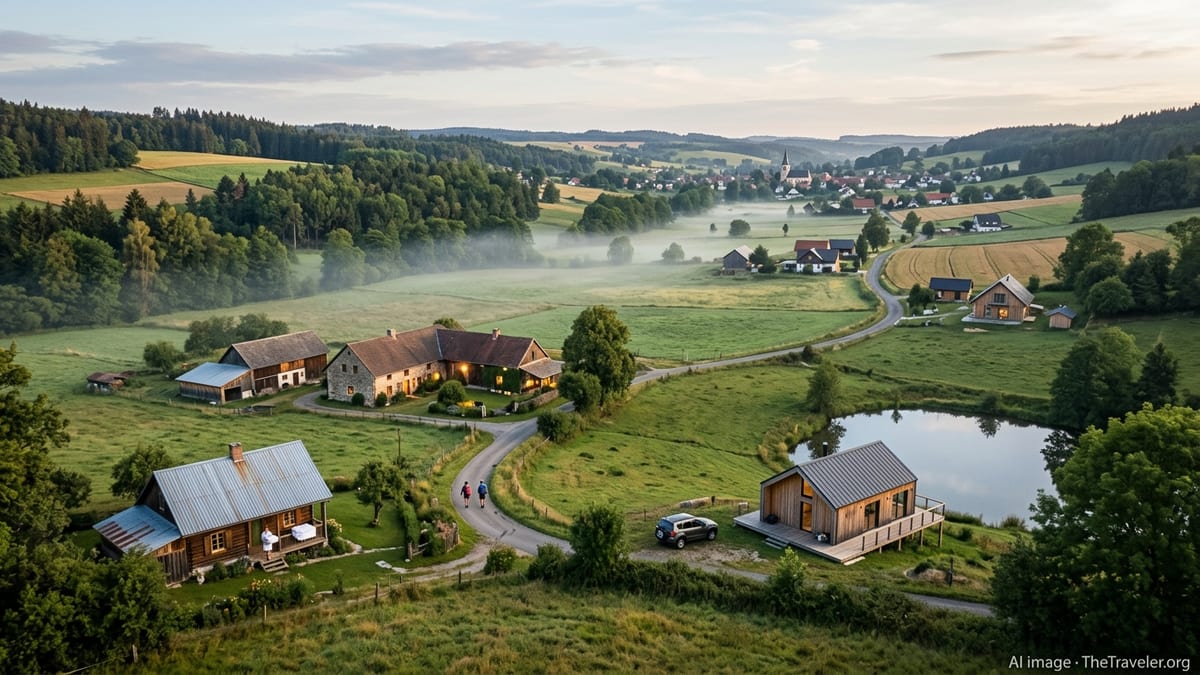
From Pandemic Shock to Permanent Rural Momentum
The shift from urban to rural stays on Airbnb began as a crisis response but has since evolved into a durable feature of the platform’s business model. During the height of the Covid 19 pandemic, travelers looked for space, privacy and drivable destinations, steering demand away from dense city centers and toward countryside locations. Company data for the United States showed nights booked in rural areas more than doubling between 2019 and 2021, while urban bookings lagged under restrictions and changing comfort levels.
Subsequent analyses of the short term rental market indicate that this pivot did not fully reverse once international flights and city breaks resumed. Research on U.S. Airbnb reservations through the end of 2024 finds that longer stays have become more common, supported by widespread remote and hybrid work. That pattern has favored destinations where travelers can combine nature, quiet and adequate connectivity, conditions more readily found in small towns and rural counties than in traditional tourist cores.
Strategic reviews of Airbnb’s post pandemic business model describe a deliberate emphasis on dispersing tourism and reducing dependence on a handful of major metropolitan markets. The company has presented this as both a resilience measure and a way to open new destinations, positioning rural regions, national park gateways and lesser known coastal areas as core parts of its global network rather than fringe niches.
Economic Lifeline for Small Town Hosts
The rural pivot has carried significant economic weight for individual hosts and communities. Publicly available data for 2021 showed that rural U.S. hosts on Airbnb earned more than 3.5 billion dollars in a single year, with farm stay operators alone typically bringing in five figure annual sums. In states with large hinterlands, such as Texas, hosts in rural counties collectively generated well over 100 million dollars in income as travel demand spilled outside the usual urban hubs.
For many owners, these earnings represent a diversification of local economies that have long relied on agriculture, resource extraction or seasonal employment. Short term rentals have turned spare rooms, converted barns and lakeside cabins into income producing assets, enabling some households to invest in property improvements or stay in family homes that might otherwise have been sold.
Analysts note that this influx of visitors brings secondary benefits through spending at local restaurants, shops, outfitters and cultural attractions. Economic impact reports prepared with independent consultancies for European markets, for example, highlight that Airbnb guests support local jobs even in municipalities with limited hotel infrastructure. Comparable patterns are emerging across North America and other regions where rural listings are now prominent in the platform’s search results.
Categories, Farm Stays and the Rise of Nature Led Travel
Product changes inside the Airbnb platform have reinforced the rural turn. The introduction of curated “categories” grouped by themes such as cabins, lakeside homes, national parks and countryside escapes has made it easier for travelers to discover remote or lesser known places. Industry research indicates that a growing share of stays occurs in areas with little or no hotel supply, suggesting that short term rentals are opening entirely new destinations rather than simply redirecting demand from existing resorts.
One striking trend is the expansion of farm stays and other working rural properties. Surveys that compile Airbnb data report that farm stay listings have surged by more than 70 percent in recent years, placing them among the platform’s fastest growing categories behind cabins and tiny homes. The appeal blends rustic experiences with modern comforts, allowing guests to wake up near grazing livestock or vineyards while still enjoying reliable Wi Fi and contemporary amenities.
Broader vacation rental reports for 2024 and 2025 describe rural and suburban segments as leading national growth, while some large cities face regulatory limits and softer occupancy. Investors and hosts are turning their attention to secondary regions where land is cheaper, local rules can be clearer and guests are actively seeking nature oriented retreats. As a result, many properties once viewed as marginal for tourism are now marketed as ideal bases for hiking, stargazing or family gatherings far from crowded downtowns.
Short Drives, Long Stays and New Travel Behaviors
Changing traveler behavior has underpinned Airbnb’s shift away from a city centered model. Multiple studies of U.S. travel habits show rising preference for trips within a few hours’ drive of home, particularly for families watching budgets or seeking to avoid airport stress. Airbnb data around major holidays points to strong growth in short distance travel, with more guests choosing regional road trips and using rural listings as hubs for outdoor activities.
At the same time, the length of stay on the platform has subtly stretched. Academic work using millions of Airbnb bookings through 2024 finds that the average reservation is now longer than before the pandemic, with a thicker tail of trips lasting several weeks or more. These extended stays are well suited to small town and countryside locations where space is plentiful and nightly rates tend to be lower than in big city cores.
Digital nomads and flexible workers are a visible part of this pattern. Industry surveys indicate that many remote professionals now plan most of their travel domestically, favoring places that balance decent connectivity with lower living costs. Rural regions within reach of metropolitan areas are leveraging this by improving broadband, co working options and visitor services, in some cases using Airbnb demand as justification for infrastructure upgrades.
Opportunities and Growing Pains in Rural Communities
The dispersal of Airbnb bookings into rural areas is not without friction. Community groups and local officials in several countries have raised concerns about housing availability, seasonal crowding and the strain on small town services when visitor numbers spike. In some markets, worries about second homes and investor led acquisitions have prompted debates over how many short term rentals a community can absorb without distorting long term housing.
Policy responses increasingly distinguish between dense urban cores and smaller destinations, but the regulatory conversation is moving into rural regions as well. While some jurisdictions have welcomed Airbnb as a tool for revitalizing tourism and supporting small businesses, others are exploring registration systems, night caps or zoning rules that seek to balance visitor income with community cohesion.
Industry data suggests that rural regions that proactively plan for tourism growth, invest in infrastructure and coordinate with regional marketing bodies are better positioned to capture the benefits of Airbnb’s evolving footprint. For now, the directional shift is clear. As travelers prioritize space, authenticity and affordability, Airbnb is steadily reorienting a portion of global tourism away from marquee city skylines and toward the quieter landscapes, small towns and working countryside that were once overlooked.