

More news on this day
From the first lie-flat business seats at the turn of the millennium to mood-lit cabins with streaming entertainment and Wi-Fi, the inside of a typical airliner in 2026 bears little resemblance to its year‑2000 counterpart.
Get the latest news straight to your inbox!
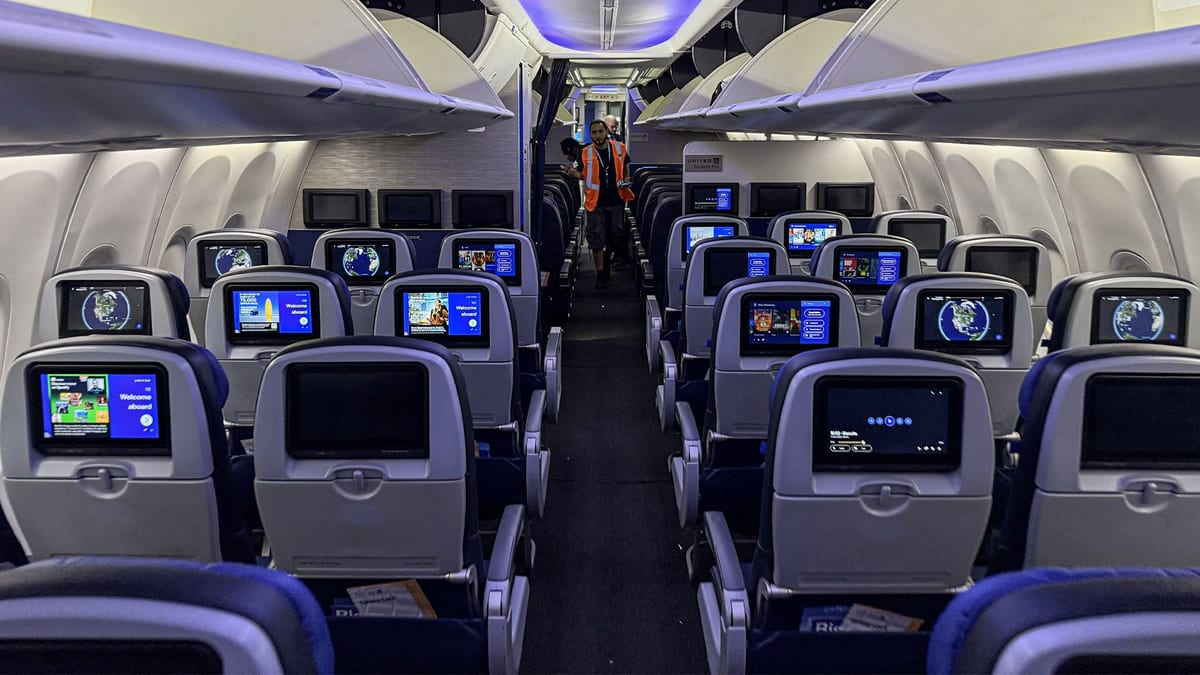
Image by Simple Flying
From Recliners to Lie-Flat Beds in Premium Cabins
At the start of the 2000s, even many long-haul business class cabins still relied on large reclining seats that did not fully convert into beds. Over the next decade, carriers began a rapid shift to lie-flat designs, first with angled beds and then fully horizontal surfaces that redefined overnight flying. Publicly available information shows that major Asian and European airlines upgraded long-haul fleets during the 2000s, while North American carriers followed with modernization programs through the early and mid-2010s.
By the late 2010s, the benchmark for international business class had moved again, from simple lie-flat seats to suites with direct aisle access for every passenger. Airlines introduced staggered and reverse herringbone layouts to fit more beds without returning to older, cramped configurations. Some carriers added sliding doors and taller privacy shells, effectively turning sections of the cabin into mini-rooms in the sky.
First class has evolved in a different direction. Instead of appearing on a wide range of routes, the most exclusive cabins have become more concentrated on flagship long-haul flights, often as enclosed suites with separate seats and beds. At the same time, several full-service airlines have announced plans to shrink or remove first class altogether in favor of larger, higher-yield business cabins and new premium economy sections.
The net result since 2000 is a clear stratification. The very front of the aircraft has grown more private and residential, with showers, sliding doors and expansive flat beds, while business class has become the primary long-haul sleeping cabin for corporate and affluent leisure travelers.
The Rise of Premium Economy and “Middle” Products
Two decades ago, passengers typically chose between economy, business and, on some routes, first class. Since then, airlines have aggressively filled the gap between coach and the premium cabins. Premium economy, initially adopted by a handful of carriers in the early 2000s, is now common on long-haul aircraft, offering wider seats, additional legroom and upgraded service without the cost of business class.
Publicly available fleet data indicates that legacy airlines in Europe and Asia were early champions of premium economy, retrofitting existing widebodies and specifying the product on new twin-aisle jets. Since the mid-2010s, US carriers and emerging long-haul operators have expanded similar offerings, branding them with distinct names but broadly converging around a separate cabin, enhanced catering and larger screens.
More recently, airlines have begun experimenting with intermediate products inside economy itself. Extra-legroom rows, once a niche feature, are now a revenue staple on many fleets, typically occupying the front of coach or exit rows. Newer concepts, such as convertible “couch” rows that turn three standard seats into a flat sleeping surface, point to a future where the traditional boundary between economy and premium cabins continues to blur.
These new layers have changed the economics of cabin design. Where a 2000-era aircraft might have offered two or three simple classes, a 2026 cabin can contain four or five distinct seating products, each priced and marketed to a different segment of demand.
Economy Class: Tighter Space, Smarter Design
While premium cabins have gained space and amenities, the story in standard economy is more complex. Published analyses of seating trends indicate that typical seat pitch in long-haul economy has fallen from around the mid-30-inch range in the early 2000s to roughly 30 to 31 inches on many aircraft today, as airlines seek to add capacity and lower unit costs.
To offset the squeeze, manufacturers have focused on slimmer, lighter seats with redesigned foams, sculpted backrests and thinner armrests. The goal is to preserve or regain a sense of knee and legroom even as rows move closer together. Newer models of narrowbody and widebody aircraft often arrive from the factory with these high-density layouts, especially on low-cost and leisure-focused carriers.
Cabin width has been another pressure point. On popular widebody types, airlines that previously installed eight or nine seats per row have in many cases added an extra seat, reducing individual seat width. At the same time, some newer aircraft families emphasize slightly wider fuselages and larger windows, which cabin designers use to argue that the overall perception of space has improved despite tighter measurements on paper.
Comfort advocates and passenger groups have kept seat size in the spotlight, prompting regulators in some jurisdictions to study minimum standards. For now, however, the dominant trend since 2000 has been toward more passengers in the same footprint, mitigated by ergonomic refinements rather than wholesale increases in space.
Entertainment, Connectivity and Lighting Go Digital
Perhaps the most visible shift since 2000 is in what passengers see and do during a flight. In the early years of the century, overhead televisions and shared movie screens were still common, and seatback systems, where available, were limited in selection and resolution. Over time, individual on-demand screens proliferated, first in long-haul cabins and then on shorter routes.
By the 2010s, streaming content libraries, high-definition displays and touchscreen interfaces had become standard on many new aircraft. Reports indicate that by the mid-2020s, a large majority of mainline jets offered either built-in seatback entertainment or wireless systems that stream to passengers’ own devices. Some airlines now provide 4K screens in premium cabins along with Bluetooth audio pairing and personalized profiles.
Connectivity has followed a similar trajectory. Early satellite systems were slow and expensive, often limited to email and basic browsing. Successive upgrades have brought faster Ku-band and Ka-band links, allowing video streaming, messaging and real-time work in the air. A number of airlines now market free or flat-rate Wi-Fi as a standard feature, particularly on long-haul and premium-heavy routes, positioning constant connectivity as a core part of the cabin experience.
Cabin lighting has also been transformed. Traditional fluorescent fixtures have largely given way to programmable LED systems that can mimic sunrise, sunset or night skies, with airlines claiming benefits for jet lag and passenger comfort. Combined with quieter composite airframes and improved humidity and pressurization on new-generation aircraft, these systems are designed to make long flights feel less exhausting than they did at the turn of the century.
Sustainability, Materials and the Next Wave of Change
As climate and efficiency pressures have intensified, cabin design has become an integral part of airlines’ environmental strategies. Lighter seats, galleys and monuments reduce overall aircraft weight, contributing directly to lower fuel burn compared with early-2000s interiors. New fabrics, recycled materials and modular components allow cabins to be refreshed more frequently while generating less waste than traditional refit programs.
Manufacturers and airlines are also rethinking how often cabins are replaced and how easily layouts can be reconfigured. Seating tracks, monument positions and even lavatory modules are increasingly designed for rapid swaps, enabling carriers to shift between higher-density and more premium-focused layouts as market demand changes. This flexibility contrasts with earlier decades, when cabins were often locked into a single configuration for most of an aircraft’s life.
Looking ahead, concepts emerging from industry events and design studios suggest further integration of biometrics, personalized lighting and adaptive seating that automatically adjusts to body shape. Narrowbody jets capable of long-haul missions are being delivered with lie-flat business seats and sophisticated mood lighting, signaling that features once limited to large widebodies are now spreading across fleets.
Twenty-five years of change have left airline cabins almost unrecognizable compared with 2000. Space is often tighter in the back, but technology, new intermediate cabins and dramatic improvements at the front of the plane have created a more segmented and highly engineered environment, in which nearly every square inch is designed to balance comfort, revenue and efficiency.