

More news on this day
As conflict reshapes key air corridors over Europe, the Middle East and parts of Africa, airlines are quietly redrawing the world map in the sky, using sophisticated risk assessments, real-time data and strict safety protocols to keep international routes open while steering clear of emerging danger zones.
Get the latest news straight to your inbox!
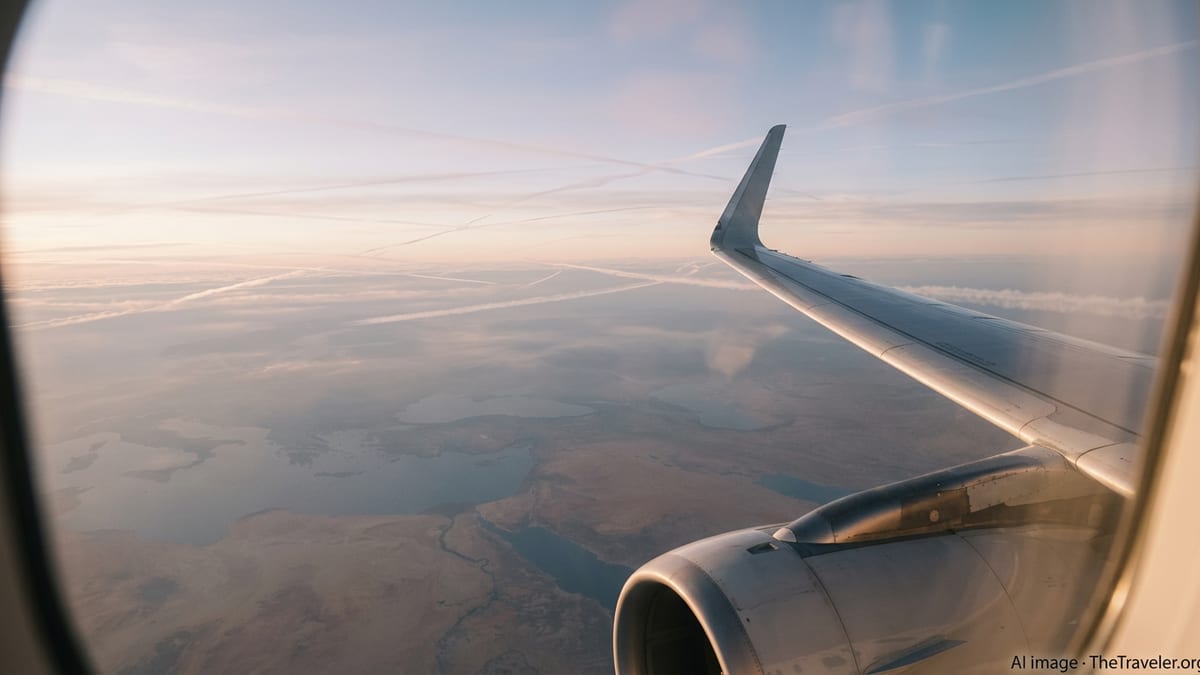
Why conflict zones matter for your flight path
Commercial aviation has long operated on the principle that safety comes before schedule, and recent tensions in the Middle East and neighboring regions have reinforced that hierarchy. When missiles, military activity or political crises flare, the invisible highways that aircraft follow across Europe, the Middle East and Africa can shift within hours, altering everything from block times to connection windows.
Recent closures of large portions of Iranian, Iraqi, Israeli and Gulf-region airspace in late February 2026 prompted airlines to divert or cancel hundreds of flights, underscoring how quickly air routes can change when military activity escalates. Publicly available flight-tracking data showed wide detours around Western Asia, with some services routed over Egypt, Saudi Arabia or the eastern Mediterranean instead of their usual direct tracks.
This is not an isolated episode. Since Russia’s 2022 invasion of Ukraine, followed by repeated flare-ups across the Middle East and instability in parts of North and East Africa, conflict-related rerouting has become a defining operational challenge for long-haul carriers. Travelers increasingly find that even when their origin and destination seem far from front lines, the safest available path between them may need to bend significantly.
These changes carry a cost. Industry analyses indicate that diverting a single long-haul flight around high-risk airspace can add one to two hours of flying time, increase fuel burn and crew costs, and constrain aircraft availability for later rotations. Yet airlines consistently accept those penalties because operating over or near active conflict zones can present unacceptably high risks from missiles, anti-aircraft systems or misidentification.
How regulators and airlines decide where not to fly
Behind each rerouted flight lies a structured risk assessment process that combines international standards with airline-level analysis. The International Civil Aviation Organization has issued detailed guidance on operations over or near conflict zones, including a Risk Assessment Manual that sets out how regulators and operators should weigh threats from surface-to-air missiles, ballistic missiles and other weapons, along with the robustness of local air traffic management and military coordination.
In Europe, the European Union Aviation Safety Agency maintains a Conflict Zone Alerting System. Through non-binding Conflict Zone Information Bulletins and Information Notes, it advises carriers to avoid specific portions of airspace when the probability and potential consequences of an incident rise beyond an acceptable threshold. Recent advisories have highlighted risks in the Middle East, including airspace over Iran, Iraq, Israel, Syria, Lebanon and areas of the southern Red Sea, encouraging operators to consider alternative routings even when airspace is not formally closed.
National regulators add another layer. Germany, for instance, has repeatedly renewed guidance instructing German-licensed airlines to avoid Iranian and Iraqi skies following major missile exchanges, reinforcing a policy that remained in place even during periods of relative calm. Similar notices have been issued at various points by authorities in the United Kingdom, France and other European states, and by aviation agencies in the Gulf that monitor risks for regional carriers.
Individual airlines then apply their own internal thresholds, often more conservative than regulatory minimums. Many European and North American carriers now treat certain high-risk flight information regions, including parts of Iran and Yemen, as off-limits except in compelling circumstances. Others introduce internal altitude restrictions, avoiding lower levels where the threat from certain weapons systems would be more acute. The result is a layered system in which international manuals, regional bulletins, national notices and company policies all interact to shape where aircraft actually fly.
Technology and real-time data that keep aircraft away from danger
The decision to reroute a flight is no longer based solely on static maps or scheduled airways. Airlines now rely heavily on live intelligence, including real-time tracking of military activity, assessments from specialist risk databases, and continuous monitoring of Notices to Air Missions that flag changing hazards. Operations centers compare these feeds against their scheduled routes hour by hour, sometimes adjusting tracks while an aircraft is already in the air.
Independent resources such as conflict-zone and risk databases aggregate open information on airspace warnings, missile ranges and recent incidents, giving operators a consolidated view of current hazards along potential routings. These tools are particularly valuable for flights over parts of North and East Africa, where conflicts in countries such as Sudan and the Sahel overlap with long-haul corridors linking Europe to southern Africa and the Indian Ocean.
On board, modern navigation systems allow flight crews and dispatchers to select from multiple pre-planned routings that steer clear of restricted or high-risk areas by wide margins. Satellite communications, aircraft tracking and updated flight management software enable quick in-flight course adjustments if new information emerges, such as a sudden airspace closure or nearby missile activity. Crews are briefed on alternate airports and contingency routings before departure, especially on routes that skirt conflict areas.
Airlines also make use of data from past crises. Analyses of previous incidents, including aircraft shot down over conflict zones, have driven refinements in how risk is modeled and how quickly routes are shifted when tensions rise. Case studies from Europe, the Middle East and Africa inform training, contingency planning and scenario exercises, with the aim of preventing any recurrence of earlier tragedies.
Europe, Middle East and Africa: how routes are being reshaped
The most visible impacts for travelers are in journey times and network design. Flights between Europe and Asia, once routed efficiently across Russia and parts of the Middle East, now frequently arc south over Turkey, the Caucasus, the eastern Mediterranean or North Africa. Following airspace restrictions linked to the war in Ukraine, some carriers already faced longer paths; new limits over Iran, Iraq or the Gulf compound that challenge, sometimes adding hundreds of extra nautical miles.
Across the Middle East itself, carriers have adopted a patchwork of suspensions, diversions and schedule changes. Public reports show that leading European groups and Gulf airlines have periodically halted services to cities such as Tehran, Baghdad, Basra and Tel Aviv during peak escalations, while keeping their global hubs connected through alternative corridors to the west and south. Others have retained limited service but re-routed flights along coastal or offshore tracks that keep them far from active conflict areas.
In Africa, where many intercontinental flights cross countries with varying security conditions, airlines have refined their route planning to avoid specific regions while preserving connectivity to major cities. Detours around parts of Sudan, Libya or the Sahel, layered on top of Middle East constraints, can lengthen popular links such as Johannesburg to London or Nairobi to European capitals. Some carriers have responded by increasing block times and adjusting connection waves at hubs to maintain reliable transfers.
The cumulative effect is that the global network now leans more heavily on certain safe corridors. Airways across the central Mediterranean, Egypt, Saudi Arabia and the Arabian Sea bear more of the traffic linking Europe, the Gulf and South Asia. This concentration in turn requires close coordination among air navigation service providers to manage congestion and preserve safety margins as more flights crowd into fewer usable tracks.
What travelers can expect: safety, delays and practical steps
For passengers, the central reassurance is that commercial aviation is structured to err consistently on the side of caution. When conflict erupts or risk indicators shift, airlines and regulators routinely cancel flights, close airspace or impose wide detours rather than accept elevated exposure. This often translates into disruption on the ground in the form of longer journeys, missed connections, or short-notice rebookings, but those inconveniences are a direct result of conservative safety choices.
Travelers connecting through busy hubs in Europe or the Gulf may notice extended block times as airlines bake likely detours into schedules. Some carriers recommend longer minimum connection times on routes that rely on congested safe corridors, acknowledging that a flight forced to skirt an unexpected closure can arrive significantly later than planned. Industry cost analyses suggest that these patterns, combined with higher fuel use and crew expenses, may put upward pressure on fares in affected markets.
Practical steps for passengers start with vigilance. Monitoring flight status in airline apps on the day of travel has become essential on itineraries touching Europe, the Middle East or Africa, especially when tensions are in the news. Travelers may also wish to leave additional time between connections and consider flexible tickets or travel insurance that covers disruption from airspace closures.
What does not change is the underlying priority. Whether flying over the eastern Mediterranean, the Red Sea, the Sahara or the North Atlantic, commercial carriers operate within a dense framework of international guidance, regional advisories and company protocols designed to keep aircraft away from conflict. The precise route on the moving map may look unfamiliar, but it reflects a continuously updated effort to map the safest possible path between two cities in a rapidly evolving geopolitical landscape.