

More news on this day
From the calm decks of Aman’s forthcoming Amangati superyacht to the historic villas and design-forward hotels of Lake Como, luxury travel is shifting toward more intimate, artful and locally rooted experiences that span continents and cultures.
Get the latest news straight to your inbox!
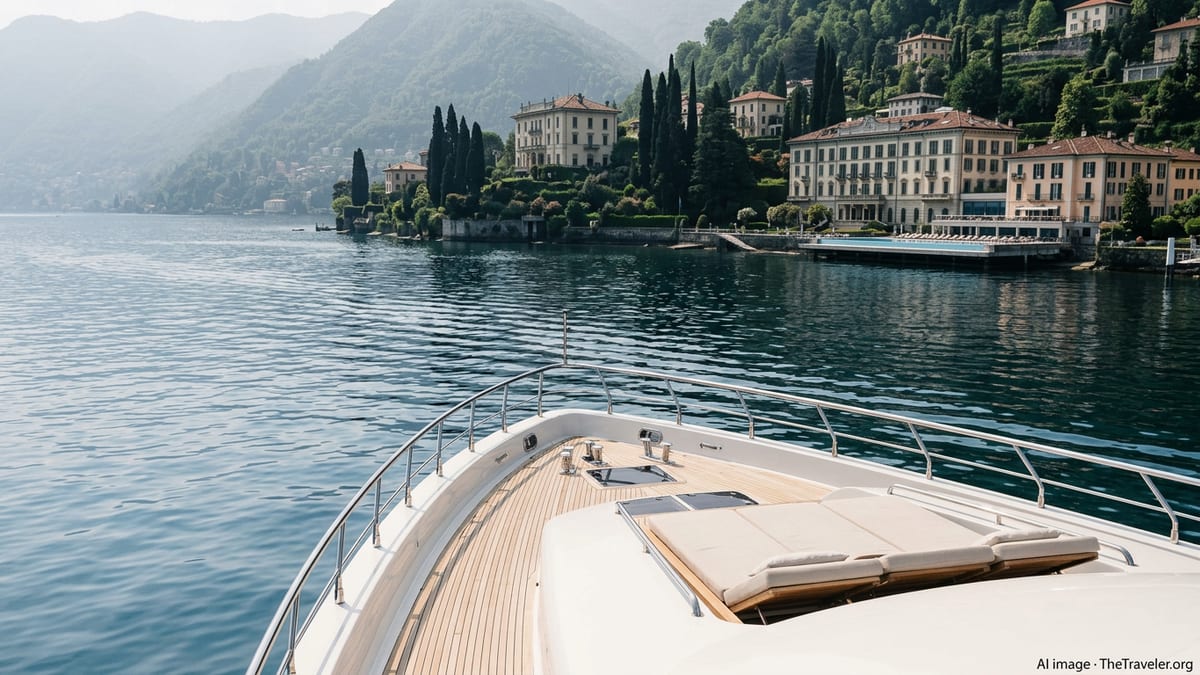
Aman at Sea and the Meaning of “Peaceful Motion”
Aman’s move from land to sea with its first yacht, Amangati, is being closely watched as a signal of where ultra-luxury hospitality is heading. Publicly available information shows that the 183-metre vessel, whose name translates from Sanskrit as “peaceful motion,” is scheduled to enter service in spring 2027 after completion at the T. Mariotti shipyard in Genoa. Designed by Sinot Yacht Architecture & Design, the ship is framed less as a cruise product and more as an Aman resort on the water, with just 47 suites and a strong emphasis on privacy and generous space.
Details released by the brand and trade coverage indicate that suites will feature floor-to-ceiling windows, private terraces and residential-style finishes that echo Aman’s land-based sanctuaries. Onboard, guests are expected to find multiple dining concepts, a jazz club, a large aft pool and an expansive wellness area incorporating open-air gardens. The configuration underscores a broader trend in top-tier travel: fewer guests, more personal space and a blurring of boundaries between indoor comfort and the surrounding seascape.
Itineraries currently promoted for Amangati position the yacht along storied coastlines rather than conventional high-volume cruise hubs. Industry sites tracking the vessel report that the maiden voyage is planned as a week-long journey in May 2027 from Palma de Mallorca to Nice, calling at smaller Mediterranean ports alongside marquee names. That approach mirrors the preferences of a new generation of high-spend travelers who prioritise exclusivity, flexible pacing and access to lesser-known anchorages over traditional big-ship spectacle.
The project also reflects intensifying competition in the ultra-luxury maritime segment, as hotel groups and cruise operators pivot to small-ship concepts. Amangati’s use of battery technology and other efficiency-focused systems, highlighted in travel and business coverage, positions it within a wave of new vessels that seek to align high-end comfort with lower-impact operations, even as questions remain about how far environmental gains can extend in this category.
From Grand Tours to Design-Led Escapes
While Amangati extends a resort brand to sea, Lake Como illustrates how a long-established destination is reinterpreting luxury on land. For centuries, the lake in northern Italy has attracted aristocrats, artists and summering elites to its shoreline villas and manicured gardens. Historic properties such as Villa d’Este at Cernobbio helped cement the region’s image as a European retreat for politics, culture and leisure, with 19th-century palazzi later converted into grand hotels overlooking the water.
In recent years, however, the luxury landscape around the lake has shifted toward highly curated, design-forward experiences that foreground art, architecture and local narratives. Coverage in design and travel publications highlights a new wave of hotels that rework historic buildings with contemporary interiors, bespoke furniture and site-specific art. Rather than relying solely on lake views and heritage cachet, these properties compete through atmosphere, cultural programming and a more residential scale.
Mandarin Oriental, Lago di Como, set in a 19th-century villa within a botanical park on the eastern shore, is frequently cited as an early example of this evolution. Press material and independent reviews describe how the resort pairs classic architecture with modern Italian design, extensive wellness facilities and high-end gastronomy aimed at international guests who see Lake Como as both a sanctuary and a base for wider exploration across Lombardy.
Elsewhere on the lake, boutique openings and extensive refurbishments are reshaping former private residences and lesser-known properties into highly personalised retreats. Industry reports on investment activity around iconic hotels point to continued confidence in Lake Como as a long-term anchor for European luxury, even as operators race to differentiate through aesthetics and experience rather than sheer scale.
The Artistic Revival of Lakefront Hospitality
The most recent phase of Lake Como’s transformation leans heavily on art and design as core elements of the guest experience. International outlets covering new openings have profiled projects that turn historic palaces into living galleries, with curated installations in lobbies, sculptural lighting and custom textile work that references the lake’s colours and surrounding mountains.
One of the highest-profile examples is a newly launched lifestyle hotel on the western shore that has reimagined a 19th-century palazzo with the help of prominent designers and architects. Reports describe a palette drawn from the local landscape, from turquoise water to soft pink sunsets, translated into marble, terrazzo and warm woods. Public spaces are animated by statement pieces, including sculptural bars and site-specific lighting, positioning the property as a hub for contemporary Italian aesthetics rather than a purely nostalgic homage.
This artistic revival extends beyond interiors. Landscaped lakefront terraces, pool decks and private jetties are being framed as stages for photography, small-scale performances and seasonal art programming. Travel features note how these spaces are deliberately crafted to feel informal and social, with striped umbrellas, low-slung furniture and layered plantings that soften the line between hotel and shoreline. The result is a more relaxed, lifestyle-driven expression of luxury that still resonates with the destination’s storied past.
For visitors, the shift means Lake Como is increasingly marketed not just as a backdrop for weddings or quiet honeymoons, but as a design destination in its own right. Curated itineraries now blend time at historic villas with gallery visits in nearby towns and behind-the-scenes access to artisan workshops, reinforcing a narrative in which art, craft and landscape are inseparable elements of the lake’s appeal.
Global Currents: Connecting Sea-Borne and Lakeside Luxury
Taken together, Amangati’s forthcoming voyages and Lake Como’s artistic reinvention point to a broader realignment in global luxury travel. At sea, brands are building smaller, more exclusive vessels that function as mobile resorts, promising privacy, tailored itineraries and a strong sense of place. On land, heritage destinations are investing in sophisticated design and cultural content to remain relevant to travelers who follow art fairs, biennials and architecture festivals as closely as they do beach seasons.
Brazil’s deep cultural and historical ties with Italy, and the popularity of Italian lake imagery in Brazilian media and social channels, help explain why Lake Como’s revival resonates strongly with affluent travelers from Latin America. Travel agencies in major Brazilian cities increasingly package northern Italy itineraries that pair Milan’s fashion districts with Como’s villas and contemporary hotels, positioning the lake as an aspirational counterpoint to domestic resort regions.
In this context, the term “global perspective” encompasses more than geography. The same Brazilian guests who might book suite stays in Lake Como’s most talked-about hotels are also part of the target market for ultra-luxury products like Amangati, whether as full-ship charters for private groups or as individual suite bookings on maiden season itineraries. Both experiences trade on similar values: highly controlled environments, bespoke design, and a carefully moderated relationship with nature.
Industry analysts note that these developments underscore how luxury hospitality is converging on a shared set of priorities, from wellness and sustainability messaging to immersive cultural storytelling. Whether drifting between Balearic coves on a yacht or stepping onto a marble jetty beneath a renovated palazzo, the new ideal of luxury is less about opulent display and more about finely tuned atmosphere, discretion and a sense of belonging to a very small, very mobile world.