

More news on this day
As geopolitical tensions, extreme weather and economic uncertainty reshape global travel plans in 2026, a new pattern is emerging: safety, stability and trust now matter as much as bucket-list appeal. Nowhere is this clearer than in the Asia-Pacific region, where Singapore, Japan and Taiwan are consolidating their status as reliable, high-functioning destinations that promise not only memorable experiences but also an unusually strong sense of security and predictability for international visitors.
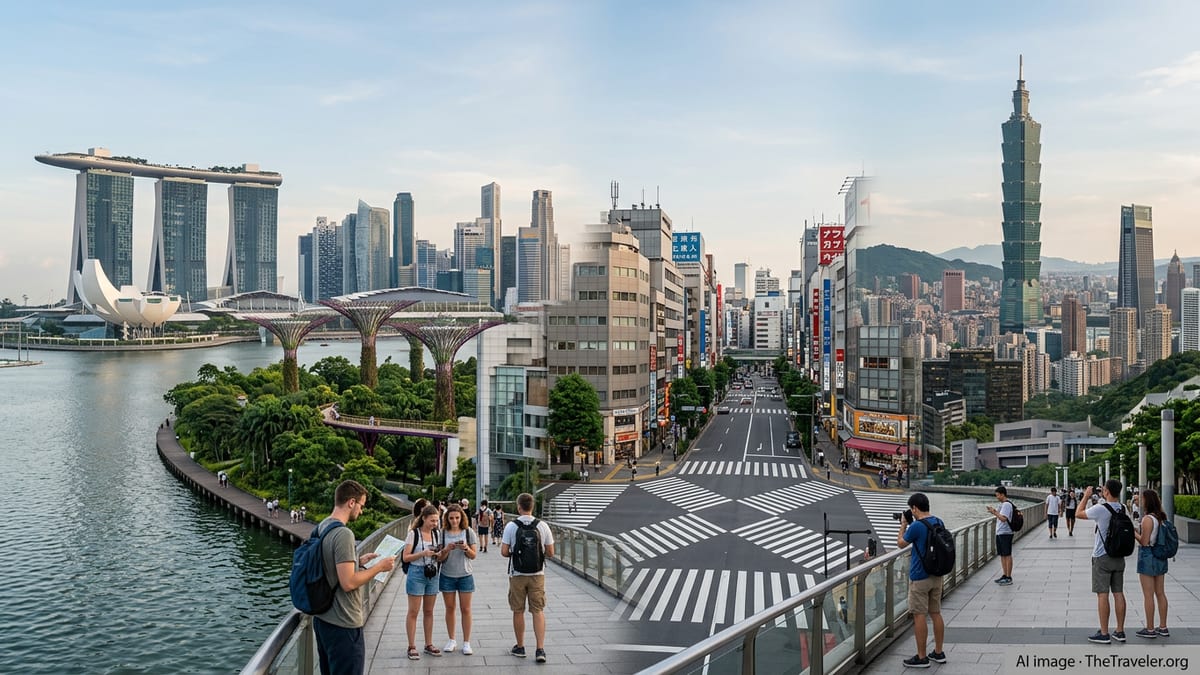
Asia-Pacific Steps Into the Spotlight Amid Global Volatility
With conflicts flaring in parts of Europe and the Middle East and continued cost-of-living pressures in North America, travel analysts say more long-haul tourists are pivoting toward Asia-Pacific in 2026. The region offers competitive pricing, relatively stable currencies and, in many markets, a perception of competent public administration and robust urban infrastructure. Those factors are drawing safety-conscious travelers who, before the pandemic, might have opted for Mediterranean or transatlantic trips.
Industry data from 2024 and 2025 already showed Asia leading the global tourism recovery, and the momentum has carried into early 2026. Inbound arrivals across key Asian hubs have not only rebounded to pre-pandemic volumes but often exceeded them, even as some Western destinations still wrestle with staffing shortages and infrastructure strain. Travel executives say this has helped reposition Asia-Pacific from a “next trip someday” region to a first-choice option for families and solo travelers planning big-ticket holidays.
Within this broader regional surge, Singapore, Japan and Taiwan stand out for combining advanced infrastructure with strong safety reputations. Each has moved quickly to refine visitor management, public health readiness and crisis communication. The result, according to tour operators, is a cluster of destinations that feel unusually well prepared in an era when travelers are scrutinizing risk more closely than ever.
Singapore: Safe, Predictable and Surging Past Pre-Pandemic Tourism
Singapore has leaned heavily into its brand as one of the world’s safest, most orderly urban destinations, and the strategy appears to be paying off. Official figures for 2025 showed the city-state attracting more than 11 million international arrivals in the first eight months alone, with tourism authorities signalling that full-year numbers surpassed 2019 levels and set a new record for visitor volume. Analysts say the performance has laid the foundation for another strong year in 2026.
Key source markets such as China, Indonesia and India are driving much of this growth, helped by streamlined entry rules, including visa-free travel for Chinese visitors, and dense air connectivity through Changi Airport. Singapore’s consistently low crime rate and reputation for strict enforcement remain powerful marketing tools for nervous travelers, particularly women, older tourists and parents planning multigenerational trips who are seeking destinations that feel straightforward and secure.
Beyond safety, the city is investing aggressively in its tourism product, rolling out new hotel capacity and upgrades to marquee attractions. The multi-year redevelopment of Resorts World Sentosa is designed to keep visitors in-destination longer, while major events such as the Formula 1 night race and global concert tours continue to anchor Singapore on the international calendar. Travel advisors say the combination of urban excitement, culinary depth and a near-frictionless visitor experience is cementing Singapore as a regional safe haven and stopover of choice in 2026 itineraries.
Japan: Record Visitor Highs, Tight Security and Managed Overtourism
Japan, long considered one of the safest countries in the world for tourists, has re-emerged as a powerhouse in global tourism, even as it navigates diplomatic strains and shifting source markets. International arrivals climbed to roughly 37 million in 2024, surpassing pre-pandemic highs, and the government has set an ambitious target of 60 million visitors by 2030. In 2025, that upward trajectory continued, with record spending by foreign tourists underscoring Japan’s appeal as a high-value, high-trust destination.
While recent political tensions with Beijing have dampened Chinese visitation, curbing one of Japan’s traditionally largest markets, overall numbers remain strong thanks to demand from the United States, Europe and within Asia. For many of those travelers, Japan’s meticulous urban planning, widespread surveillance in public areas and famously efficient rail system are now part of the safety calculus, not just the convenience factor. Travel insurers and risk consultancies routinely rank Japan among the lowest-risk countries globally for crime and public security incidents affecting visitors.
At the same time, Tokyo is trying to defuse pressure points created by overtourism. Authorities are promoting lesser-known regional destinations, adjusting transport rules in heavily visited areas and encouraging off-peak travel seasons to ease strain on local communities. Tourism officials argue that spreading visitors more evenly across the archipelago not only improves quality of life for residents but also enhances resilience, making Japan better placed to weather sudden shocks while maintaining its image as a calm, orderly place to explore.
Taiwan: Quiet Achiever Climbing the Global Tourism Rankings
Taiwan has emerged as one of Asia’s quiet tourism success stories, steadily increasing its profile even as cross-strait tensions dominate headlines. The island welcomed around 8.6 million international visitors in 2024, up roughly 9 percent year on year, according to figures released by its Tourism Administration. That performance helped Taiwan climb to 36th place worldwide in the latest United Nations tourism revenue ranking, reflecting both higher arrival numbers and greater per-visitor spending on culture, dining and organized tours.
Surveys conducted among foreign visitors paint a picture of a destination that feels safe, manageable and welcoming. Tourists report high satisfaction with environmental and personal safety, with average ratings in 2024 rising well into the “good” to “excellent” range on a five-point scale. For travelers wary of political flashpoints, local operators emphasize Taiwan’s robust civil infrastructure, modern healthcare system and well-practiced disaster preparedness, particularly in relation to typhoons and earthquakes.
Tourism officials are working to shift Taiwan’s image from a transit stop between North and Southeast Asia into a standalone destination. Investments in heritage districts, national parks and cycling infrastructure are being matched with campaigns to attract more visitors from Japan, South Korea and Southeast Asia, while cautiously monitoring the still-limited flow of package tours from mainland China. Industry observers say this diversification strategy reduces reliance on any single market and helps Taiwan position itself as a resilient, medium-scale safe haven for travelers seeking authenticity without sacrificing security.
Why Safety, Governance and Reliability Now Drive Destination Choice
Behind the rise of Singapore, Japan and Taiwan as perceived safe havens is a broader recalibration of what travelers value when choosing where to go in an unpredictable world. Travel search data and booking patterns suggest that, alongside price and iconic attractions, tourists are now weighing hospital capacity, public-health track records, political stability and even cyber security when deciding how comfortable they feel crossing borders.
In this environment, destinations with clear communication, responsive institutions and reliable public services stand out. All three highlighted Asia-Pacific markets have invested in multilingual emergency messaging, robust digital entry systems and transparent tourism data. That infrastructure proved its worth during the pandemic and has continued to reassure visitors wary of sudden policy shifts, natural disasters or transportation disruptions.
For now, travel experts expect Asia-Pacific’s safe and stable hubs to keep gaining share in 2026 itineraries, particularly among long-haul travelers booking complex or high-spend trips. While new risks could yet reshape the map again, Singapore, Japan and Taiwan are demonstrating that in a decade defined by overlapping crises, destinations that make visitors feel genuinely protected and well looked after can transform global uncertainty into a powerful competitive advantage.