

More news on this day
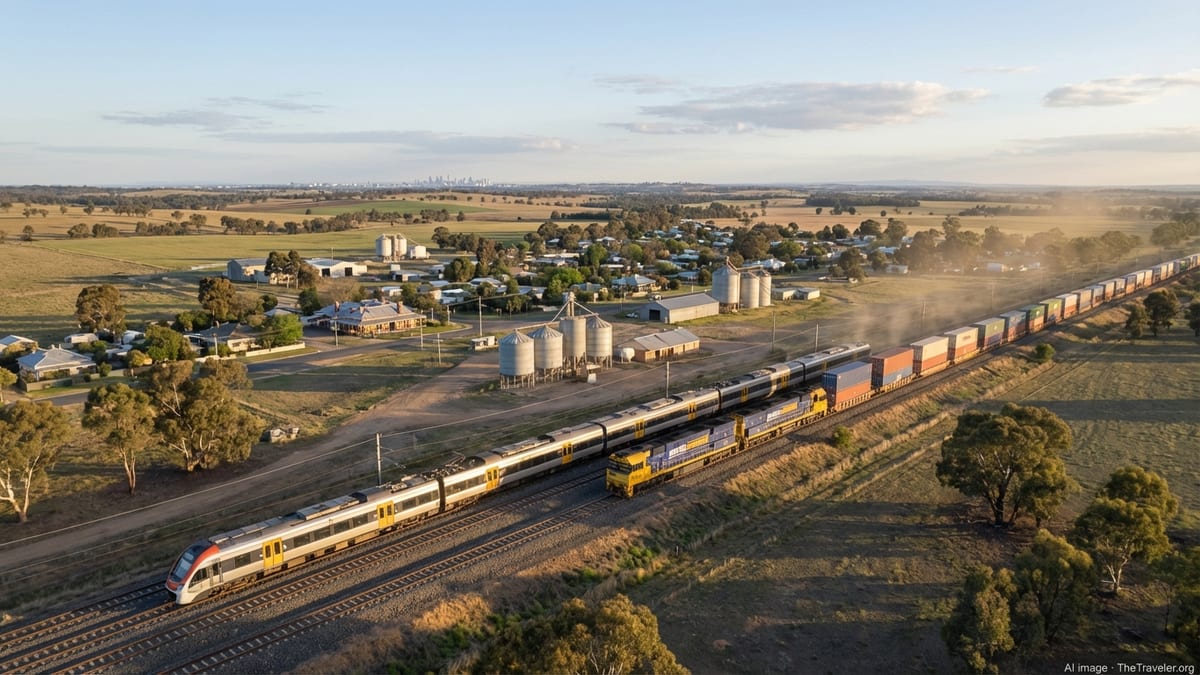
Australia’s rail network is undergoing its most ambitious transformation in decades, with a wave of metro, regional and freight projects in 2024 positioning the country’s rail industry as a central driver of tourism, regional development and long-term economic strength.
Metro Megaprojects Are Redrawing the Tourist Map
Sydney’s expanding metro network is at the forefront of Australia’s rail-led tourism shift. In August 2024, the newest underground line linking the northwest, the central business district and Sydenham opened to intense public interest, carrying more than a million passengers in its first week of operations. Running deep beneath the harbour and the city’s core, the driverless system has dramatically simplified cross-city travel for visitors, placing major retail, dining and cultural districts within minutes of each other.
The metro’s frequent, high-capacity services are already changing how both residents and tourists explore the city. Transport data has shown sharp increases in trips between central Sydney, North Sydney and emerging dining hotspots, with midweek and evening patronage notably higher than before. Hospitality operators report that easier rail access is boosting bookings and extending trading hours as visitors feel more confident moving between neighbourhoods late into the evening.
Future stages of the network, including the Sydney Metro West line linking the central business district with Parramatta and Sydney Olympic Park, are expected to amplify this effect. Tunnelling on the 24 kilometre corridor is now well advanced, with the line set to slash travel times to one of the country’s fastest-growing health, research and events precincts. For tourism, the appeal of a single, fast rail spine connecting stadiums, convention venues, cultural sites and new hotel zones is clear.
Alongside Sydney, other capitals are using urban rail to compete for visitor spend. Melbourne’s Suburban Rail Loop, now under active delivery for its first eastern section, is designed to connect key education, employment and health hubs in a single orbital line. While the initial focus is commuters, tourism analysts note that a seamless rail ring tying together university districts, malls, sporting venues and future airport links could fundamentally reshape how visitors move around Australia’s second-largest city.
Regional Rail Revival Opens New Tourism Corridors
Beyond the capitals, state and federal governments are betting on regional rail as a tool for spreading tourism and population growth. Victoria’s multibillion-dollar Regional Rail Revival program, scheduled to reach major delivery milestones through 2024 and 2025, is upgrading every regional passenger line in the state. Projects include longer platforms, modernised stations, additional passing loops and track improvements designed to support more frequent and reliable services.
These upgrades are already encouraging short-break travel from Melbourne to regional centres known for wine, food and nature-based experiences. Faster and more dependable trains have made towns along the Geelong, Ballarat, Bendigo and Gippsland corridors more competitive with car travel, particularly for younger visitors and international tourists reluctant to drive on unfamiliar roads. Tourism operators report growing interest in rail-inclusive itineraries, from winery tours and cycling weekends to coastal escapes packaged around train timetables.
In northern New South Wales, the conversion of disused lines into rail trails is creating a different kind of rail-powered tourism economy. The Northern Rivers Rail Trail, a multi-use cycling and walking path that follows a former branch line, is being extended towards Byron Bay and Lismore, with the completed route expected to stretch more than 130 kilometres. Local councils and tourism bodies anticipate a substantial uplift in overnight stays, bike hire businesses and hospitality ventures as long-distance active travellers plan multi-day journeys along the route.
These regional projects highlight how rail, even when no longer hosting trains, can anchor new visitor markets. The common thread is connectivity: by providing safe, legible and environmentally friendly routes between townships, trailheads and heritage sites, rail corridors are becoming the backbone of new regional destination strategies.
Inland Rail and Freight Strengthen the Visitor Economy from Behind the Scenes
While passenger lines attract the most public attention, Australia’s most transformative rail investment may be unfolding out of sight. The Inland Rail project, a 1,600 kilometre fast freight corridor linking Melbourne and Brisbane via inland regional centres, has passed several construction milestones in early 2026, including completion of major works on the Stockinbingal to Parkes section and key bridge upgrades in Victoria and New South Wales. Although designed for double-stacked freight trains rather than tourists, the line is expected to deliver substantial indirect benefits to the visitor economy.
By shifting large volumes of freight from road to rail, Inland Rail aims to reduce highway congestion, lower transport emissions and improve the resilience of national supply chains. For tourism operators, that translates into more reliable deliveries for hotels, restaurants and attractions, as well as safer and less congested intercity highways that remain critical for coach tours and self-drive visitors. Regional towns along the corridor are also positioning themselves as logistics and service hubs, leveraging construction jobs and future freight activity to support new accommodation, dining and retail offerings.
Economists note that the project’s long-term effect will be to knit together inland agricultural, mining and manufacturing regions more tightly with ports and capital city markets. That stronger economic base, in turn, can underpin investment in local airports, visitor centres and experience-based tourism. In places such as Parkes, Wagga Wagga and Toowoomba, civic leaders are already marketing their towns as rail-linked centres where business travel, conferences and leisure tourism intersect.
The broader national rail network is receiving parallel upgrades targeted at resilience and capacity. In the 2024–25 federal budget, the Australian government and the Australian Rail Track Corporation allocated more than a billion dollars for critical works on the 8,500 kilometre interstate network, including track rehabilitation, heavier rail replacement and flood-resilient culvert upgrades. Industry groups argue that these investments are essential to keeping both freight and long-distance passenger services running during extreme weather, an increasingly important factor for domestic tourists planning rail journeys across the continent.
High-Speed Ambitions and Policy Debates Shape the Next Era
Running alongside this wave of construction is a high-stakes policy debate about how far and how fast Australia should pursue high-speed rail. The High Speed Rail Authority, established in 2023, spent much of 2024 developing a detailed business case for an initial Sydney to Newcastle corridor as part of a longer-term vision for an east coast network reaching Brisbane and Melbourne. The federal government allocated tens of millions of dollars for this planning work, presenting the project as a catalyst for regional growth, productivity gains and lower-emissions intercity travel.
Supporters argue that a genuine high-speed spine could be transformative for tourism, enabling two- or three-hour journeys between major cities and regional gateways that currently require flights or lengthy drives. A line from Sydney to Newcastle, they say, would connect one of the country’s busiest gateways with a coastal region rich in beaches, wine regions and nature reserves, while also relieving capacity constraints on existing passenger and freight routes.
Yet the economic and engineering challenges remain formidable. Budget forecasts show funding for the authority tapering off after mid-decade, and independent assessments have questioned whether the enormous capital cost of a full high-speed network can be justified under current demand projections. Transport experts are divided over whether Australia should start with more modest, incremental speed and capacity upgrades on existing lines, or push ahead with a flagship project designed to match the fastest systems in Europe and Asia.
For now, the high-speed debate underscores a wider point: rail is no longer treated purely as an engineering concern, but as a strategic lever in national economic, climate and tourism policy. Decisions taken in the next few years about corridors, funding models and integration with airports and ports will shape how visitors experience Australia for decades.
Tourism, Climate and Economic Domination Converge on the Tracks
Across these projects, a common narrative is emerging: rail is being positioned as the backbone of a lower-carbon, more regionally balanced Australian economy. Governments are explicit about the climate benefits of shifting both passengers and freight from road and air to electric or more efficient rail, linking national emissions targets with practical transport choices. For tourism boards, this alignment creates new opportunities to market rail journeys, metro-linked precincts and rail-trail adventures as both enjoyable and environmentally responsible.
International visitors are increasingly factoring sustainability into their travel decisions, and tour operators report growing interest in itineraries that minimise internal flights in favour of scenic rail. Long-established tourist trains such as the Indian Pacific and The Ghan have been joined by a new generation of rail-centric experiences, from metro-accessible dining districts to multiday cycling trips along former branch lines. The appeal is not only the journey itself but the narrative of travelling in a way that supports regional communities and reduces environmental impact.
Economically, the scale of rail investment since 2024 signals a broader attempt to secure Australia’s competitiveness in an era of fragile supply chains and intensifying global tourism rivalries. By combining urban metros, regional upgrades and freight megaprojects, policymakers are betting that an integrated rail system will make Australian cities more liveable, regional towns more accessible and exports more reliable. Those factors, in turn, are expected to underpin long-term growth in visitor numbers and spending.
Whether Australia ultimately builds a full high-speed network or settles on a patchwork of faster, more frequent conventional lines, 2024 is shaping as a turning point. The country’s rail industry is no longer simply keeping pace with demand; it is actively redefining how people and goods move, how destinations grow and how the nation presents itself to the world of travellers watching from abroad.