

More news on this day
Bangalore International Airport Limited is advancing a multi‑billion‑dollar expansion and connectivity program at Kempegowda International Airport, positioning Bengaluru as a major transit gateway for South India and long‑haul global traffic.
Get the latest news straight to your inbox!
Terminal 2 as the New International Gateway
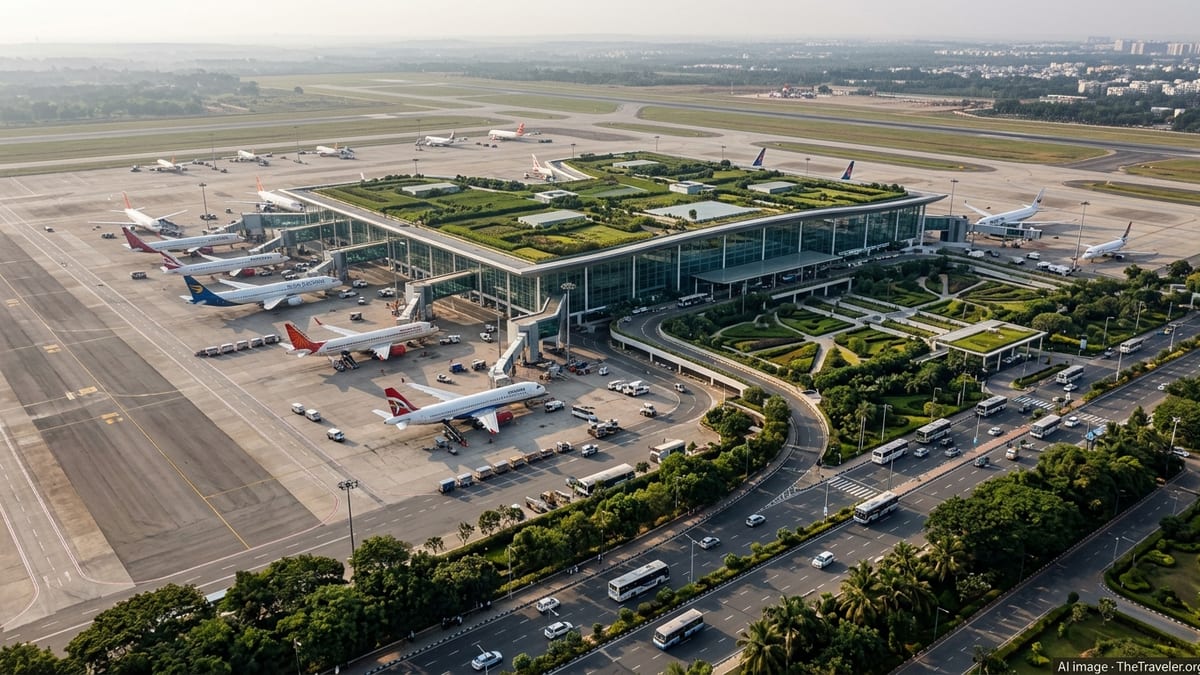
Kempegowda International Airport’s Terminal 2, widely described in coverage as a “terminal in a garden,” has become the focal point of Bangalore International Airport Limited’s strategy to capture a larger share of international and transit traffic. Publicly available information indicates that international operations are being consolidated in T2 alongside select premium domestic services, creating a clear split between domestic‑heavy Terminal 1 and a more globally oriented Terminal 2.
The design of T2, with extensive indoor landscaping, natural light and high ceilings, is oriented toward long‑haul comfort and smoother transfers. Check‑in halls, immigration counters and security lanes have been laid out to reduce processing time for connecting passengers, while additional boarding gates and contact stands are intended to support more wide‑body operations. Industry commentary points to T2’s initial capacity in the tens of millions of passengers annually, with provisions built in for modular expansion as traffic grows.
Airline moves are reinforcing this hub‑focused role. Flag carrier Air India has already shifted its Bengaluru operations into T2, and other full‑service airlines are routing more key services through the new building. This clustering of network and alliance carriers at a single terminal is viewed by analysts as a prerequisite for building up efficient international‑domestic connections and making Bengaluru more attractive as an intermediate stop between Europe, the Middle East, Southeast Asia and secondary Indian cities.
Master Plan to Scale Capacity Toward 100 Million Passengers
Underpinning these changes is a long‑term master plan approved by the airport’s board that aims to create infrastructure for about 100 million annual passengers and around 1.5 million tonnes of cargo in the coming years. Reports on the plan describe a capital program measured at roughly 2 billion US dollars, with spending spread across terminal expansion, airside upgrades and supporting infrastructure.
A central element is the phased expansion of Terminal 2 itself, targeting completion of the current phase around 2028. Local business media coverage notes that the project includes additional piers and contact stands, expanded concourses, and upgraded baggage and security systems designed to handle sustained growth in international operations and connecting flows. The refurbishment of Terminal 1, now dedicated largely to domestic traffic, is progressing in parallel to raise overall capacity and improve transfer experiences between the two terminals.
Planning documents referenced in regulatory and investor filings also outline early studies for a potential third terminal in the late 2020s or early 2030s, reflecting expectations of continued demand growth in the Bengaluru region. Taken together, these projects are intended to move the airport from a point‑to‑point gateway model toward a genuine multi‑terminal hub capable of accommodating complex banked connecting schedules and higher transit ratios.
Multimodal Connectivity: Metro, Roads and Tunnels
BIAL’s hub strategy relies not only on terminal capacity but also on transforming access to the airport. The airport is being integrated into Bengaluru’s evolving transit network through the Namma Metro Blue Line, which will extend to dedicated Airport City and terminal stations. Publicly accessible project information shows that the line is under construction, with government statements and local reporting pointing to a target completion window in the second half of this decade.
Within the airport perimeter, a multi‑modal transport hub is planned in front of Terminal 2, designed to bring metro, buses, taxis and private vehicles into a single integrated interchange. This facility is expected to simplify surface transfers for both local and connecting passengers using Bengaluru as a stopover, mirroring set‑ups at established Asian transit hubs.
On the road network, BIAL’s expansion blueprint includes new links aimed at easing congestion and cutting travel times from fast‑growing eastern suburbs and tech corridors. Plans for an Eastern Connectivity Tunnel, described in Indian press coverage, envisage a dedicated route that could reduce journey times from areas such as Whitefield by around 30 percent and divert traffic away from heavily used existing corridors. Additional improvements involving state highways, ring roads and dedicated airport bus services are gradually increasing the catchment area that can reliably reach early‑morning and late‑night flights, a key factor in attracting transfer‑friendly schedules.
Airport City, Hotels and Passenger Experience Upgrades
Parallel to airside and landside expansion, BIAL is developing an “Airport City” on hundreds of acres adjacent to the runways, envisioned as a mix of office space, hospitality, retail, healthcare and logistics. Real estate and infrastructure analyses describe a plan that could deliver tens of millions of square feet of commercial space and thousands of hotel keys by the early 2030s. This kind of airport‑anchored urban district is viewed as a way to deepen Bengaluru’s role as a business and technology hub while generating non‑aeronautical revenue to support long‑term airport investment.
For transit passengers, the presence of multiple on‑airport hotels, convention spaces and retail districts is expected to make stopovers more attractive and lengthen dwell times. Developers and market observers highlight growing investor interest in sites near the planned Airport City and metro stations, with expectations that easy access to terminals will appeal to both corporate tenants and international travelers.
Inside the terminals, BIAL has emphasized experiential design as a differentiator. Terminal 2’s extensive gardens, art installations and locally inspired materials aim to give the facility a distinct sense of place that aligns with Bengaluru’s reputation as a green and innovation‑focused city. Service upgrades, including expanded self‑check‑in, biometric processing at selected touchpoints and improved wayfinding, are being rolled out to support faster connections and a smoother journey for time‑sensitive transfer passengers.
Cargo, Network Growth and Competitive Positioning
Cargo development forms another pillar of the airport’s transit ambitions. Prior expansion phases have already raised Kempegowda International Airport’s cargo handling capacity, and additional investments are being pursued through dedicated logistics partnerships and new warehousing facilities. Trade publications and investor reports describe the buildout of a large logistics park on the campus, designed to support e‑commerce, temperature‑controlled shipments and time‑critical freight.
On the passenger side, publicly released traffic figures for the first half of 2025 show continued growth in both domestic and international segments, with international numbers rising at a faster clip as more airlines and routes are added. Industry observers note that Bengaluru’s growing technology, startup and biotech sectors are helping to support demand for direct long‑haul services, while its location in southern India allows airlines to route connecting traffic efficiently between South Asia, the Middle East, Southeast Asia and beyond.
Within India’s competitive aviation landscape, this combination of expanded terminal capacity, integrated ground transport, cargo capability and airport city development is positioning Bengaluru as a prominent alternative to traditional hubs such as Delhi and Mumbai. While many projects, including full Terminal 2 buildout and metro connectivity, are still several years from completion, the direction of investment suggests that Bangalore International Airport Limited is intent on moving Kempegowda International Airport from regional gateway status toward a fully fledged global transit hub.