

More news on this day
In an era of fuel efficiency and quieter cabins, passenger capacity remains a decisive metric on busy long-haul routes, and Boeing’s 777-300ER continues to outseat its closest Airbus rival, the A350-1000.
Get the latest news straight to your inbox!
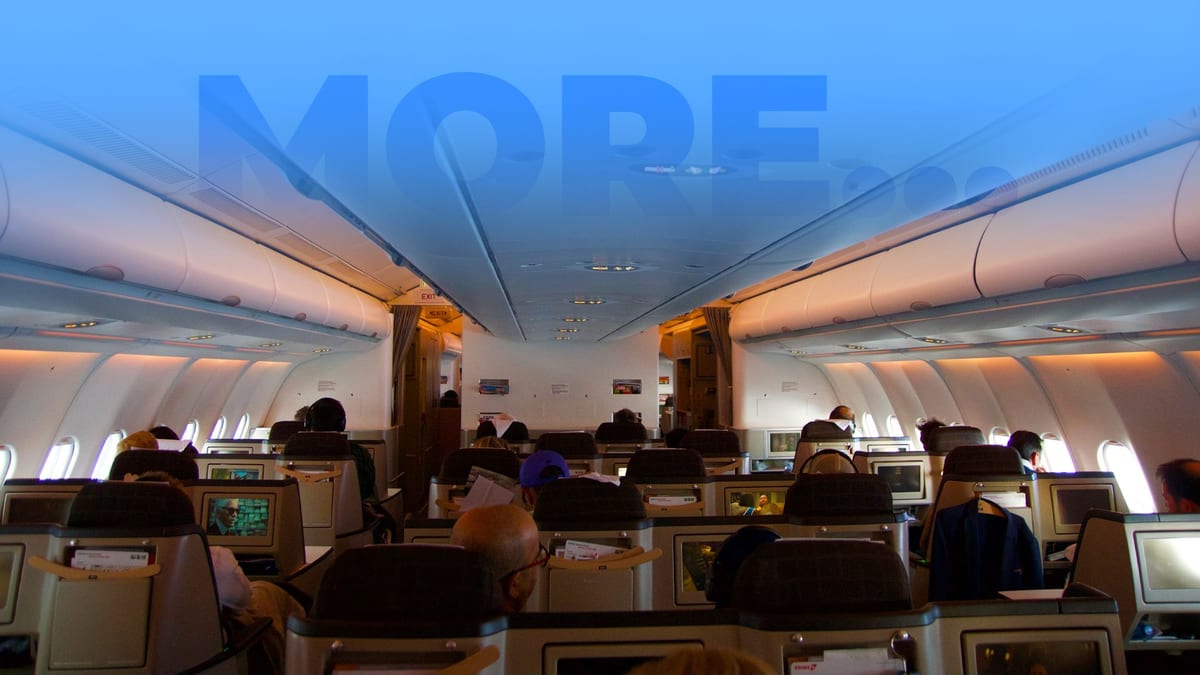
Image by Simple Flying
Capacity Heavyweight in the Twin-Engine Widebody Market
Among current in-service widebody jets, industry data highlights the Boeing 777-300ER as the twin-engine aircraft that can carry the most passengers in mainstream commercial layouts. Technical summaries compiled by aviation reference sites and specialist publications show the 777-300ER seating around 365 passengers in a typical three-class configuration, rising to about 451 seats in a denser two-class layout and up to roughly 550 in a single-class high-density arrangement. These figures place the aircraft at the top of the capacity table for twinjets currently flying, short of very large four-engine types.
The 777-300ER’s direct competitor from Airbus is the A350-1000, which was launched as a new-generation alternative for airlines wanting similar range and capability with lower fuel burn. Publicly available Airbus marketing materials and independent fleet analyses generally cite a typical layout of about 369 seats in three classes for the A350-1000, while high-density layouts can reach 410 to 440 passengers depending on cabin choices. That still leaves the 777-300ER with a notable advantage whenever airlines are focused on squeezing the maximum number of seats into a long-haul twin.
Specialist rankings of the world’s largest passenger aircraft published in late 2025 and early 2026 consistently put the 777-300ER ahead of the A350-1000 on capacity. These overviews describe the Airbus type as the largest widebody currently in active production, but also note that the Boeing widebody it was designed to challenge can still hold more passengers in equivalent cabin classes, especially when airlines prioritize high-density layouts on trunk routes.
Why the 777-300ER Can Carry More People
The 777-300ER’s higher seat count is rooted in its basic dimensions and cabin geometry. The aircraft’s long fuselage, stretching more than 73 meters, allows carriers to install additional rows of seats relative to shorter widebodies. Its cross-section supports standard economy cabins at either nine-abreast in a 3-3-3 configuration or ten-abreast in a 3-4-3 layout, giving planners considerable flexibility between comfort and capacity. Seat maps and technical data sheets shared by airlines and aircraft-information services often illustrate layouts that push close to the upper end of the type’s certified passenger limit.
The A350-1000, although similar in overall length, has slightly different cabin dimensions and structural design aimed at fuel efficiency and weight savings. Airbus markets the A350 cabin as providing competitive or improved comfort at standard nine-abreast economy, with some operators exploring ten-abreast for ultra-dense configurations. Even so, most published examples of airline layouts for the A350-1000 cap out below the heaviest 777-300ER arrangements, especially when a premium cabin with lie-flat business class is included.
Independent technical references also point to the 777 family’s high certified maximum passenger count as a factor. For the 777-300 and 777-300ER series, manufacturer documentation and third-party compilations describe maximum one-class capacities around 550 passengers, a figure that few airlines use in day-to-day service but which highlights the structural and regulatory envelope available. The A350-1000’s advertised maximum falls short of this mark, leaving the Boeing design as the more capacious option in comparable operating scenarios.
How Airlines Use the Extra Capacity
For airlines, the 777-300ER’s added seating has strategic value on high-demand long-haul routes where filling a large aircraft is rarely a challenge. Carrier fleet plans and route maps show the type deployed on dense trunk services such as transpacific links, Europe to Asia corridors, and connections through major Gulf and Asian hubs. In these markets, the ability to sell more seats on a single flight can deliver lower unit costs when demand is strong, even if the airframe is older than its Airbus rival.
Fleet information from several large intercontinental airlines indicates that many retain substantial numbers of 777-300ERs alongside newer types, rather than replacing them outright with A350s. Some carriers have refitted cabins to update seats, inflight entertainment, and premium products while keeping overall seat counts relatively high. Publicly available seating plans often reveal configurations that remain above 360 seats in three classes, underscoring how central the type remains for volume-driven routes.
By contrast, the A350-1000 is frequently selected for a balance of capacity and efficiency. Airlines ordering the Airbus type often highlight expected fuel-burn improvements and lower carbon emissions per seat compared with earlier-generation widebodies. While some operators are pushing A350-1000 layouts toward higher densities, the aircraft is commonly configured slightly below the 777-300ER’s maximum potential, matching missions where comfort branding or range flexibility is as important as raw seat numbers.
Enter the 777-9, Boeing’s Next Capacity Leader
Looking ahead, Boeing is preparing to introduce the 777-9, the largest member of its 777X family, which is designed to replace and surpass the 777-300ER. Manufacturer airport-compatibility documentation and cabin references published in recent months describe a typical two-class seating capacity of around 414 seats for the 777-9, with some analyses citing about 426 seats depending on layout assumptions. These figures would keep Boeing ahead of the A350-1000 in standard airline configurations, despite the Airbus jet’s newer composite design and service-entry advantage.
Industry features on upcoming widebodies describe the 777-9 as set to become the world’s largest twin-engine passenger aircraft once it enters airline service later this decade. Comparative tables in aviation media note that the A350-1000 typically tops out near 410 seats in high-density layouts marketed for long-haul operations, leaving the 777-9 with a modest edge in advertised capacity. The new Boeing jet also introduces broader cabin width and redesigned interior features intended to maintain seat counts without sacrificing comfort compared with the 777-300ER.
Major airlines in the Middle East and Europe have already accumulated substantial order backlogs for the 777-9, according to published coverage of recent air shows and fleet announcements. These carriers often operate global hub-and-spoke networks that rely on large aircraft feeding connecting banks of flights, making incremental gains in seat capacity per movement particularly valuable. In that context, the 777-9 is being positioned as the natural successor to the 777-300ER’s role as a high-capacity workhorse.
Balancing Capacity With Efficiency and Passenger Experience
The continued capacity advantage of Boeing’s big twins over the A350-1000 does not automatically determine airline preferences. Widebody orders reported in the last two years show Airbus scoring significant A350 deals with carriers focused on fuel efficiency, lower operating costs, and fleet commonality. For these airlines, a slight shortfall in maximum seats compared with the 777-300ER or future 777-9 is offset by expected savings over the aircraft’s life cycle and potential marketing benefits from a newer cabin product.
On the passenger side, seat configuration choices made by airlines can narrow or widen the practical difference between the two rivals. Many operators of the 777-300ER choose ten-abreast seating in economy to maximize capacity, while A350-1000 operators more often favor nine-abreast layouts that emphasize comfort. Travel reviews and cabin reports regularly describe noticeably different experiences between a densely configured 777 and a more spacious A350, even when total seat counts are comparable.
As long-haul travel demand continues to recover and grow, the contest between capacity and efficiency will remain central to the Airbus-Boeing rivalry. For now, publicly available technical figures and airline cabin plans confirm that when airlines seek the most seats possible on a modern twin-engine widebody, the Boeing 777-300ER, and its upcoming successor the 777-9, still hold a clear lead over the Airbus A350-1000 in the race for passenger volume.