

More news on this day
As UK travellers head into the busy Easter getaway, new analysis of recent April flying seasons highlights how Bournemouth Airport stacks up on flight delays compared with some of the country’s largest hubs.
Get the latest news straight to your inbox!
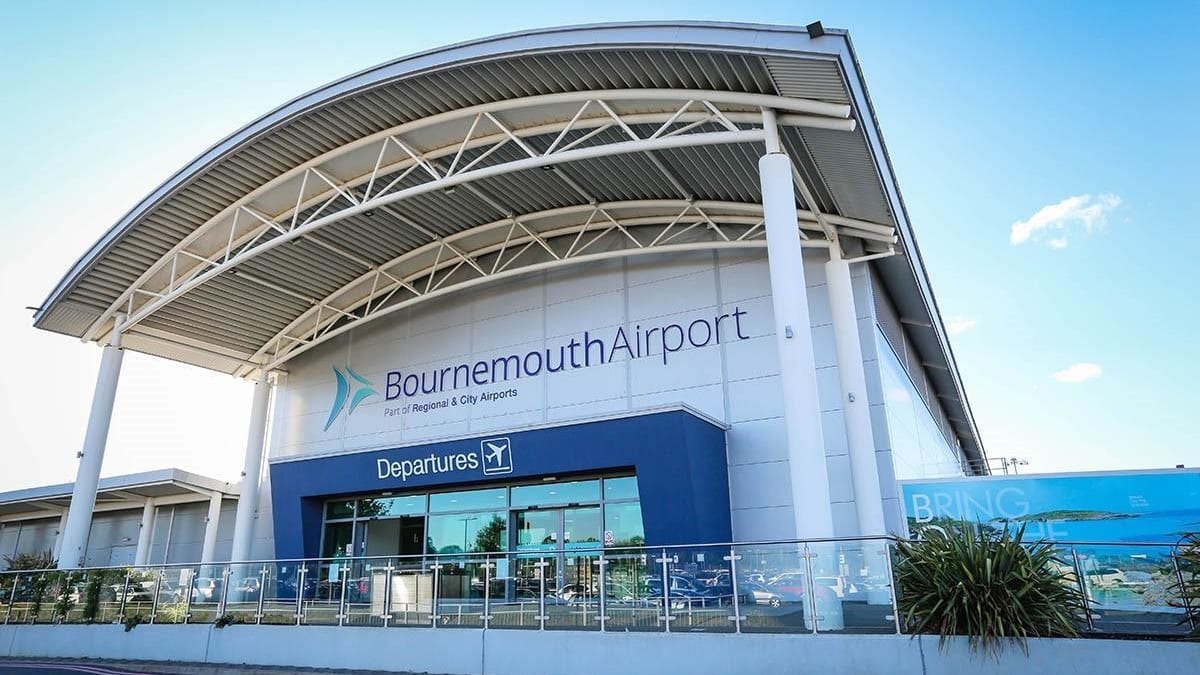
Data behind this year’s Easter delay warnings
Travel analytics published in the run up to Easter 2026 draw on several years of Civil Aviation Authority punctuality figures and commercial flight-tracking data to gauge how often UK departures run late during April. One recent ranking of UK airports for Easter travel examined delay patterns across the 2022 to 2025 Easter periods, focusing on the share of flights that departed more than 15 minutes behind schedule.
Across the country, the study shows that more than a quarter of April flights at many major UK airports left at least 15 minutes late, underlining the pressure that Easter places on aviation infrastructure. Weather, air traffic control constraints and aircraft turnaround times all contribute to bottlenecks when passenger numbers spike for the long weekend.
Against that backdrop, the analysis positions smaller regional airports, including Bournemouth on the south coast, alongside much busier hubs such as Heathrow, Gatwick, Manchester and Edinburgh, allowing Easter travellers to weigh up their options beyond simply choosing the nearest or biggest airport.
The April and Easter focus is significant for 2026. Easter fell in late March this year, but the rankings still use April as a proxy for peak spring travel, since school holidays and city-break demand keep schedules tight across both months.
How Bournemouth compares in Easter delay rankings
In the latest Easter-focused delay table, Bournemouth Airport sits in the upper half of the UK rankings, with an estimated 26.9 per cent of April flights delayed by more than 15 minutes. That places it just below several larger airports which see slightly higher disruption, but still marks Bournemouth out as an airport where more than one in four flights can run notably late during the peak spring period.
By this measure, Bournemouth’s Easter delay performance is comparable to Edinburgh and Bristol, which both see a little over 27 per cent of April flights exceed the 15-minute delay threshold. The figures also show Bournemouth grouping with major London hubs: Heathrow records delays on roughly 26.4 per cent of April flights, while Gatwick stands at about 26.0 per cent in the same analysis.
The numbers suggest that, despite handling far fewer passengers than the big national hubs, Bournemouth is not immune to the systemic pressures that shape UK aviation performance around Easter. While smaller terminals can sometimes move passengers more quickly through check-in and security, they still rely on the same aircraft fleets, crew resources and congested European airspace that affect the rest of the network.
At the same time, Bournemouth’s delay rate is not among the very worst in the country by this methodology. Several mid-sized airports see a higher proportion of April flights delayed beyond 15 minutes, indicating that Bournemouth sits in a crowded middle tier rather than at the extremes of either punctuality or disruption.
Broader context: annual delay averages and cancellations
Looking beyond Easter-specific analysis, wider annual punctuality data also provides context for Bournemouth’s performance. Government statistics for 2024, based on Civil Aviation Authority figures and highlighted in recent media coverage, ranked Bournemouth among the UK’s ten slowest airports for average departure delays, with flights leaving around 18.9 minutes late on average.
That placed Bournemouth eighth in a national table led by Gatwick, which recorded average delays of more than 23 minutes and retained its position as the UK’s worst-performing major airport for punctuality. Birmingham and Manchester followed closely behind, with average delays of around 21 and 20 minutes respectively, underscoring how congestion at large hubs continues to drag on schedules.
However, other research focusing on cancellations paints Bournemouth in a more favourable light. A recent review of UK airport cancellation rates found that Bournemouth had one of the lowest shares of scrapped flights in the country, with only a fraction of services being cancelled compared with the national average. This suggests that while Bournemouth passengers may experience late departures relatively often, outright cancellations remain comparatively rare.
Taken together, the statistics depict an airport that sits near the middle of the pack on delays but performs strongly on reliability in terms of flights actually operating. For Easter travellers, that trade-off can be important, as a delayed departure is often less disruptive than a cancellation that forces last-minute rebooking.
What is driving delays at Easter across UK airports
The Easter period tends to magnify operational challenges that exist throughout the year. Airlines concentrate capacity into a handful of popular leisure routes, while airports compress heavy departure banks into peak morning and evening windows, leaving little flexibility when disruption occurs. Once a delay develops early in the day, it can ripple through successive rotations of the same aircraft.
Industry reports on recent Easters point to several recurring factors behind late departures. Weather systems across northern Europe can trigger air traffic control restrictions, forcing aircraft to accept longer routings or extended ground holds. Staffing and crew availability, particularly at smaller bases, can also play a role, as any absence is harder to absorb without spare personnel on standby.
On the ground, infrastructure limitations are another constraint. Airports with shorter runways or limited stands, including some regional facilities, may have less ability to handle surges in traffic or recover quickly from earlier disruption. At larger airports, the challenge is often the volume of movements sharing the same runways and taxiways, especially where terminals are already operating close to their design capacity.
The result, visible in the Easter rankings, is that both big hubs and compact regional airports like Bournemouth share similar levels of delay exposure. The specific causes may differ from place to place, but travellers across the network see a broadly comparable risk of late departures in April.
What Bournemouth-bound Easter travellers can do
For passengers using Bournemouth this Easter season, the statistics underline the value of building extra time into their journey plans. With roughly a quarter of flights historically departing more than 15 minutes late in April, tight connections onto trains, ferries or onward flights from other airports may carry added risk.
Travel guidance issued for the 2025 and 2026 Easter periods consistently highlights simple steps that can help reduce the impact of delays. These include opting for earlier departures where possible, allowing generous buffers between connecting services, and ensuring that airlines have up-to-date contact details so that schedule changes are communicated quickly.
Passengers are also encouraged by consumer groups and travel providers to familiarise themselves with their rights in the event of significant delays or cancellations, particularly under UK and European compensation rules. Knowing when meals, accommodation or refunds may be due can make it easier to navigate disruption if it arises on the day.
For now, Bournemouth’s position in the Easter delay rankings suggests that while the airport does not offer immunity from spring travel disruption, it also does not sit among the country’s most problematic performers. For many south coast travellers, that balance of relative reliability and convenience will remain an attractive proposition as another busy holiday weekend approaches.