

More news on this day
When a powerful March blizzard wiped out thousands of flights across North America, many international travelers found themselves stuck abroad with rapidly shrinking options. Flexible credit card rewards, particularly Capital One miles, emerged as an unexpected safety net for some, turning what could have been days of uncertainty into same-day reroutes home.
Get the latest news straight to your inbox!
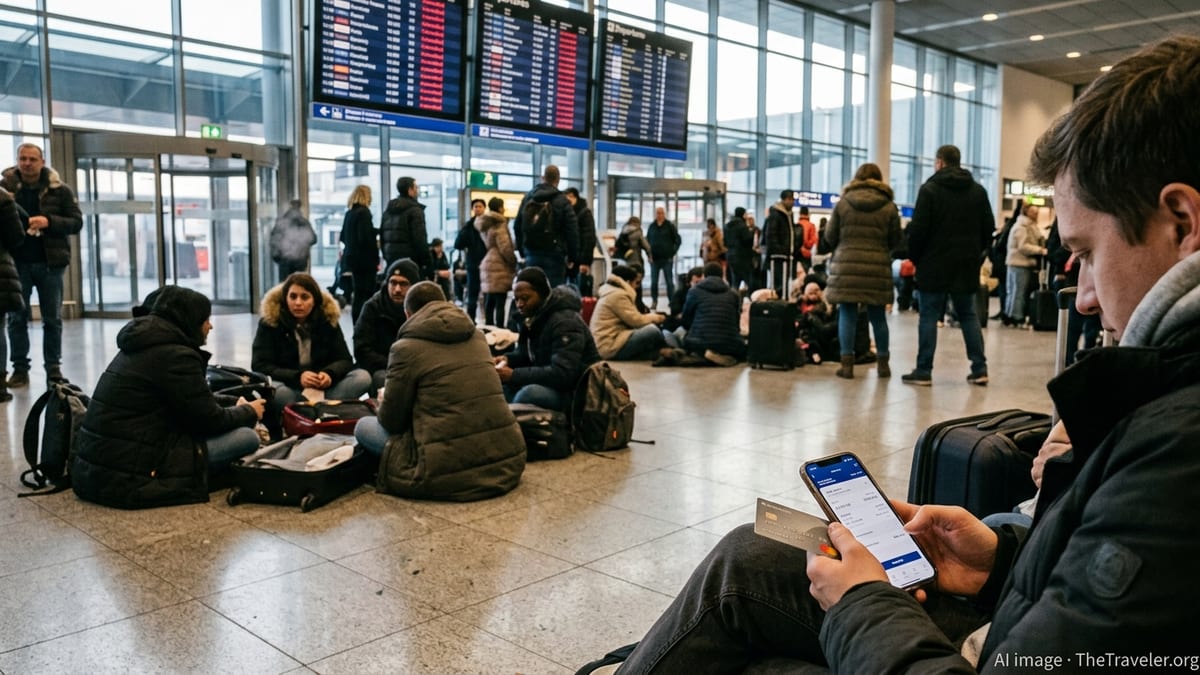
Blizzards, Backlogs and a Scramble to Get Home
Heavy winter weather has repeatedly disrupted air travel over the past two seasons, with large storm systems causing mass cancellations and delays at major North American hubs. In mid-March 2026, a powerful storm system led to more than 5,000 flight cancellations over two days, according to widely cited aviation tracking data, stranding passengers in Europe, Asia and Latin America who were relying on connections through affected US airports.
For one US traveler returning from Europe, a transatlantic itinerary routed through the Midwest collapsed overnight as the storm intensified. The original flight into a Midwestern hub was canceled, the automated rebooking pushed the connection back by two days, and subsequent options were routed through other storm-hit airports with similar risks. Airline phone queues stretched for hours as crews and aircraft were repositioned and airport operations slowed.
Published coverage of recent storms shows that this experience was far from unique. Across several major events over the last two winters, airlines have often struggled to quickly rebook passengers on alternative itineraries when entire waves of flights are grounded. With hub airports saturated and economy cabins quickly filling, travelers willing and able to look beyond standard cash tickets have often had the best chances of getting moving again.
In this case, the traveler turned to a backup tool: a stockpile of Capital One miles that could be moved to multiple airline partners within minutes. That flexibility proved crucial once it became clear the original carrier could not offer a timely route home.
Turning Capital One Miles into Emergency Flight Options
Capital One’s travel ecosystem has expanded in recent years into a full transferable points currency. Publicly available documentation from the bank and independent points analysts indicates that cardholders can move miles at a one-to-one rate to a network of airline loyalty programs, including Air Canada Aeroplan, Air France KLM Flying Blue, British Airways Executive Club and TAP Miles&Go, among others.
For a stranded traveler, that network translates into the ability to search award space on multiple alliances and carriers in parallel. In the March disruption scenario, the traveler identified an open economy award seat from a European city to a Canadian hub using Aeroplan, paired with a separate award seat from Canada to a West Coast gateway on another Star Alliance carrier. That combination avoided the storm zone entirely by routing over more northerly airports with fewer weather impacts.
Because Capital One miles generally transfer to many partners instantly, the traveler was able to run a common play used by seasoned points users: locate seats first, then move just enough miles to the relevant airline program for an immediate booking. Guidance from travel rewards publications consistently advises against speculative transfers and recommends waiting until a specific flight is selected, since transfers cannot be reversed.
In this case, the transfer and booking sequence took less time than waiting on hold with the original carrier. Taxes and surcharges on the award tickets were paid in cash, while the mileage balance covered most of the last minute cost that would otherwise have been several times higher than the original ticket price.
Why Transfer Partners Matter During Disruptions
Analyses of transferable credit card currencies in 2025 and 2026 often highlight how partner breadth and transfer ratios affect a traveler’s options when plans fall apart. Capital One’s roster now spans major global alliances and several niche carriers, with most partners accepting miles on a one-to-one basis. This parity allows cardholders to evaluate award charts across different programs rather than being locked into a single airline’s inventory and pricing.
During mass cancellations, this variety can be more important than headline earning rates. A traveler whose itinerary on a US airline is canceled might still find award seats on a foreign partner routing through a less congested hub. For example, Flying Blue can provide access to Air France and KLM services that bypass storm-prone US hubs, while Executive Club miles can open routes on British Airways or partners within the oneworld alliance. Aeroplan and TAP Miles&Go similarly unlock different combinations of transatlantic and regional flights.
Travel reports also show that award availability sometimes remains when paid fares become prohibitively expensive or when revenue inventory is tightly managed during irregular operations. Having the ability to quickly move Capital One miles into whichever program is still showing seats can mean the difference between returning home within 24 hours or waiting days for the next available rebooking through the original carrier.
Not every transfer is instant, and some users have reported occasional delays when moving large sums of miles to certain programs. Still, the prevailing pattern for many of Capital One’s core airline partners is near real time posting, which is particularly valuable when award seats are disappearing quickly in the middle of a systemwide disruption.
How Travelers Can Prepare Before the Next Wave of Cancellations
Travel experts who track irregular operations note that the most successful last minute reroutes tend to come from travelers who prepared well before departure. In the context of Capital One miles, preparation often means creating free frequent flyer accounts with key partners in advance, confirming that names and birthdates match across profiles, and familiarizing oneself with each program’s basic award pricing between common origin and destination regions.
Another recurring recommendation in public guidance is to maintain a flexible mindset about routing and cabin. When a major storm shuts down a preferred nonstop route, it may be more realistic to piece together a journey using separate award tickets, such as flying to a nearby open hub and then connecting onward by a different airline or even by rail where practical. Capital One’s transfer network makes it easier to build such “creative” itineraries, as long as travelers are comfortable searching multiple programs and considering alternate airports.
Using miles in an emergency also carries trade offs. Capital One miles can often deliver high value when redeemed for aspirational premium cabins booked months in advance. Burning a large balance on last minute economy tickets might not be the mathematically optimal choice. Yet as recent weather disruptions have shown, many travelers are willing to trade theoretical future value for the certainty of getting home promptly, particularly when accommodation, missed work and other costs of an extended delay are factored in.
For those planning international trips during seasons when storms or other disruptions are common, the current landscape suggests that flexible points, including Capital One miles, are increasingly functioning as a form of travel insurance. They cannot prevent cancellations, but they can provide a powerful backstop when traditional rebooking channels are overloaded and standard cash fares surge.