

More news on this day
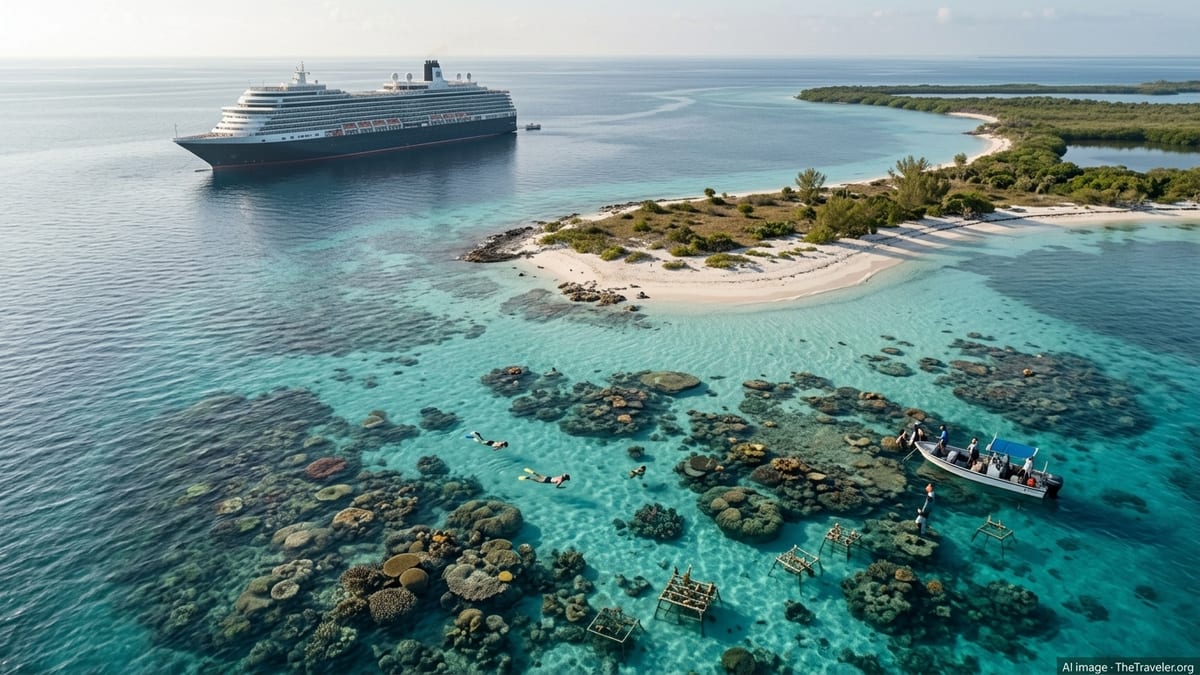
As climate change, pollution and disease batter coral reefs across the Caribbean, a growing number of cruise itineraries are quietly adding something unexpected to the usual mix of beaches and buffets: hands-on opportunities for passengers to help bring damaged reefs back to life.
Get the latest news straight to your inbox!
A Region on the Front Line of Coral Decline
Coral reefs in the Caribbean have been losing ground for decades, with studies indicating that the region has already lost a significant share of its living coral cover since the 1970s. Warmer seas, increasingly frequent marine heatwaves, stronger storms, coastal development and land-based pollution have combined to push many once-vibrant reef systems into steep decline. Conservation organizations describe the Caribbean as one of the global epicenters of coral stress, but also a proving ground for large-scale restoration techniques.
Despite these pressures, reefs remain central to the region’s economy. Publicly available data show that tourism and fisheries linked to healthy coral systems support millions of livelihoods, while reef structures themselves provide critical natural defenses against coastal erosion and storm surge. That combination of ecological and economic importance has pushed governments, scientists and non-profits to experiment with new approaches to stabilizing and rebuilding damaged coral communities.
In that context, the cruise industry, long scrutinized for its environmental footprint, is emerging as both a challenge and a potential part of the solution. New projects at cruise-owned islands, popular ports of call and nearby marine reserves suggest that, under certain conditions, cruise ships and their passengers can help accelerate reef restoration rather than undermine it.
From Sand Mine to Marine Reserve at Ocean Cay
One of the most visible examples of this shift sits in the northern Caribbean, where an abandoned industrial sand quarry has been transformed into Ocean Cay MSC Marine Reserve. Company and foundation documents describe how the cay in The Bahamas was redeveloped into a private island destination surrounded by a protected marine area spanning roughly 64 to 65 square miles, with restoration work focused on nearby coral beds and seagrass habitats.
Central to that effort is the Super Coral Programme, which has established coral nurseries for critically endangered reef-building species such as elkhorn coral. Scientific summaries report that the project is testing thermally tolerant coral strains and propagation methods designed to withstand recent marine heatwaves that have devastated natural reefs in many parts of the Caribbean. The nurseries are intended to serve as a source of resilient corals that can be outplanted on degraded reef structures around the island.
In April 2025, the MSC Foundation opened a dedicated Marine Conservation Center on Ocean Cay, turning part of the cruise stop into a working hub for research, restoration and education. Publicly available information indicates that the facility includes laboratories, coral tanks and spaces for visiting graduate students and scientists to trial new restoration techniques at a scale rarely possible in more remote sites. For cruise passengers, the island’s interpretive areas and optional excursions introduce the realities of reef decline and the science behind coral gardening, offering a very different experience from the traditional beach day.
The redevelopment of Ocean Cay underscores how cruise-controlled destinations can be repurposed to support conservation. Instead of building additional piers or resort-style infrastructure in sensitive areas, the project has focused on restoring the island’s natural profile, expanding native vegetation and using solar power and advanced wastewater treatment to reduce local impacts on surrounding reefs.
Passenger Excursions as Citizen Science
Beyond private islands, several cruise lines and shore operators are positioning reef-focused excursions as a way for travelers to participate directly in conservation. Shore tour descriptions for various Caribbean and tropical itineraries highlight activities such as assisting marine biologists with coral health surveys, taking part in coral gardening sessions and helping maintain underwater nurseries used to grow young corals before they are transplanted to nearby reefs.
These programs draw on methodologies developed over the past decade by organizations such as Reef Renewal Bonaire and other regional partners, which have refined techniques for fragmenting, growing and reattaching corals across multiple islands. Workshop reports from 2025 describe how restoration practitioners are now sharing standardized protocols and data to increase the survival and growth rates of corals once they are moved back onto degraded reefs, creating a knowledge base that tourism-focused operators can adapt for visitor experiences.
For cruise passengers, the result is a gradual shift from purely recreational snorkeling trips to optional excursions framed as citizen science. Guests may help clean algae from nursery frames, measure coral fragments or photograph reef sections for monitoring purposes. While the scientific value of any single vacation activity is modest, conservation groups argue that these programs can generate long-term benefits by funding ongoing fieldwork, building local capacity and increasing public support for stronger reef protections.
There are also growing efforts to integrate reef-friendly practices into everyday shore time. Some ports and tour operators emphasize biodegradable reef-safe sunscreens, encourage guests to avoid touching or standing on corals and provide short briefings on how simple behavioral changes in the water can reduce stress on fragile reef organisms.
Cruise Investments and Coastal Resilience
At the same time, broader investment patterns tied to cruise tourism are intersecting with regional strategies for climate resilience. Coral conservation groups, development banks and environmental organizations have launched joint initiatives to finance reef restoration as a form of natural coastal infrastructure, arguing that rebuilt coral structures can help buffer storm impacts on coastal communities that depend on tourism hubs and port facilities.
Partnership announcements in recent years describe technical and financial support for coral projects in countries such as Colombia, Costa Rica and Mexico, where reefs play a key role in protecting low-lying shorelines and tourist resorts. These efforts often combine scientific restoration work with community-based programs that train local residents as coral gardeners, dive guides or marine park rangers, linking economic opportunity to long-term stewardship of nearby reefs.
Cruise lines, which rely on both attractive underwater landscapes and resilient ports, have begun to align some of their corporate sustainability strategies with these regional initiatives. Public sustainability reports highlight investments in cleaner fuels, improved wastewater treatment and coastal habitat projects alongside reef-focused work. While these measures do not offset all of the environmental impacts associated with large vessels, they indicate a move toward more integrated planning that views coral health as an asset rather than an obstacle to development.
Ports that welcome cruise traffic are also starting to explore how their infrastructure can be planned to minimize additional damage to reefs. In some locations, newer pier designs and operational guidelines are being promoted as ways to limit sediment disruption, propeller wash and direct contact with coral colonies in shallow water, though conservation advocates continue to call for stronger safeguards in high-traffic areas.
What Travelers Can Expect on Reef-Focused Sailings
For travelers considering a Caribbean cruise with an eye on reef conservation, the experience increasingly goes beyond a single volunteer activity. On some itineraries, guests encounter a mix of on-board talks, island-based learning centers and guided snorkel trips that showcase both healthy reefs and restoration sites. At destinations like Ocean Cay, information centers and signage explain how coral nurseries work, why certain areas of the seabed are off-limits and how climate stress is reshaping marine ecosystems across the region.
Published coverage and visitor accounts suggest that many of these offerings remain optional and low-key rather than intrusive. Passengers can still choose a relaxed beach day, but a growing share opt into reef-related experiences once they understand that their ticket revenue and excursion fees help fund ongoing scientific and conservation work. Cruise lines, for their part, are gradually marketing these initiatives as part of a broader shift toward more responsible tourism rather than as standalone charity projects.
Travel experts note that the quality and depth of reef programs can vary widely between cruise brands and individual ports. Prospective passengers who want their trip to support coral restoration are advised to look for itineraries that mention established partnerships with recognized marine organizations, clearly describe how funds are allocated and provide transparent information about conservation outcomes rather than just promotional language.
As coral reef restoration moves from experimental plots to larger-scale interventions around the Caribbean, cruise ships are likely to remain both a pressure and a potential ally. For now, travelers who choose carefully and participate thoughtfully can find sailings where time spent in the water contributes, in a small but tangible way, to the recovery of the very reefs that drew them to the Caribbean in the first place.