

More news on this day
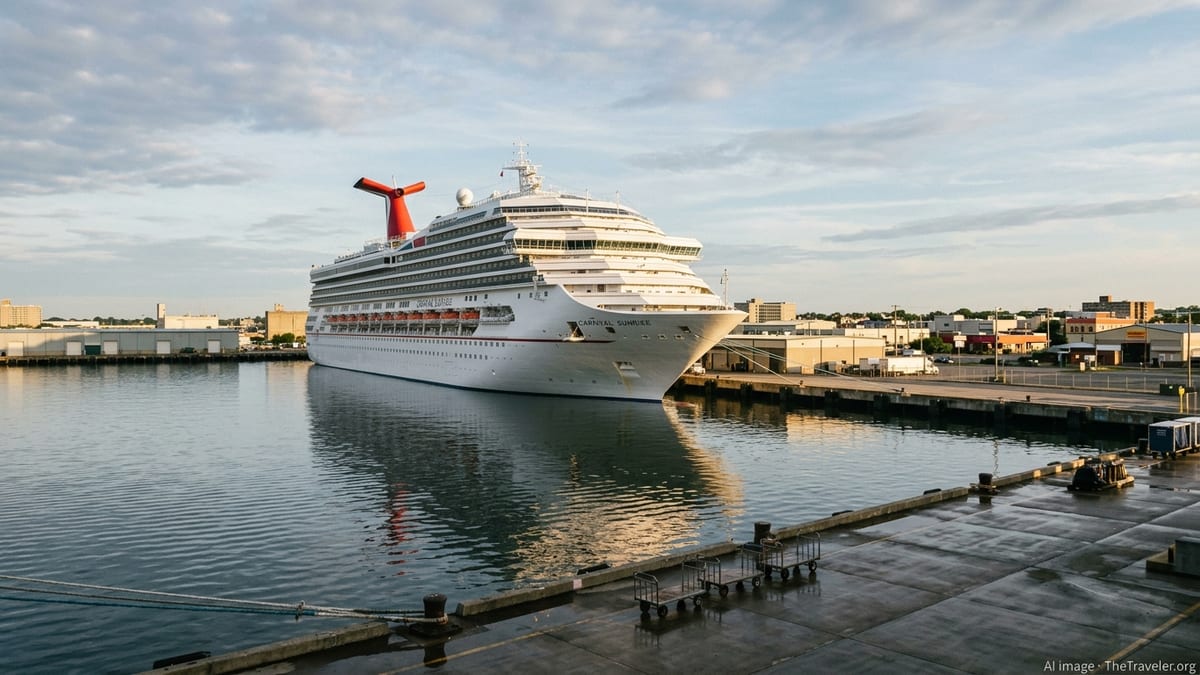
Once synonymous with the notorious 2013 “Poop Cruise,” Carnival Triumph has since undergone one of the most dramatic image and hardware overhauls in modern cruising, reemerging in 2019 as Carnival Sunrise after a $200 million transformation.
Get the latest news straight to your inbox!
From Engine Room Fire to Infamous Nickname
The ship that now sails as Carnival Sunrise entered service in 1999 as Carnival Triumph, part of Carnival Cruise Line’s Destiny-class. For more than a decade it operated routine Caribbean itineraries before a series of mechanical issues in early 2013 culminated in one of the industry’s most publicized breakdowns.
On February 10, 2013, a fire in the aft engine room disabled Carnival Triumph in the Gulf of Mexico during a four day cruise from Galveston, Texas, with more than 4,200 passengers and crew on board. Subsequent reporting and official investigations found that the blaze originated in the engine space and knocked out propulsion and much of the vessel’s electrical power.
With the ship adrift and key systems offline, conditions on board deteriorated over several days as the vessel was towed toward Mobile, Alabama. Raw sewage backups, limited sanitation, and air conditioning failures were widely documented by passengers and media outlets, which quickly labeled the episode the “Poop Cruise.” The phrase would become shorthand for one of the most damaging public relations crises in Carnival’s history.
Coverage of the incident extended well beyond the cruise press, with mainstream news organizations detailing passenger accounts of inoperable toilets, makeshift sanitation measures, and long waits for basic services. Publicly available information from maritime authorities and safety agencies later outlined a chain of technical vulnerabilities that amplified the impact of the engine room fire.
Safety Scrutiny and Operational Changes
The fallout from the 2013 breakdown went beyond headlines. The event prompted extensive scrutiny of Carnival Triumph’s systems and of fleetwide practices at Carnival Cruise Line. Investigations examined maintenance routines, fire prevention, and redundancy in power generation and hotel services, aiming to reduce the risk that a single incident could again disable so many critical functions.
According to publicly available investigation reports, post incident actions included modifications to fuel line arrangements, upgrades to fire detection and suppression equipment, and changes to engine room inspection procedures. Industry observers noted that the episode became a case study in how loss of power on a large cruise ship can quickly cascade into sanitation and habitability challenges.
At the same time, corporate communications focused on compensation, future cruise credits, and policy changes intended to reassure passengers. Carnival publicly detailed new operational protocols and emergency response planning, as well as additional investment in maintenance and technical reliability across the fleet.
Yet, despite continued service as Carnival Triumph for several more years, the ship’s association with the “Poop Cruise” remained a persistent reference point in public discourse. Travel forums, news features, and follow up coverage regularly revisited the 2013 incident whenever the vessel appeared in the news, underscoring how difficult it can be for a cruise brand to move past a high profile failure.
A Record Breaking $200 Million Rebirth
By 2018, Carnival Cruise Line signaled a decisive reset. The company announced that Carnival Triumph would undergo what it described as a bow to stern makeover in spring 2019 and would be renamed Carnival Sunrise upon completion. Industry publications reported a budget of about 200 million dollars for the project, the largest single ship refit in the company’s history.
The conversion took place over roughly 38 days at the Navantia shipyard in Cádiz, Spain, beginning in March 2019. Reports indicate that around 7,000 shipyard workers and ship staff were involved, working around the clock to strip, rebuild, and reconfigure large portions of the vessel. The scope of work extended far beyond cosmetic refreshes to include structural changes, new cabins, and updated technical systems.
Published coverage notes that the project added more than one hundred new staterooms and suites, modernized the ship’s atrium and public spaces, and integrated newer Carnival branded venues such as Guy’s Pig & Anchor Bar B Que Smokehouse, RedFrog Pub, expanded WaterWorks slides, and an upgraded adults only Serenity retreat. Dining, entertainment, and pool deck layouts were reworked to align the ship more closely with newer vessels in the fleet.
Technical upgrades were another core element of the transformation. While not all details have been disclosed, trade reports describe investments in energy efficiency, hotel systems, and behind the scenes infrastructure informed in part by lessons drawn from earlier mechanical failures. The result was a ship that, while retaining its original hull and basic dimensions, effectively relaunched with a new identity and substantially updated hardware.
Rebranding Strategy and Public Perception
The decision to rename Carnival Triumph as Carnival Sunrise was widely viewed as both a marketing move and a symbolic break from the “Poop Cruise” narrative. With the refit, Carnival integrated the ship into a branding pattern that had previously seen Carnival Destiny reborn as Carnival Sunshine after a major overhaul, positioning Sunrise as part of a refreshed subset of the fleet.
When Carnival Sunrise debuted from Norfolk, Virginia in late April 2019, travel media coverage focused heavily on the new venues and redesigned spaces, often framing the story as a complete transformation rather than a refurbishment. The ship’s christening in May 2019, with a new godmother and a new name, reinforced the reintroduction to consumers as essentially a different product from the vessel that had drifted powerless in 2013.
Consumer response, as reflected in reviews and travel commentary, gradually shifted from the earlier focus on the 2013 breakdown to assessments of the updated layout, food options, and entertainment. While some passengers still referenced the ship’s past, particularly those familiar with the “Poop Cruise” coverage, the marketing narrative increasingly emphasized Sunrise’s expanded amenities and refitted accommodations.
At the same time, the refit fit into a broader trend in the cruise industry toward large scale conversions that extend the commercial life of existing tonnage. By investing heavily in a high profile rebuild, Carnival demonstrated a willingness to both address brand baggage and capitalize on the ship’s underlying structure in a way that was more cost effective than ordering a newbuild of equivalent capacity.
Legacy of a Crisis Turned Case Study
More than a decade after the 2013 incident, the ship now known as Carnival Sunrise operates as a cautionary tale as well as an example of recovery. Training materials, academic analyses of cruise safety, and consumer rights discussions continue to reference the breakdown of Carnival Triumph as a pivotal moment in public awareness of cruise ship vulnerabilities.
The transformation into Carnival Sunrise did not erase that history, but it reframed the vessel’s story. Instead of being permanently defined by images of inoperable toilets and towed homecomings, the ship is now frequently cited for having undergone one of the most extensive refurbishments the sector has seen, blending damage control with product innovation.
For the wider cruise industry, the trajectory from “Poop Cruise” to Sunrise underscores how a single high impact incident can accelerate changes in safety practices, technical standards, and communications strategies. It also shows how operators attempt to rebuild trust through tangible investment in hardware alongside careful rebranding.
As Carnival Sunrise continues to sail with updated amenities and a reworked public image, its dual identity remains part of its allure for some travelers and a footnote for others. The ship’s evolution illustrates how modern cruise lines navigate the long wake of a crisis, turning a widely publicized breakdown into the starting point for one of their most ambitious transformations.