

More news on this day
Luxury travel is moving beyond private pools and fine dining, as new openings, investment trends and global tourism frameworks point to a future where meaningful community connection is central to the guest experience.
Get the latest news straight to your inbox!
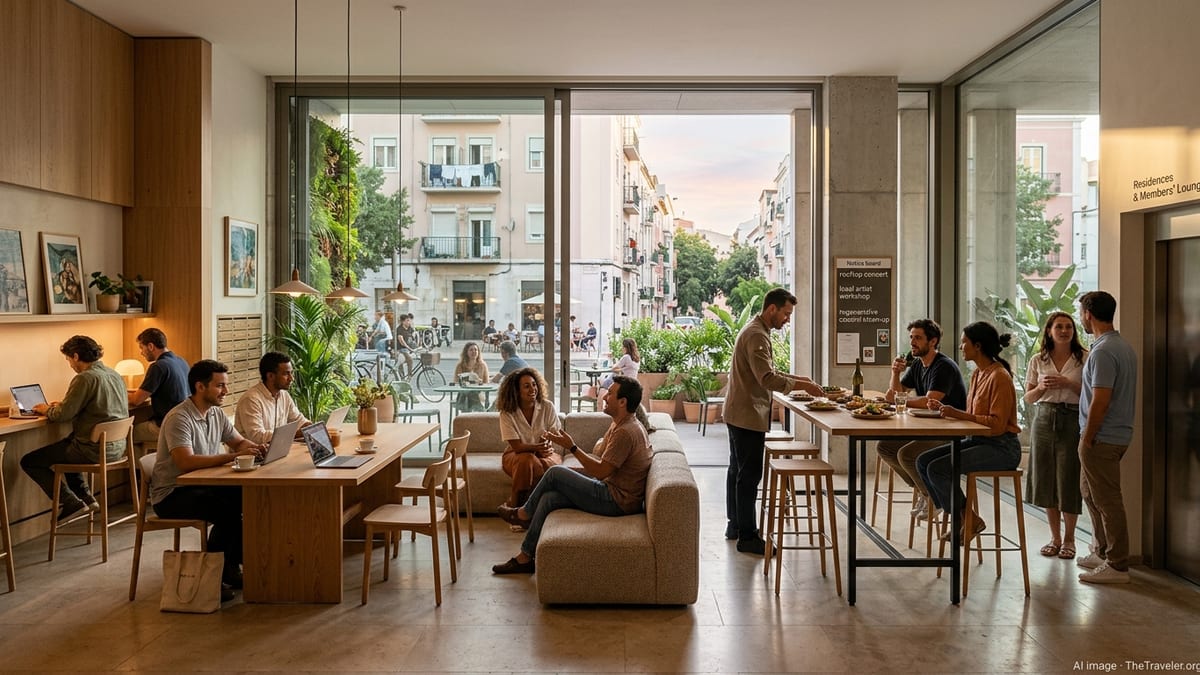
Luxury Travelers Seek Connection, Not Isolation
Recent industry analysis indicates that high-end travelers in 2025 and 2026 are increasingly prioritizing social connection, cultural immersion and shared experiences over traditional symbols of status. Reports on global luxury travel trends note a convergence of work and leisure, wellness, and community-driven experiences, with guests expecting hotels to serve as social hubs as much as places to sleep. This shift is particularly visible among millennial and Gen Z travelers, who value interaction, authenticity and purpose as core components of a premium stay.
Consulting and trend reports widely cited in the sector describe a behavioral turn sometimes framed as a move from screen fatigue to “social rewilding,” where travelers seek real-world, in-person connection in environments that still feel curated and elevated. In this context, the most desirable properties are those that make it easy to meet others with similar interests, participate in local culture and feel part of a temporary community without sacrificing comfort or privacy.
Luxury brands are responding with social programming that ranges from chef-led communal dinners and rotating cultural residencies to pop-up galleries, rooftop concerts and co-working salons. The hotel is positioned less as a sealed-off sanctuary and more as a platform for serendipity, where design, staffing and technology quietly choreograph opportunities for guests to connect with one another and with their surroundings.
This recalibration of expectations is beginning to reshape how success is measured. Instead of focusing solely on average daily rate or suite size, more operators are tracking engagement with community events, repeat stays linked to neighborhood loyalty and qualitative feedback about belonging and emotional connection.
Branded Residences and Hybrid Spaces Blur Home and Hotel
The surge in branded residences and mixed-use developments is one of the clearest signs that community and luxury are converging. Industry briefings ahead of major hospitality summits highlight that the branded residences sector has grown sharply over the past decade, with thousands of projects worldwide and dedicated conferences examining how “loyalty, lifestyle and living” now intersect in the same building.
These projects, often backed by well-known hotel flags, offer owners and long-stay guests access to hotel-style services, curated amenities and member programming while embedding them in local neighborhoods. Recent announcements around high-rise luxury towers and resort communities show developers emphasizing private clubs, multi-level social spaces, co-working lounges and resident-only cultural calendars as key selling points, on par with spas and signature restaurants.
Hotel groups are also reorganizing their brand portfolios to reflect lifestyle and community priorities. Publicly available corporate materials from major chains show a clearer distinction between classic business hotels and newer lifestyle and luxury concepts that foreground culture, food and beverage and social design. In these properties, lobbies are configured as living rooms and workspaces, guestrooms are optimized for longer stays, and ground floors are opened up to local residents through cafes, markets and events.
Analysts suggest that this blending of home, hotel and members’ club responds to a traveler who may spend weeks or months in one destination, expects a sense of neighborhood continuity, and evaluates value through access to networks and experiences rather than room hardware alone.
Regenerative Tourism Puts Communities at the Center of Luxury
Alongside the push for social connection, luxury travel is increasingly being defined by its impact on host communities and ecosystems. Sector-specific research and destination reports describe regenerative tourism as a leading trend in high-end travel for 2025, with affluent guests seeking stays that leave a place better than they found it. This approach goes beyond minimizing harm to proactively support environmental restoration, cultural preservation and local livelihoods.
Case studies recognized by industry initiatives, including regenerative travel awards and virtual symposiums, highlight properties that integrate conservation projects, community-owned enterprises and cultural co-creation into the guest journey. Examples range from remote eco-lodges supporting habitat restoration and youth employment to coastal resorts investing in marine protection and circular-economy pilots. In each case, luxury is presented as the capacity to participate in positive change, not only to enjoy exclusive surroundings.
Global policy frameworks are reinforcing this direction. A recent initiative convened by international tourism and economic organizations introduced “Principles for Transformative Tourism,” which call for travel to function as a net-positive force for people and planet. These principles encourage operators, investors and destination managers to design visitor experiences that support social inclusion, cultural resilience and environmental regeneration alongside financial performance.
For travelers, this means that a luxury stay is increasingly marketed through impact indicators: hectares of land restored, local suppliers engaged, cultural programs funded and community partnerships established. For destinations, the integration of luxury and community outcomes offers a way to manage tourism growth while maintaining social acceptance and long-term viability.
Designing Hotels as Social Infrastructure
The redefinition of guest experience is also visible in how new hotels and redevelopments are being designed. Architectural coverage in recent months has spotlighted heritage buildings converted into luxury properties where communal spaces, rooftop terraces and multi-use lounges take precedence over traditional grand lobbies. These projects often preserve historic exteriors while reconfiguring interiors to accommodate co-working, informal gatherings and cultural events.
Extended-stay and hybrid hospitality brands provide another blueprint. Public information on companies such as Zoku, which operates in several European cities, shows a model built around loft-style rooms combined with shared workspaces, “living kitchen” restaurants and programed community events. The brand’s pursuit of certifications linked to social and environmental performance underscores how community engagement is increasingly seen as a mark of quality in the upscale segment.
Industry research outside hospitality, focused on temporary co-living communities and so-called “pop-up cities,” has described the value of “scaffolded spontaneity” in social design. Applied to hotels, this translates into spatial layouts and digital tools that make it easy to discover activities, join small-group experiences and move seamlessly between solitude and sociability. The hotel functions as social infrastructure, quietly orchestrating interactions while respecting privacy and varied guest needs.
For owners and operators, this design philosophy can deepen guest loyalty and differentiate properties in crowded urban markets. A strong social offering also creates additional revenue opportunities through memberships, events and partnerships with local creative and entrepreneurial communities.
From Niche Concept to New Benchmark for Luxury
What began as a niche for lifestyle hotels and remote eco-retreats is rapidly becoming a new benchmark across the luxury spectrum. Investor presentations and conference agendas in early 2026 emphasize uniquely positioned luxury and upper-upscale hotels that combine strong design, destination storytelling and measurable community impact. Awards programs now routinely highlight community engagement, regenerative design and social innovation as criteria for recognizing leading properties.
Analysts note that this evolution is not purely values-driven. Data shared in sustainability-focused reports suggests that demand for responsible and community-attuned luxury experiences is growing, with wellness-oriented and environmentally aligned travel projected to outpace the broader market. As high-spend guests reward brands that align with their expectations around purpose and connection, community-centric models are being framed as a pathway to long-term profitability.
For destinations, the rise of community-focused luxury has strategic implications. It encourages a shift away from volume-driven visitation toward higher-yield travelers who stay longer, spend more with local businesses and are more invested in cultural and environmental stewardship. It also prompts closer collaboration between hotel developers, local governments and community organizations to ensure that new projects support shared goals.
As the sector looks toward the next decade, the guest experience at the top end of the market is likely to be defined less by how insulated travelers feel from the world outside and more by how deeply they are invited into it. In this emerging model, community is not an optional extra but the core of what makes luxury travel feel truly exceptional.