

More news on this day
Years after Delta Air Lines retired its final Boeing 747 from passenger service, the Queen of the Skies has reappeared across the airline’s brand in surprising and carefully curated ways.
Get the latest news straight to your inbox!
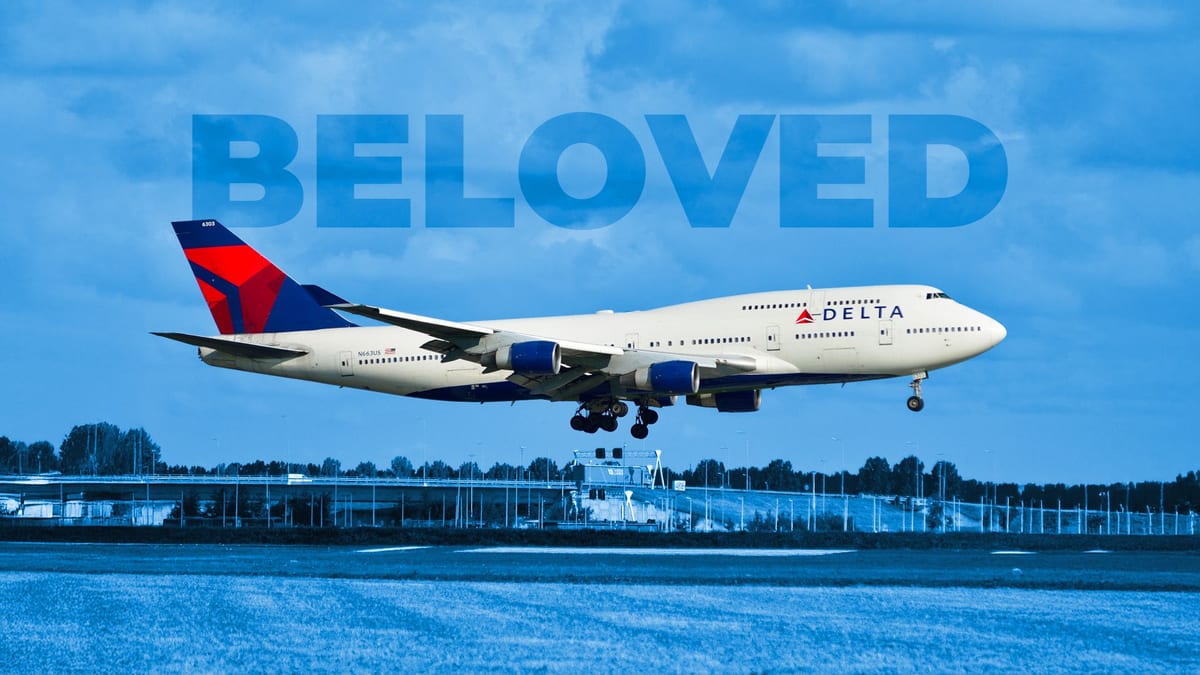
Image by Simple Flying
From Flagship Workhorse To Final Farewell
Delta’s relationship with the Boeing 747 stretches back through its merger with Northwest Airlines, which brought a sizable fleet of 747-400s into the combined carrier. Publicly available fleet data shows that by late 2017 Delta was the last United States passenger airline still operating the jumbo jet, long after most competitors had shifted to more efficient twin-engine models.
As fuel prices rose and new-generation aircraft such as the Airbus A350 entered the fleet, the economics of four-engine widebodies grew harder to justify. Delta outlined plans to retire the 747-400 by the end of 2017, and by December that year the airline’s final scheduled passenger services using the type had taken place between Detroit and Seoul. Aviation industry reports at the time described the flights as the closing chapter of 47 years of combined 747 operations at Northwest and Delta.
The retirement did not pass quietly. Delta organized a farewell tour of the aircraft, including domestic “goodbye” flights and charter services that allowed employees and enthusiasts to experience the jumbo jet one last time. Travel industry coverage highlighted the level of nostalgia that surrounded these events, underscoring the emotional connection many travelers felt to an aircraft often associated with the golden age of long-haul flying.
Although the last 747 left Delta’s scheduled roster in late 2017, the aircraft’s story at the airline was far from over. Rather than disappearing entirely, the Queen of the Skies began to re-emerge in different roles across the company’s public face.
A Museum Centerpiece In Atlanta
One of the most visible ways Delta preserved the 747 was by turning a former Northwest 747-400 into a permanent exhibit at the Delta Flight Museum near Hartsfield Jackson Atlanta International Airport. The aircraft, ship 6301 and tail number N661US, was the first 747-400 ever built. It was moved onto the museum campus and opened to the public as “The 747 Experience,” complete with interior access and a custom walkway built along the wing.
Information from the museum describes the jumbo jet as both a historical artifact and an event venue. Visitors can tour the aircraft, view preserved cabin layouts and step into the flight deck, while corporate and private groups are able to host functions inside the fuselage. The setting has effectively turned the Queen of the Skies into a living classroom on widebody evolution, air travel design and the role of long-haul jets in global connectivity.
The exhibit also gives Delta a permanent three dimensional symbol of its long haul heritage. Photography of the aircraft often appears in corporate communications and aviation media, reinforcing the link between the brand and one of the most recognizable silhouettes in commercial aviation. For travelers passing through Atlanta, the museum has become an accessible way to reconnect with a type that no longer flies passengers for any major United States carrier.
By anchoring a 747 at its home base, Delta ensured that the aircraft’s retirement would not mean disappearance. Instead, the airline repositioned the Queen of the Skies as a piece of industrial history and a backdrop for storytelling about the company’s global ambitions.
From Airframe To Airplane Metal Credit Card
Delta’s 747 comeback has not been limited to the museum. In partnership with American Express, the airline has turned retired airframes into an unexpected product on the ground. A recent limited edition refresh of the Delta SkyMiles Reserve credit card introduced designs manufactured using metal sourced from two former Delta Boeing 747 aircraft.
According to published coverage of the launch, the card faces are created from reclaimed fuselage material taken from 747s retired after more than 27 years of service. Each card incorporates details tied to a specific airframe, including tail number, inaugural and final flight dates and total miles flown during the aircraft’s career. The design effectively lets frequent flyers carry a small piece of the Queen of the Skies in their wallets.
The move fits into a wider trend of airlines and manufacturers repurposing retired aircraft components as consumer items, but the 747 connection gives Delta’s effort particular resonance. For aviation enthusiasts, the cards function as both payment tools and collectible artifacts. For Delta and American Express, they provide a tangible link between the romance of long haul travel and a high end financial product.
By transforming surplus metal into a premium card, Delta extended the lifecycle of its retired jumbos beyond the scrapyard. The aircraft no longer carry passengers, yet fragments of their structure remain in daily circulation with some of the airline’s most loyal customers.
Heritage, Branding And Fan Culture
The reappearance of the 747 across Delta’s museum, marketing and co branded products reflects a broader shift in how airlines leverage heritage. Rather than treating retired types purely as sunk costs, carriers are increasingly viewing them as assets that can reinforce brand identity and engage niche audiences.
Enthusiast communities and frequent flyer forums regularly highlight Delta’s 747 initiatives as examples of how to honor a classic aircraft while still focusing on a modern fleet. Discussions often note that while the airline has moved on to twin engine widebodies with lower emissions and operating costs, it continues to acknowledge the emotional weight the Queen of the Skies carries for many travelers.
The 747’s new roles also support Delta’s broader storytelling around innovation and continuity. The museum exhibit allows the airline to show how cabin products have evolved from early long haul configurations to today’s lie flat suites, while the card program underscores the idea that even as metal is recycled, the spirit of past aircraft lives on within the brand.
For an airline that once flew the 747 across flagship routes linking the United States with Asia and Europe, these heritage touches help bridge the gap between eras. The Queen of the Skies now functions as a symbol for Delta’s journey from a legacy of four engine jumbos to a future built on more efficient aircraft, without losing the sense of wonder that made the jumbo jet famous.
A Comeback Without Returning To The Skies
Despite occasional social media speculation, there is no indication that Delta plans to bring the 747 back into active passenger service. The aircraft’s comeback at the airline is symbolic rather than operational, taking shape through museum preservation, branded merchandise and carefully targeted marketing efforts.
Industry analysts point out that the economics of the type are difficult to reconcile with the priorities of modern network planning, especially given advances in twin engine widebodies and growing attention to fuel burn and emissions. Against that backdrop, the form of the 747’s return at Delta is notable precisely because it keeps the aircraft in the public eye without putting it back on the schedule.
In effect, Delta has turned the Queen of the Skies into a multifaceted heritage platform. The aircraft that once embodied mass international travel now serves as a museum anchor, a collectible embedded in a metal credit card and a recurring visual motif in the airline’s storytelling. For passengers who once crossed oceans on the upper deck and for younger travelers who know the 747 only from photographs, these efforts ensure that the jumbo jet’s legacy remains visible in the Delta universe.
The Queen of the Skies may no longer thunder down Delta runways, but through preservation, product design and brand strategy, the airline has found ways to give its most famous four engined icon an unlikely second act.