

More news on this day
As the United States races toward a historic year that will pair the 2026 FIFA World Cup with nationwide America250 celebrations, Destination Capitol Hill is becoming a central stage where the travel industry seeks to influence how the country manages an unprecedented wave of visitors, security needs, and economic opportunity.
Get the latest news straight to your inbox!
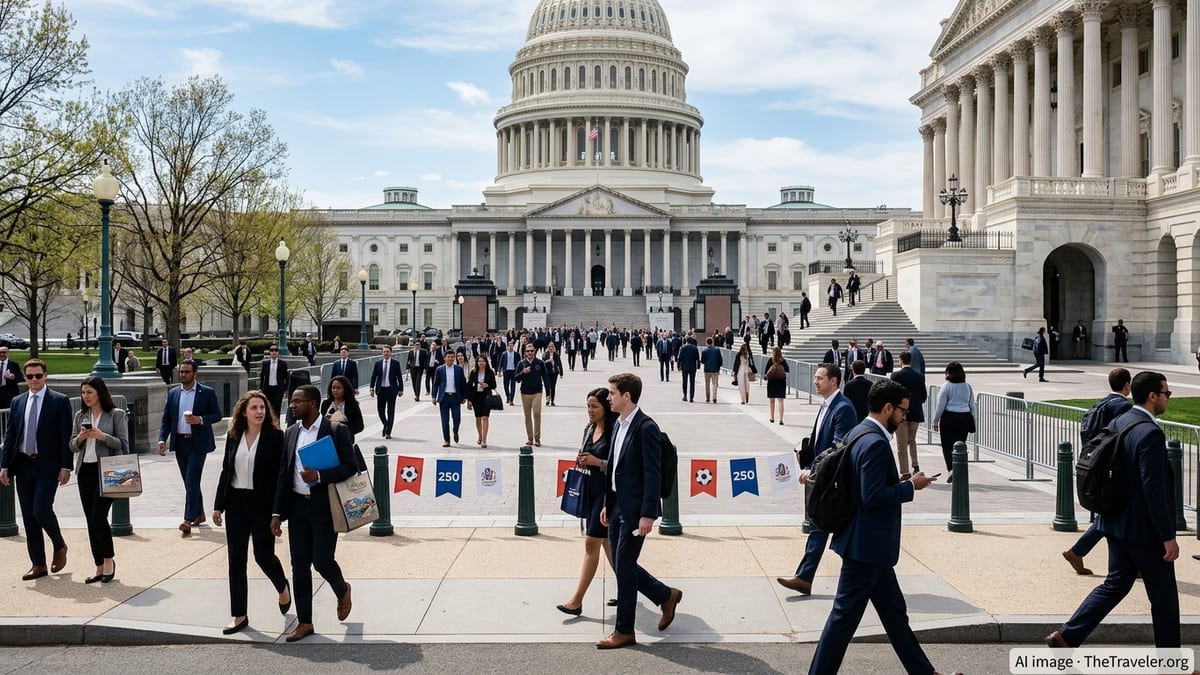
Advocacy Event at the Heart of a Historic Tourism Year
Destination Capitol Hill, organized by the U.S. Travel Association, is widely described in public materials as the travel industry’s premier advocacy gathering, bringing hundreds of tourism leaders to Washington, D.C. each year. Participants range from destination marketing organizations and convention bureaus to airlines, hotel groups, and attraction operators, all focused on shaping federal policy that affects how visitors experience the United States.
Recent program descriptions show that upcoming editions of Destination Capitol Hill are explicitly framed around a “decade of sports” and milestone events, with the 2026 FIFA World Cup and the nation’s 250th anniversary in 2026 at the center. The event is positioned as a forum to press for policy changes that can unlock visitor growth, reduce friction in the travel process, and ensure that U.S. infrastructure is prepared for record crowds.
Briefing documents circulated for recent gatherings indicate that sessions now spotlight topics such as visa processing, airport modernization, national parks funding, and event security coordination. The message from industry advocates is that without targeted action from Congress and federal agencies, the United States risks squandering a rare opportunity to showcase the country to millions of first-time visitors.
U.S. Travel’s own progress reports describe steady growth in the scale and reach of Destination Capitol Hill, noting that hundreds of executives have fanned out across Capitol Hill to meet with a large share of Senate and House offices, signaling that travel is seeking a more defined place in national economic policy discussions.
Aligning Policy With the 2026 FIFA World Cup
The expanded 2026 FIFA World Cup is expected to be one of the largest sporting events ever held, with federal transportation analysis forecasting as many as 6 million visitors moving among 16 venues across the United States, Canada, and Mexico between June 11 and July 19, 2026. U.S. host cities are preparing for a compressed surge in air travel, cross-border movements, intercity rail and highway traffic, and urban transit demand.
Federal agencies have begun publishing planning frameworks for these movements, including guidance from the Federal Highway Administration on managing “planned special events” at scale and ensuring that surface transportation networks can cope with game days and fan festivals. Simultaneously, a White House task force has been formed to coordinate federal involvement in the 2025 FIFA Club World Cup and the 2026 tournament, underscoring the event’s national importance.
At Destination Capitol Hill, the travel sector is using these developments as leverage to argue for broader reforms. Talking points prepared for attendees emphasize the need to modernize the nation’s travel systems, with advocacy materials citing estimates in the billions of dollars to bring airports, entry processes, and visitor infrastructure in line with global competitors. Industry groups have also drawn attention to new federal visa-related fees that, according to reporting by outlets such as Axios, could discourage potential visitors just as the tournament approaches.
Advocates at Destination Capitol Hill are pressing for streamlined visa processing, expanded use of trusted traveler programs, and targeted funding to support host city transit, security, and wayfinding. Public summaries of their agenda argue that without these improvements, bottlenecks at consulates, airports, and city gateways could dent visitor satisfaction and reduce the long-term economic legacy of the World Cup.
America250: Tourism at the Core of the Semiquincentennial
Layered on top of the World Cup is America250, the branding used for the United States’ 250th anniversary in 2026. National planning bodies, including the United States Semiquincentennial Commission and a White House task force on the celebration, are working with federal agencies and states to design events that stretch from historic sites on the East Coast to national parks and cultural attractions nationwide.
Tourism is emerging as a central plank of these celebrations. Destination-marketing agency Brand USA has launched initiatives such as an “America the Beautiful Game” trip-planning hub that links World Cup itineraries with broader travel experiences and highlights 250 themed things to do across the country. Public information on these plans frames 2026 as a moment to encourage visitors to go beyond host cities and explore lesser-known regions.
Yet planning for America250 has not been without controversy. Recent reporting has highlighted funding tensions surrounding the official America250 organization and concerns from some members of Congress about whether appropriated money is reaching the intended programs. These debates, while political in nature, have practical implications for tourism because they affect support for heritage projects, interpretive programming, and national marketing campaigns.
Destination Capitol Hill has become one of the venues where the travel industry is seeking clarity. Advocacy documents tied to the event urge lawmakers to fully resource both World Cup and semiquincentennial initiatives and to view them as interconnected drivers of international and domestic travel. The goal, as described in publicly available talking points, is to use 2026 to reset the United States’ global tourism brand after years of disruption.
Security, Infrastructure and Visitor Experience in the Spotlight
Security and infrastructure are recurring themes in both federal planning documents and Destination Capitol Hill briefing materials. The Department of Homeland Security has announced new efforts, including a specialized office focused on drone threats, reflecting concerns about protecting packed stadiums and open fan zones during both World Cup matches and America250 gatherings. Federal Emergency Management Agency grants announced in late 2025 earmarked hundreds of millions of dollars for counter-drone and security technology in World Cup host states and Washington, D.C.
Transportation investment is another front. Public communications from the Department of Transportation and transit agencies show targeted funding packages for host city transit systems, intended to expand capacity, improve accessibility, and shorten transfer times for visitors moving between airports, downtowns, and stadiums. In some regions, debates over local security and operating costs have made headlines, underscoring how much is riding on intergovernmental coordination.
Within this context, Destination Capitol Hill participants are advocating for what they describe as a seamless end-to-end visitor experience, from visa application and airport arrival through to intercity connections and digital wayfinding. Industry-generated reports, highlighted at recent events, argue that travelers increasingly compare border procedures, rail connectivity, and digital information across competing destinations, meaning any friction during 2026 could influence perceptions of the United States for years.
To address this, the advocacy agenda promoted at Destination Capitol Hill calls for measures such as modernized airport screening technology, improved staffing at ports of entry, smart signage in multiple languages, and expanded funding for national parks and public lands that are expected to see surging visitation during the anniversary year. The overarching narrative presented to lawmakers is that welcoming infrastructure is not just a security necessity, but a competitive economic asset.
What Travelers and the Industry Should Watch Next
With just months to go before the first visitors arrive for 2026’s major events, several policy tracks emerging from Destination Capitol Hill and federal planning will be closely watched by both the industry and travelers. These include potential adjustments to new visa-related fees, continued rollout of federal grants for transit and security, and finalization of national branding campaigns linking the World Cup with America250 experiences.
Travel-industry analysis suggests that demand is strong, but not guaranteed. U.S. Travel and other groups have repeatedly warned in public reports that the country is vying with destinations in Europe, Asia, and the Middle East that have invested heavily in streamlined entry, high-speed rail, and major cultural programming. Ensuring that U.S. airports, downtowns, and heritage sites feel ready and welcoming in 2026 is therefore as much about long-term positioning as it is about the immediate visitor bump.
For travelers, publicly available planning tools are multiplying. Host cities are releasing venue maps and transit guides, Brand USA and state tourism offices are publishing suggested itineraries that pair matches with road trips or national park visits, and airlines are shaping schedules around peak match days. Observers expect these resources to expand rapidly as the tournament and semiquincentennial draw nearer.
Behind the scenes, Destination Capitol Hill will remain one of the forums where the travel sector seeks to keep these issues high on the federal agenda. As advocacy groups return to Washington in 2025 and 2026, their message is likely to stay consistent: the way the United States manages this extraordinary convergence of sport and history will influence its tourism trajectory well beyond the final whistle and fireworks.