

More news on this day
As Dubai International Airport navigates a turbulent start to 2026, its playbook for handling disruptive weather and wider regional shocks is increasingly defined by rapid operational suspensions, aggressive use of diversions, and a finely calibrated restart strategy designed to keep one of the world’s busiest hubs moving while keeping passengers and crews safe.
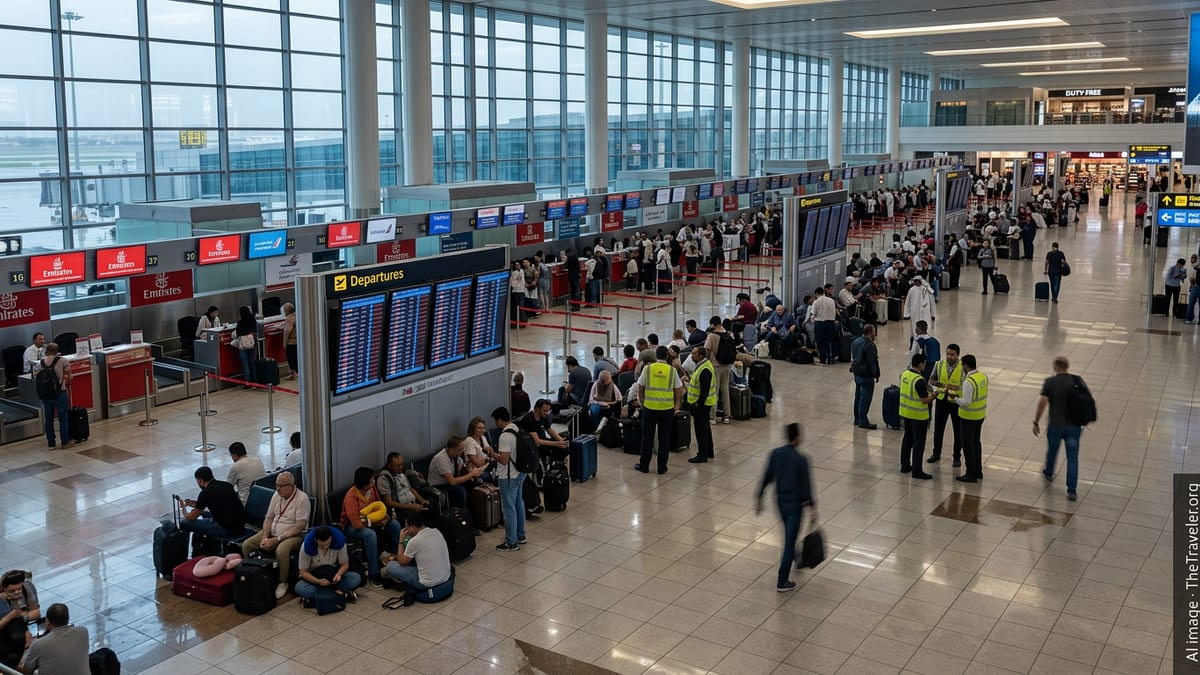
Short, Sharp Suspensions to Protect a Global Hub
When dangerous conditions build over Dubai International Airport, authorities are increasingly opting for short, decisive suspensions of runway operations instead of trying to push through the disruption. That approach was visible during recent periods of unstable Gulf weather and wider regional turbulence, when arrivals and departures were paused while aircraft already airborne were rerouted to alternative airports. The model mirrors measures taken during the flooding and intense storms of April 2024, when the airport temporarily halted movements and later worked through a heavy backlog of cancellations and delays.
Airport and airline managers say these brief shutdowns are meant to prevent more chaotic, hours-long knock-on disruption later in the day. By freezing movements while lightning, low visibility, or water accumulation on airside infrastructure reach critical levels, the teams on the ground gain time to inspect runways, reposition equipment, and manage aircraft and crew rotations. Emirates and flydubai, the largest operators at the hub, now routinely issue time-bound suspension notices, allowing passengers to understand whether their flights fall inside or outside the most critical window.
The latest pattern, informed by past storms, favors clearly defined suspension periods followed by partial restarts, with a focus on wide-body long-haul flights and key trunk routes. Operational leaders argue that this strategy reduces the risk of go-arounds or diversions at the last minute and concentrates disruption into a shorter, more manageable time frame, even if that means significant inconvenience for those scheduled to fly during the pause.
Strategic Use of Diversions Across the Gulf Network
When Dubai’s runways close, the impact radiates quickly across the Gulf’s tightly interconnected airspace. In recent weather-related disruptions and during this year’s wider regional restrictions, flights bound for Dubai have been routinely diverted to Abu Dhabi’s Zayed International Airport, Dubai World Central in the south of the city, Al Ain, Muscat in Oman, and occasionally airports elsewhere in the Gulf. These diversion patterns reflect pre-agreed contingency plans designed to keep aircraft and passengers as close as possible to their intended hub.
During the record-breaking rains of April 2024, Dubai International saw more than a thousand flights cancelled and dozens diverted over a two-day period as torrents of water flooded access roads and affected ramp operations. Those diversions provided a template that is now being reused and refined: long-haul flights that are close to Dubai at the time of suspension are typically diverted to nearby hubs with available stands and immigration capacity, while flights still far from the Gulf may be held at origin or rerouted before departure.
Gulf carriers say that diversions are increasingly planned with through-passengers in mind. Airports like Abu Dhabi and Muscat have been used as temporary mini-hubs, where travelers are processed and, when possible, re-accommodated on special services or ground transport once Dubai can accept traffic again. While this approach introduces complexity and cost, it helps prevent aircraft from holding in stacks over a congested airspace and reduces the number of planes arriving simultaneously the moment Dubai reopens.
Protecting Passenger Safety While Keeping Information Flowing
Safety remains the stated reason for every weather-linked suspension at Dubai International, but passenger communication has become just as critical to maintaining confidence in the hub. After previous storms left travelers stranded for hours in crowded terminals, Dubai Airports and major carriers now emphasize a consistent message: do not travel to the airport unless your airline has confirmed that your specific flight is operating. That guidance has been repeated during the latest run of disruptions and is backed by visible measures such as temporary suspension of check-in and security screening.
Digital channels have become the primary tool to manage traveler expectations. Airlines push status updates through apps, text messages, and email, while the airport maintains live departure and arrival boards. Travelers, in turn, have contributed their own eyewitness reports from terminals and diversions across social platforms, creating a more granular, if sometimes confusing, information environment. For airport managers, the priority is to keep official messaging simple and consistent, particularly around whether operations are fully suspended, partially resumed, or operating under delay.
Even with better communication, the human cost of disruption can be high. Families transiting with young children, laborers connecting on tight schedules, and tourists at the end of their trips often face long waits on terminal floors or in crowded gate areas when storms or regional airspace closures ripple through schedules. Recent experience has prompted airlines to boost on-the-ground support teams and prioritize vulnerable travelers when rebooking limited seats out of Dubai and its diversion airports.
Recovery Playbooks and Knock-on Effects on Global Schedules
Once dangerous weather or other hazards pass, recovering from a suspension at Dubai International is a carefully choreographed exercise that can take days. The immediate focus is clearing aircraft that were diverted or held on the ground, which often means prioritizing long-haul services whose passengers face the greatest onward disruption. Crews and aircraft may be out of position after being redirected to other airports, leading carriers to operate a wave of so-called “repositioning” flights back into Dubai before normal schedules can resume.
These recovery waves have global implications. A thunderstorm or sand-laden squall over Dubai can end up affecting morning departures in Europe, evening bank departures in Asia, and transatlantic arrivals the following day. Airlines build some buffer into their rosters, but a multi-hour suspension at such a busy hub still cascades through rotations, forcing cancellations on thinner routes and reducing spare capacity for several days. Industry analysts note that operators are increasingly using disruption-resilient scheduling tools and real-time data to decide which flights to prioritize once the hub restarts.
Airport infrastructure is also being tested and adjusted. Drainage and water-management systems, ground-power availability, and stand allocation procedures are reviewed after each major weather event. The flooding of 2024, which brought parts of Dubai to a standstill and led to unprecedented disruption at the airport, triggered renewed investment in hard infrastructure and contingency planning. Those upgrades are now being assessed against the more recent mix of heavy rain, regional restrictions, and isolated security incidents.
Climate Volatility, Regional Risks and the Future of Disruption Planning
Behind the immediate task of handling each new storm or airspace alert is a longer-term question: how can a desert mega-hub prepare for increasingly volatile weather and unpredictable regional shocks. Climate scientists have linked the extreme Gulf downpours seen in 2024 to a warming atmosphere that can hold and release more moisture, while airlines and airports across the region are reevaluating how resilient their operations are to both flooding and intense heat. For Dubai, that means designing procedures that can cope with more frequent, high-impact disruptions without permanently undermining its role as a seamless global connector.
Regional instability has added a further layer of complexity in early 2026, with temporary airspace restrictions and security concerns forcing Gulf carriers to suspend or reroute flights even on clear-weather days. Dubai’s approach to these compounded risks has been to lean on its existing playbook for weather events: decisive suspensions when needed, extensive use of diversions within a network of nearby airports, and a phased restart that prioritizes safety-critical and long-haul operations.
For passengers, the message is that disruption at Dubai International is likely to remain a periodic reality, particularly in storm seasons or moments of regional tension. But as each episode prompts refinements in suspension protocols, diversion corridors and recovery timetables, aviation experts say the hub is gradually becoming more adept at absorbing shocks. The challenge for Dubai will be to keep turning those lessons into faster, safer recoveries, even as the disruptions themselves grow more complex.