

More news on this day
Across Europe’s most visited cities, the same tension is playing out: tourism is surging back, visitor spending is rising, and local residents are finding it harder to afford a place to live. From Venice to Paris, Barcelona to Berlin, the rapid growth of short-term rentals and visitor beds is colliding with already tight housing markets, forcing authorities to search for new ways to balance a lucrative industry with the basic need for affordable homes.
Get the latest news straight to your inbox!
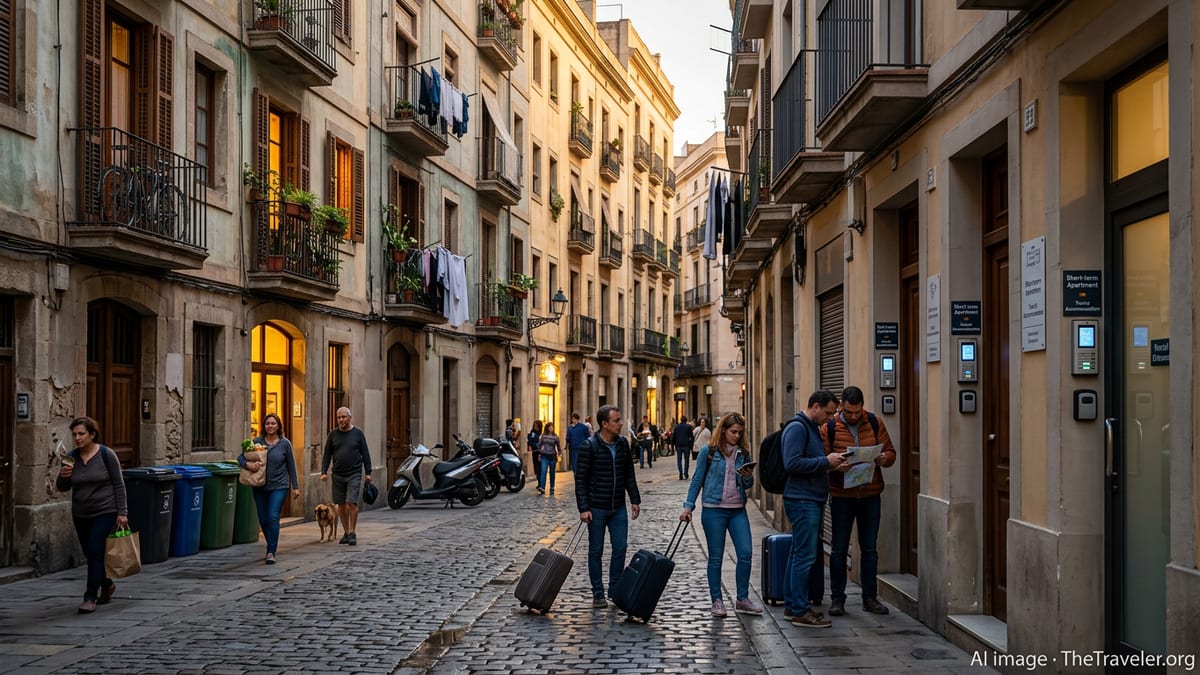
Tourism Recovery Meets a Structural Housing Squeeze
European demand for city breaks and cultural travel has rebounded strongly since the pandemic, with Italy, France, Spain and Germany among the region’s most visited destinations. Industry reports indicate that overnight stays in Italy alone climbed into the hundreds of millions in 2024, while France and Spain remain among the world’s top countries by international arrivals. At the same time, Eurostat data show that nearly one in ten urban residents in the European Union were considered overburdened by housing costs in 2024, spending more than 40 percent of disposable income on accommodation.
This parallel rise in visitor numbers and housing stress is particularly acute in dense historic centers where tourism and daily life share the same streets. In districts of Paris, Barcelona, Florence and Berlin, long-term tenants compete not only with new arrivals moving to cities for work or study, but also with property owners attracted by the higher returns of renting to holidaymakers. Analysts describe a feedback loop in which rising tourist demand pushes up rents and sale prices, prompting more landlords to shift from residential to short-stay use, which in turn further reduces local housing supply.
The debate has widened beyond rent levels to questions about the very character of European cities. Residents’ groups in places like Montmartre in Paris and the old quarters of Barcelona argue that neighbourhoods are being transformed into open-air theme parks, with shops, services and even public space increasingly tailored to visitors rather than year-round communities. Urban planners note that this “touristification” can hollow out central districts, pushing families to outlying areas while visitor numbers continue to climb.
Italy: Venice, Florence and Rome Test Stricter Controls
Italian cities sit at the centre of the overtourism debate, with Venice, Florence and Rome facing some of the sharpest tensions between global demand and local liveability. Venice has become a symbol of the strain: activists there count tens of thousands of tourist beds in the historic centre, including more than 10,000 in relatively lightly regulated short-term rentals. To reduce crowding and help protect local life, Venice has introduced and then expanded a day-tripper tax aimed at visitors who do not stay overnight, while also tightening registration rules for holiday apartments.
Florence and Rome, meanwhile, have focused more directly on short-term rentals. In Florence’s UNESCO-listed historic centre, local authorities moved to halt new tourist apartments, citing evidence that the spread of such properties had made it harder for residents to find affordable homes. Legal challenges have complicated some of these efforts, but 2025 and 2026 have still brought stricter enforcement of registration rules and fines for multi-property hosts who circumvent caps or planning requirements. Publicly available information shows that Italy is also revising national tax rules from 2026, keeping a reduced flat tax for a single short-term rental property but tightening conditions for larger portfolios in an effort to discourage speculative use of housing stock.
At the same time, Italy is trying to avoid undermining a tourism sector that supports millions of jobs and underpins the economies of regions such as Veneto, Tuscany and Lazio. Tourist taxes in cities like Rome, Florence and Naples, which apply to both hotels and short-term rentals, are increasingly framed as tools to reinvest in public services, heritage conservation and neighbourhood upkeep. Analysts say the Italian experience underscores the challenge of designing measures that curb the most distortive effects of holiday rentals without driving away visitors or pushing activity entirely underground.
France: Paris Tightens Airbnb Rules as Neighbourhoods Transform
France has become one of Europe’s largest markets for short-term rentals, and Paris remains a key battleground. Data compiled by independent researchers show that the French capital hosts tens of thousands of active listings on major platforms, the vast majority of them entire homes. In some central arrondissements, residents’ associations argue that a growing share of housing has been converted into tourist accommodation, contributing to rising prices and what locals describe as the “Disneyfication” of historic neighbourhoods.
In response, France adopted new national rules in 2024 that make it harder to operate multiple short-term rentals as a lightly regulated side business. Paris has already used the flexibility in those rules to lower the maximum number of days a primary residence can be rented out each year and to raise potential fines for illegal tourist lets into the tens of thousands of euros. Municipal data and media coverage indicate stepped-up inspections and legal action against landlords who convert entire buildings into de facto holiday hotels without planning permission.
French officials also highlight the importance of diversifying tourism across the wider region. Cities such as Lyon, Marseille, Bordeaux and smaller heritage towns are promoting alternative itineraries to relieve pressure on the most saturated districts of Paris and the Cote d’Azur. Urban policy specialists note that such strategies may take years to shift visitor flows, but they are increasingly seen as essential complements to more technical regulatory tools in the housing market.
Spain: Barcelona’s Landmark Ban and Widening Protests
Spain’s debate over tourism and housing has become particularly visible since 2024, when anti-overtourism protests spread across the Balearic and Canary Islands and major mainland cities including Barcelona and Málaga. Demonstrators have drawn attention to what they describe as sharp rent increases, the growth of precarious seasonal jobs and the erosion of everyday life in historic districts. In parallel, the Spanish housing market has been marked by years of rising prices, with the central bank warning that homes may be overvalued relative to long-term fundamentals.
Barcelona has moved to the forefront of regulatory experimentation. The city has already frozen new tourist apartment licences in central neighbourhoods and tightened checks on illegal lets. In 2024, the mayor announced a plan to phase out licences for more than 10,000 authorised tourist apartments by the end of the decade, effectively banning short-term apartment rentals to tourists from around 2028. Local housing studies suggest that returning those units to the residential market could trigger noticeable falls in both rents and sale prices, although hospitality groups warn of potential job losses and reduced income for small owners.
New regional legislation in Catalonia and reforms to “temporary” leases are also reshaping the Spanish rental landscape. Measures require clearer justification for short-duration contracts and extend some protections normally reserved for long-term tenants, reducing the legal grey zone in which some tourist and mid-term rentals have operated. Analysts say Barcelona’s policies are being watched closely across Europe as a high-profile test of whether aggressive limits on tourist apartments can restore affordability without undermining the city’s role as a global destination.
Germany and the EU: From City Bans to Common Data Rules
Germany’s major cities have adopted some of Europe’s earliest and strictest controls on holiday lets. Berlin introduced a form of partial ban on the misuse of residential housing as vacation rentals several years ago, requiring permits for converting full apartments into tourist accommodation and imposing fines for violations. Other cities such as Munich and Hamburg have followed with their own registration systems, limits on the number of days a secondary home can be rented and tougher penalties for unregistered listings.
Local research in Germany points to a mixed picture. In some districts, limits on short-term rentals appear to have helped stabilise rents at the margin and slow the loss of permanent residents. In others, high demand from students, professionals and new migrants continues to push up prices regardless of tourist activity. Housing economists argue that constraints on holiday lets can ease pressure in popular neighbourhoods but cannot substitute for broader efforts to increase construction, expand social housing and improve regional transport so that residents can live farther from historic cores.
At the European level, policymakers are attempting to harmonise at least part of the fragmented rules that have emerged across member states. A new EU regulation on data collection and sharing for short-term accommodation services, adopted in 2024 and moving toward full implementation, is designed to give local authorities more reliable information on the number and location of tourist rentals. Proposals currently under discussion suggest that future EU-wide guidance could include model options such as caps on the number of nights per year, limits on total listings in high-stress areas and easier mechanisms to enforce local rules via platforms.
What Travellers Should Understand About the New Landscape
For visitors planning trips to Europe’s major cities in 2026 and beyond, the shifting regulatory environment means that familiar accommodation options may change. Some destinations, such as Barcelona and Venice, are likely to see fewer traditional tourist apartments inside historic centres and more offers in surrounding neighbourhoods or nearby towns. In Italy, France, Spain and Germany, registration numbers and local tax rules are increasingly visible in booking processes, as authorities require platforms and hosts to display proof that a listing complies with local law.
Travellers may also encounter new fees and access conditions. Venice’s day-tripper levy, raised tourist taxes in parts of Spain and Italy, and tighter limits on cruise or coach arrivals in several cities are all part of a broader effort to manage visitor flows and fund urban services. Public information suggests that more destinations are encouraging bookings in licensed hotels, guesthouses and registered rentals that meet safety and planning standards, even if this can mean higher advertised prices than informal alternatives in previous years.
Housing advocates emphasise that individual choices can play a role alongside policy. Choosing accommodation in areas away from the most saturated historic cores, staying longer in a single place rather than making multiple short stops, and supporting local businesses that serve residents year-round are all ways to lessen the cumulative pressure of mass tourism. As Europe’s cities try to reconcile their global appeal with the right to housing for those who live there, visitors are increasingly being asked to see themselves not only as guests, but also as participants in the urban systems they enjoy.