

More news on this day
Indonesia’s tourism revival is entering a new phase in 2026, as policymakers, destinations, and travelers pivot from crowd-driven growth toward immersive nature escapes, cultural festivals, and more meaningful trips that channel money into local communities.
Get the latest news straight to your inbox!
Tourism Rebounds While Policy Shifts From Volume to Value
Indonesia’s tourism sector is moving into 2026 with strong momentum. Recent data from Statistics Indonesia and industry trackers show that foreign visitor numbers passed 15 million in 2025, closing in on pre-pandemic records, while domestic trips exceeded one billion as residents returned to traveling across the archipelago. International arrivals in January 2026 topped one million, underlining sustained demand at the start of the year.
Government strategies released over the past year indicate a clear shift from chasing raw visitor counts toward what officials describe as “quality” or “high-value” tourism. Publicly available briefings on tourism policy outline targets of more than 16 million foreign visitors in 2026, but with greater emphasis on length of stay, spending per trip, and community benefits, rather than headline numbers alone.
Industry reports suggest this repositioning is partly a response to overtourism concerns in Bali, where visitor volumes have already surpassed pre-pandemic peaks, and where new levies and behavioral guidelines are being used to manage pressure on infrastructure and culture. Across Java, Sumatra, Sulawesi, and emerging destinations like the new capital Nusantara, planners are increasingly steering promotion toward experiences that disperse travelers, encourage longer itineraries, and highlight local heritage.
Within this broader strategy, glamping hubs such as Ciwidey in West Java and major cultural events like the Prambanan Shiva Festival near Yogyakarta are emerging as emblematic of the future direction of Indonesian tourism.
Ciwidey’s Glamping Boom and the Rise of Nature-Based Stays
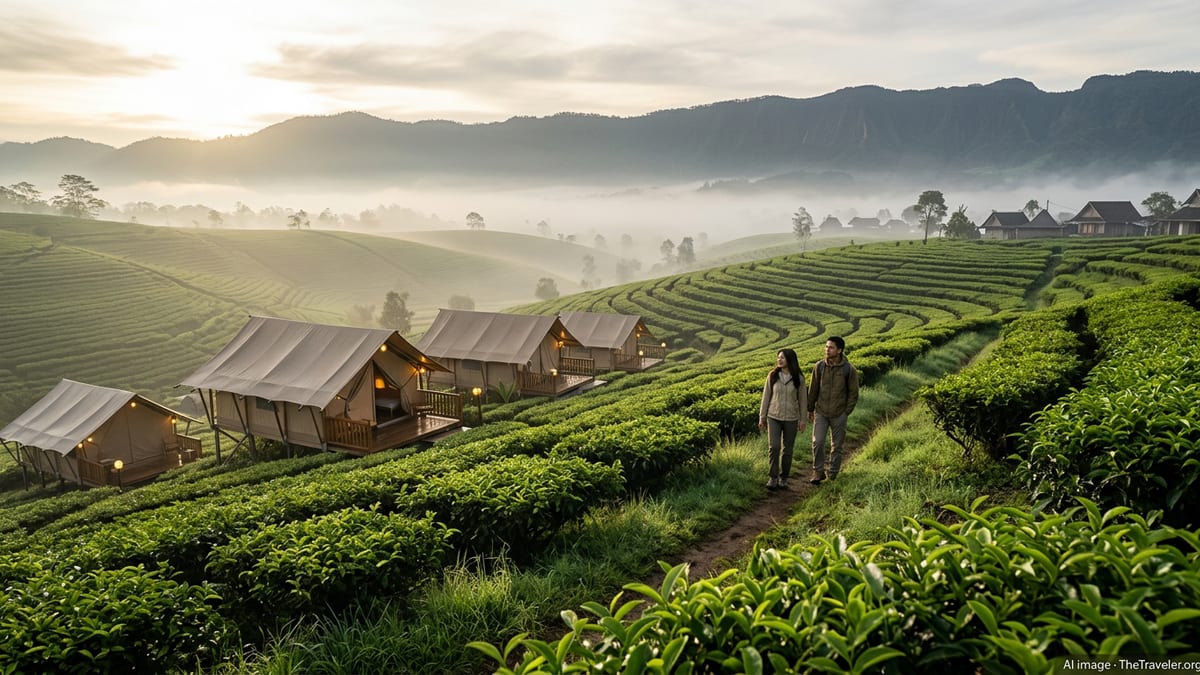
Ciwidey, a cool highland region south of Bandung in West Java, has quietly become one of Indonesia’s most dynamic testbeds for “comfortable nature” tourism. Over the last few years, multiple glamping complexes, dome tents, and cabin-style stays have opened around the area’s tea plantations, hot springs, and crater lakes, offering city residents an escape that combines outdoor adventure with hotel-style amenities.
Online travel platforms show a sharp increase in search interest and bookings for Ciwidey glamping properties in 2024 and 2025, mirroring a broader regional trend toward short-haul, nature-focused getaways among Indonesia’s growing middle class. Many sites market themselves around stargazing, campfires, and easy access to local waterfalls, while still providing private bathrooms, Wi-Fi, and curated dining, making them attractive for families and first-time campers.
Local tourism data from West Java points to a diversification of visitor flows away from classic city breaks in Bandung toward highland districts like Ciwidey and Pangalengan. Analysts note that glamping is helping to stretch visitor spending beyond day trips, as travelers stay overnight, hire local guides, and purchase food and crafts from nearby villages. For regional planners, the model is seen as a way to capture urban weekend demand without the environmental footprint of large resort complexes.
As Indonesia’s 2026 tourism programs highlight sustainable and community-based destinations, Ciwidey’s success is likely to become a reference point. Stakeholders are now watching how issues such as waste management, traffic, and land use are handled, viewing the area as a live case study in balancing comfort, access, and conservation in a rapidly popularizing nature destination.
Prambanan Shiva Festival Positions Culture at the Center
On the cultural side, the Prambanan Shiva Festival is rapidly being positioned as a flagship national event. The festival, anchored around Maha Shivaratri observances at the ninth-century Prambanan temple complex in the Special Region of Yogyakarta, expanded its program in early 2026 into a month-long series of spiritual, artistic, and cultural activities.
According to recent coverage from Indonesian news outlets, the 2026 edition opened in mid-January and culminated with Maha Shivaratri on 15 February, combining classical dance, music, heritage tours, and Hindu rituals. The festival frames Prambanan not only as a UNESCO-recognized archaeological site, but as a living center of Hindu culture in predominantly Muslim Indonesia.
Tourism planners increasingly cite the Prambanan Shiva Festival alongside events like the Borobudur Vesak Lantern Festival as examples of how culture-led programming can extend stays in Central Java and attract visitors beyond Bali. Travel industry briefings describe efforts to package the festival with nearby attractions such as Yogyakarta’s palace district, Borobudur, and volcanic landscapes on Mount Merapi, creating multi-day itineraries that blend history, spirituality, and nature.
For local communities, this type of event-driven tourism offers opportunities in guiding, crafts, performance, and food services. The challenge for 2026 and beyond will be to scale up international visibility while preserving the ritual core of the festival and managing crowding around a fragile heritage site.
Meaningful Travel and Community Impact Take Center Stage
Parallel to these product shifts, Indonesia is tapping into a global demand for “meaningful” or purpose-driven travel. Reports from international tourism bodies and regional market analysts highlight strong interest among younger and higher-spending travelers in trips that prioritize environmental responsibility, cultural understanding, and direct benefits to host communities.
Indonesia’s tourism strategy documents for the 2025 to 2029 period emphasize this direction, underscoring programs that encourage visitors to participate in village-based experiences, creative economy workshops, and conservation projects. Case studies promoted by national and provincial tourism boards showcase homestays, agro-tourism in coffee and tea regions, and snorkeling and diving experiences that support coral restoration or marine protection funds.
Glamping in Ciwidey and festivals like the Prambanan Shiva Festival fit neatly into this narrative, giving travelers tangible ways to connect with landscapes and traditions while keeping their environmental footprint relatively contained. In both cases, the success of the model depends on whether local residents gain a material share of tourism income and retain a meaningful role in shaping how their culture and environment are presented.
Observers note that Indonesia’s pivot toward meaningful travel is also a hedge against growing competition in Southeast Asia, where neighboring countries are marketing similar beaches and city breaks. By foregrounding its diversity of cultures, religions, and ecosystems, and by investing in products that cannot easily be replicated elsewhere, Indonesia is seeking to lock in loyalty from travelers who are less interested in cheap package holidays and more drawn to immersive journeys.
2026 Outlook: Diversification Beyond Bali
Forecasts compiled by tourism research firms and regional organizations suggest that Indonesia could welcome between 16 and 17 million international visitors in 2026 if current trends hold, along with more than 1.1 billion domestic trips. While Bali will continue to account for a large share of arrivals, national tourism messaging is increasingly pointing travelers toward Java, Kalimantan, Sulawesi, and the new capital city of Nusantara, which has begun to attract visitors curious about its modernist architecture and planned green spaces.
Domestic airlines and rail operators are expanding connectivity to secondary cities, which in turn supports the growth of glamping sites, eco-lodges, and cultural routes. In West Java, this includes easier access from Jakarta and Bandung to highland destinations like Ciwidey. In Central Java and Yogyakarta, additional flights and improved road links are expected to help festivals such as the Prambanan Shiva Festival draw more regional tourists.
At the same time, Indonesia is promoting digital tools to guide visitor behavior, from smart ticketing systems at heritage sites to AI-based travel companions that provide practical information and encourage respectful conduct. These efforts reflect a recognition that managing tourism flows, rather than simply accelerating them, will be critical as the country climbs back to and potentially exceeds its pre-2020 tourism peaks.
Together, the rise of glamping in places like Ciwidey, the elevation of cultural festivals such as the Prambanan Shiva Festival, and the embrace of meaningful travel signal how Indonesia intends to shape tourism in 2026: more dispersed, more experiential, and more closely tied to the wellbeing of the people and landscapes that make the archipelago unique.