

More news on this day
Britain’s long-promised rail overhaul is finally gathering speed, as the creation of Great British Railways moves from policy papers to legislation, branding and early passenger-facing changes expected to be widely felt by 2026.
Get the latest news straight to your inbox!
A Single Guiding Mind for a Fragmented Network
The Great British Railways project is designed to tackle nearly three decades of fragmentation across the rail system in Great Britain. Since the 1990s, track and trains have largely been run by separate organisations, with more than a dozen passenger operators working to different contracts, standards and commercial incentives. Reports indicate that this structure has often left passengers confused about who is responsible when things go wrong, while making strategic planning and timetable coordination more complicated.
According to publicly available information from Parliament and government briefings, the current Railways Bill would formally establish Great British Railways as a new public body bringing together most passenger train operations in England with the management of the rail infrastructure. Network Rail’s asset-owning company is expected to be folded into the new structure, which will take on the role frequently described as the system’s “directing mind.” Scotland and Wales will retain devolved responsibilities, but will interface with the new body on cross-border services and infrastructure planning.
Shadow arrangements are already in place. A shadow Great British Railways has been operating inside existing organisations to begin aligning timetables, operational standards and customer information systems. As the legislation progresses through Parliament in 2025 and 2026, these interim structures are expected to crystallise into a single, legally defined entity that passengers will see on station signage, trains and digital platforms.
By consolidating decision-making, ministers argue that Great British Railways will be better placed to coordinate track access, rolling stock, maintenance and timetables, reducing duplication and closing gaps between infrastructure and operations. Supporters of the reform say that, over time, this should translate into fewer last-minute cancellations, less timetable instability and a clearer line of accountability to government and passengers.
Fares Freeze, Simpler Tickets and New Caps
Alongside structural change, the government has signalled that the Great British Railways era will be defined by a closer grip on fares. After years of above-inflation price rises on many routes, ministers have already implemented a national rail fares freeze and presented it as a first step towards making train travel more affordable. Policy papers on the Railways Bill indicate that the new body will be required to set out how it plans to cap fare increases across regulated and, in time, more flexible ticket types.
Committee documents from the bill’s passage show that parliamentarians are pressing for Great British Railways to take on explicit duties around value for money. Proposed measures include a framework for linking any future fare changes to clear performance metrics, such as punctuality and reliability, and for extending and standardising child and youth discounts across operators. Although many of these details are still under debate, the direction of travel points to a more national, rules-based approach that reduces the scope for sharp regional variations.
Passengers are also being promised simpler ticketing. Government briefings highlight plans for a nationwide move away from the most complex legacy ticket types towards a smaller set of products that are easier to understand and compare. This is expected to include wider use of flexible season tickets, tap-in and tap-out style pay-as-you-go systems on suburban and commuter routes, and more transparent advance purchase fares on long-distance services.
Publicly available consultation responses suggest that by 2026 many travellers should begin to see fewer instances of the same journey offering wildly different prices for similar itineraries. The combination of a fares freeze, clearer pricing rules and new caps is intended to restore confidence in rail as a cost-effective option compared with driving or domestic flights, particularly for regular commuters and leisure travellers booking in advance.
Digital Ticketing and Joined-Up Journeys
The technological backbone of the reforms is a concerted push towards integrated, open ticketing systems. Recent parliamentary material on the Railways Bill refers to provisions requiring Great British Railways to provide open-source access to its ticketing platforms. This would allow third-party retailers, regional transport bodies and mobility apps to plug directly into a single national back end, giving passengers a more consistent experience regardless of where or how they buy their tickets.
One of the clearest ambitions is true multimodal ticketing, allowing passengers to move between rail and local buses or trams with a single ticket or fare cap. Draft legislative text and briefing notes discuss steps towards through-ticketing between railway services and local transport, particularly in urban areas with existing smartcard or contactless systems. By 2026, travellers in some regions could be able to plan and pay for an entire door-to-door journey in one transaction, rather than juggling separate tickets and payment methods.
Open data is another pillar of the change. Government rail reform documents emphasise the creation of consistent, real-time information feeds covering timetables, disruption and seat availability, all under the stewardship of Great British Railways. Tech companies and journey-planning platforms are expected to build on these feeds to offer more accurate routing, delay warnings and platform information, narrowing the gap between what operators know internally and what passengers can see on their phones.
For international visitors arriving in the United Kingdom, these changes are likely to make the system feel more familiar. The direction of policy aligns Britain’s network more closely with integrated transport models seen in parts of continental Europe, where a single national brand, unified ticketing and comprehensive apps guide passengers cleanly across longer-distance and local services.
Public Ownership and Service Improvements on the Ground
The creation of Great British Railways sits alongside an ongoing shift towards public ownership of passenger operations. The Passenger Railway Services (Public Ownership) Act has already given government the power to bring train companies back into state control as their contracts expire, with a programme now under way to transfer major operators into a publicly owned group that will ultimately sit under the Great British Railways umbrella.
Published coverage in European and UK media has tracked the first high-profile transfers, including South Western Railway and other franchises returning to government hands. These transitions are being presented as early building blocks of the future network, with reports highlighting new investment in rolling stock, station upgrades and customer service initiatives undertaken since the operators were moved into public ownership.
Government news releases point to a range of tangible improvements that are already visible to passengers. Examples include new timetables on the East Coast Main Line that increase long-distance capacity, targeted station refurbishments and the rollout of on-train technology designed to spot faults before they cause disruption. Officials have framed these as proof that a more coordinated public sector-led approach can channel investment where it is most needed rather than where returns are highest.
By 2026, more routes are expected to have moved across to the public portfolio, expanding the part of the railway that can be directly aligned with Great British Railways’ national timetable, asset strategy and customer service standards. Supporters of the reforms argue that this will reduce the patchwork of differing operating models and allow successful practices in one region to be rolled out more quickly across the network.
What Rail Travellers Can Expect by 2026
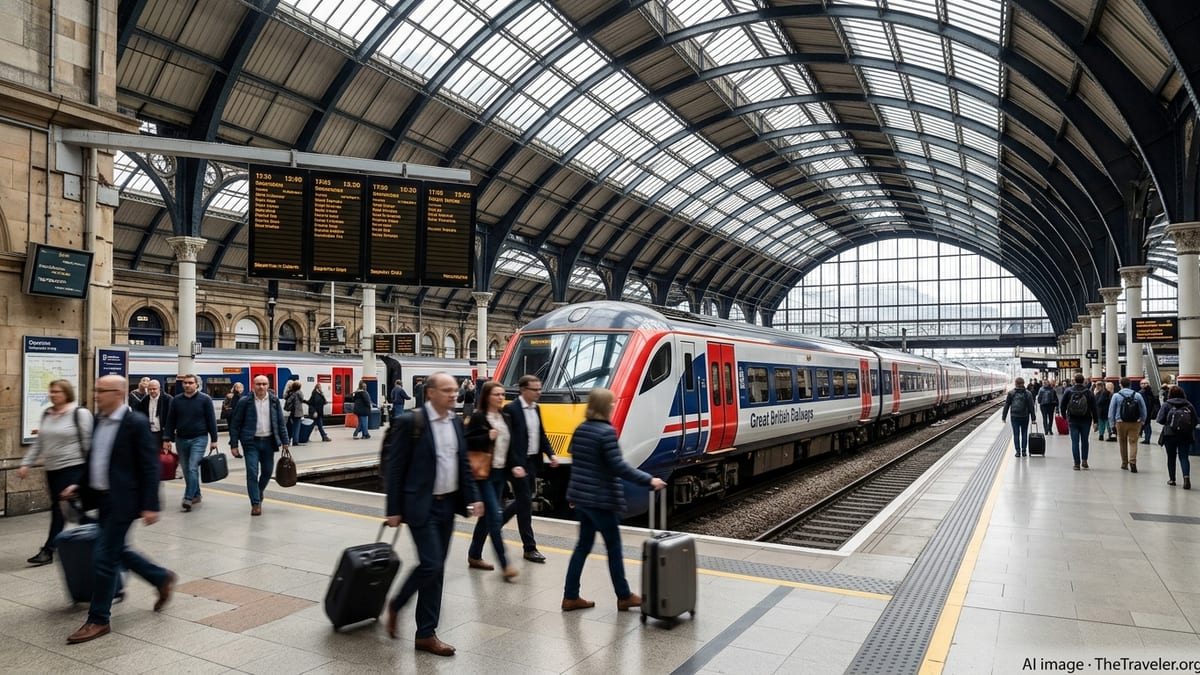
Much of the legislative and organisational work behind Great British Railways will continue into the second half of the decade, but the next two years are expected to bring a series of visible milestones for passengers. The new red, white and blue branding is already being rolled out on trains and stations, signalling the emergence of a single national identity for the network in place of today’s mix of operator logos.
Timetable changes announced in recent months, alongside investment in digital signalling and condition-monitoring technology, are intended to improve punctuality and resilience before the new structure is fully in place. As more operators transfer into the public group and align their contracts with Great British Railways, the expectation outlined in official documents is for clearer minimum service standards and performance benchmarks that apply consistently across Great Britain.
On the customer side, travellers can expect an increasing shift towards digital channels by 2026, with more routes offering barcode or contactless tickets, expanded real-time information and the early stages of nationwide integrated ticketing in major city regions. At the same time, the continued fares freeze and emerging rules on caps and discounts are aimed at keeping rail competitive with other modes, especially as households remain sensitive to living costs.
For domestic passengers and overseas visitors alike, the coming Great British Railways era is being framed as an opportunity to reset Britain’s relationship with its trains. If the legislation now moving through Parliament delivers as intended, the result by 2026 should be a network that is easier to understand, simpler to buy for and, crucially, better value for the millions of journeys that depend on it each week.