

More news on this day
As wellness tourism accelerates toward a trillion‑dollar market, hotel groups and destination resorts are racing to turn spas, sleep programs and longevity offerings from nice‑to‑have amenities into structured revenue engines embedded in their core business models.
Get the latest news straight to your inbox!
Wellness Tourism Becomes a High-Growth Revenue Pool
Publicly available market data shows that wellness travel is now one of the fastest growing segments in global tourism. The Global Wellness Institute has projected wellness tourism spending to pass the 1 trillion dollar threshold in 2024, with the market expected to more than double again over this decade as travel fully normalizes and health remains a top consumer priority. Recent industry monitors indicate that wellness trips and expenditures have already climbed well above pre-pandemic levels, underscoring a structural rather than cyclical shift in demand.
Other research groups report similarly bullish trajectories. Studies from multiple market analysts place the global wellness tourism market size in the range of roughly 950 billion to just over 1 trillion dollars in 2024, with compound annual growth rates commonly forecast near or above 9 percent through the early 2030s. North America is repeatedly identified as the largest single region by spending, while Europe and Asia Pacific are emerging as powerful growth engines, helped by expanding middle classes and improving air connectivity.
This weight of spending is changing the way hotel owners and operators think about wellness. Instead of viewing spas and fitness centers as cost centers that support room sales, owners are increasingly treating wellness as a primary demand driver. Analysts tracking the sector note that wellness travelers spend significantly more per trip than the average tourist, with higher outlays on lodging, food, bespoke activities and treatments. That spending halo has made wellness a strategic priority in boardrooms and investment committees.
The acceleration is also visible in capital flows. Investor presentations from listed hospitality and real estate groups highlight wellness as a core theme in pipeline development, from hot spring destinations in Japan and Central Europe to mixed‑use resorts in the Middle East built around thermal bathing, integrated medical clinics or performance diagnostics labs. Asset managers now routinely benchmark projected spa and wellness revenue per available room alongside traditional metrics such as occupancy and average daily rate.
From Free Perk to Structured Product
Within individual properties, the shift from amenity to asset is most apparent in how wellness is packaged and priced. Where hotels once offered complimentary access to a basic gym and limited spa menu, many are now experimenting with multi-day retreats, subscription-style memberships and targeted programs that can be sold year‑round to both in‑house guests and local residents. Publicly available examples range from urban hotels that sell corporate burnout recovery weekends to coastal resorts offering seasonal sleep, detox or immune‑support itineraries at premium prices.
Revenue managers and spa directors are also aligning wellness more closely with room inventory. Industry case studies show hotels bundling suites with guaranteed spa time, personal training, nutrition consultations or oxygen therapy sessions, effectively yielding higher total revenue per occupied room. In large resorts, wellness packages are being linked to specific room categories near spas, thermal facilities or nature trails, turning proximity itself into a pricing lever.
A parallel development is the rise of branded wellness concepts within major hotel groups. Several global chains have launched dedicated wellness labels or sub‑brands, building standardized guidelines for lighting, bedding, air quality, fitness equipment and recovery features. These platforms make it easier to track performance, negotiate partnerships with equipment and technology providers, and cross‑sell wellness across loyalty databases. In franchise and management contracts, such branded wellness offerings are increasingly referenced as key value propositions capable of lifting both occupancy and rate.
This move toward structured product also includes clearer monetization of time and space. Rather than leaving saunas, pools and relaxation areas as complimentary add‑ons, some operators are applying dynamic pricing to day passes, time‑limited access windows and private rental of thermal suites or ice baths. In high-demand urban markets, rooftop pools and hydrotherapy areas are being marketed almost as standalone clubs, with tiered access for hotel guests, local members and external day visitors.
Designing Properties Around Wellness Economics
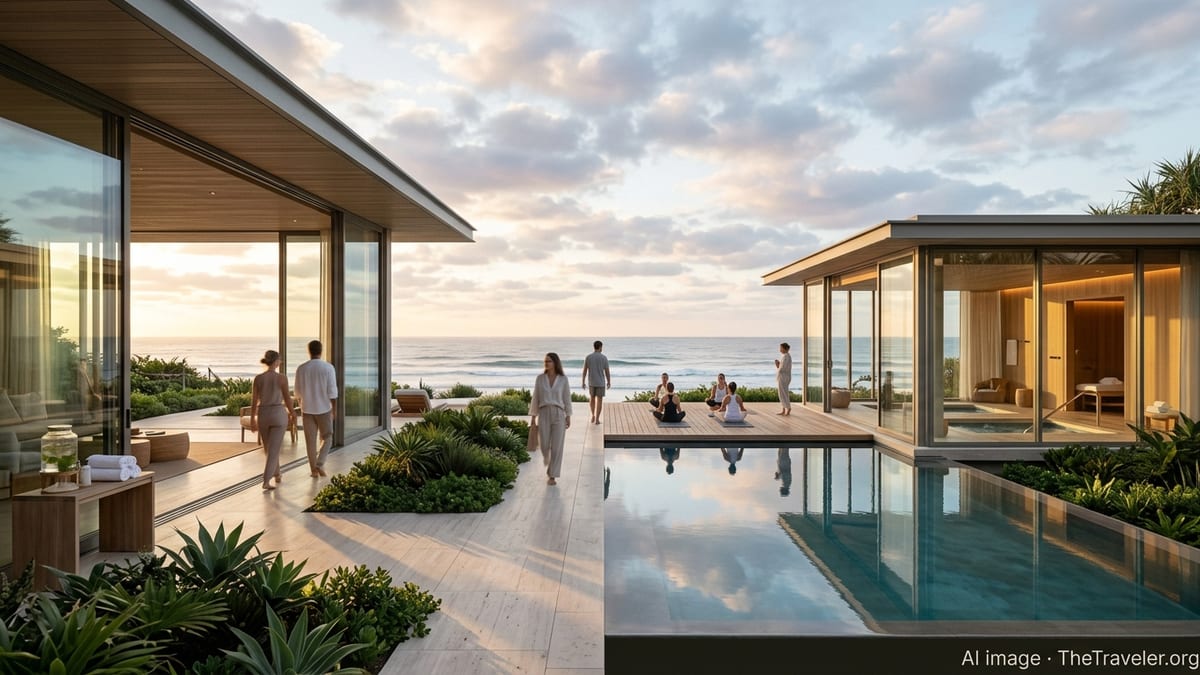
The reclassification of wellness as a revenue asset is influencing how new properties are designed and existing ones are refurbished. Architectural briefs for resort developments increasingly prioritize circulation patterns, natural light, sound control and views that support restorative experiences, instead of relegating wellness to a basement spa. Thermal circuits, outdoor hydrotherapy pools, yoga pavilions and walking paths are appearing closer to the heart of master plans, often framing central courtyards or waterfront vistas intended to command premium rates.
Reports on development pipelines in Europe, North America and the Middle East point to a growing number of large-scale thermal and water‑based destinations where wellness is the primary anchor, sometimes paired with waterparks, restaurants and cultural venues to drive mixed‑use footfall. In these models, spa and bathing revenues are projected to sit alongside ticketing, food and beverage, and retail as core income streams rather than incidental spend. Some concepts are designed to accommodate millions of visitors annually, blending day‑use guests with overnight stays to smooth seasonality and enhance cash flow.
At the asset-management level, owners are using wellness metrics to justify significant capital expenditure. Consultants in the spa and wellness field note that investments in expanded treatment rooms, outdoor relaxation decks, medical‑grade equipment or biophilic interiors are increasingly evaluated against uplift in overall property valuation and potential repositioning into higher rate categories. Where wellness demand is strong, developers are also exploring branded residences and timeshare units built around access to health clubs, spas, medical diagnostics and curated longevity programs.
Technology choices are part of the new economics. Operators are deploying booking platforms and customer relationship management tools that track guest preferences for treatments, classes and sleep environments. Over time, this data can be used to refine schedules, staffing and pricing, creating more efficient utilization of high-value spaces while personalizing experiences that keep guests returning. Automation of check‑in, locker access and retail transactions in spa areas is also helping to contain labor costs, a critical factor as wage inflation challenges hospitality margins in many markets.
Longevity, Medical Tie‑Ups and New Revenue Streams
One of the most dynamic areas of wellness monetization is the convergence between hospitality, longevity and medical services. Reports from destinations in Europe, the Middle East and Asia describe hotels adding diagnostics, biohacking labs, minimally invasive aesthetic treatments and medically supervised weight management to their product mix, often delivered in partnership with clinics or specialist operators. These services typically command higher price points than traditional spa offerings and can generate repeat visits anchored around treatment plans or annual health checkups.
In markets such as India, Thailand and parts of Central and Eastern Europe, wellness resorts are positioning themselves along the continuum between medical tourism and leisure travel. Public statistics show that countries with established reputations in Ayurveda, thermal therapies or rehabilitation are attracting rising numbers of international visitors seeking combined treatment and vacation stays. For hotel groups, these hybrid models create opportunities to fill shoulder seasons, lengthen average stay and drive ancillary spend on food, local excursions and follow‑up digital consultations.
Longevity themes are resonating strongly with affluent, time‑poor travelers. Industry coverage highlights the popularity of programs that blend biomarker testing, movement coaching, nutrition, mindfulness and sleep optimization into structured itineraries, sometimes designed in collaboration with academics or sports scientists. These offerings are typically sold at premium package rates, with options for post‑stay support delivered via apps or telehealth platforms. For hotels, this turns a one‑off getaway into a longer customer relationship that can be measured in subscription or membership revenue rather than one‑time room nights.
Retail is another growth channel. Wellness‑focused properties are devoting more floor space to concept stores stocked with skincare, nutraceuticals, wearables, athleisure and home fragrance aligned with their brand story. Some operators report strong performance from curated private‑label products that create new profit pools and extend the property’s presence into guests’ homes. Online commerce linked to hotel wellness brands is also expanding, allowing guests to restock supplements, teas or sleep aids long after checkout.
Measuring Returns and Managing Risk
As wellness moves into the center of hotel business plans, owners and operators are refining how they measure returns and manage associated risks. Industry analysts recommend tracking spa and wellness revenue per available room, treatment room utilization, capture rates among in‑house guests, local membership income and the impact of wellness branding on average daily rate and occupancy. These metrics help decision‑makers compare wellness investments to other potential uses of capital, such as additional keys, meeting space or entertainment amenities.
However, the pivot also exposes hotels to new operational challenges. Specialized staff, from therapists to sports trainers and nutritionists, can be costly and difficult to recruit, particularly in secondary or remote destinations. Regulatory requirements around medical procedures, nutrition advice or advanced diagnostics vary widely between jurisdictions and can change over time, adding complexity to compliance. Insurance and liability frameworks need careful attention when properties introduce high‑intensity activities, biohacking technologies or invasive treatments.
Experts also caution against overbuilding wellness facilities without sufficient demand analysis. While market data paints a broadly positive picture, growth is not uniform across all regions or traveler segments. Properties that simply add a larger spa without a clear concept, credible partners or strong local catchment may struggle to achieve targeted returns. The most successful models identified in published case studies tend to be those where wellness is integrated with destination storytelling, nature access, food and cultural programming rather than treated as an isolated department.
Even with these risks, the direction of travel appears clear. As consumers place greater emphasis on health, stress reduction and preventive care, wellness is evolving from a decorative add‑on to a central pillar of hospitality economics. For hotels willing to rethink design, partnerships and performance metrics, a massage room in the basement is no longer the end goal. Instead, wellness is emerging as a diversified asset class that can reshape how properties are financed, operated and ultimately valued in a changing global tourism landscape.