

More news on this day
From spiritual journeys on the Ganges to coral-ringed atolls in the Indian Ocean, India, Egypt and the Maldives are emerging as a powerful trio reshaping global tourism flows and expectations.
Get the latest news straight to your inbox!
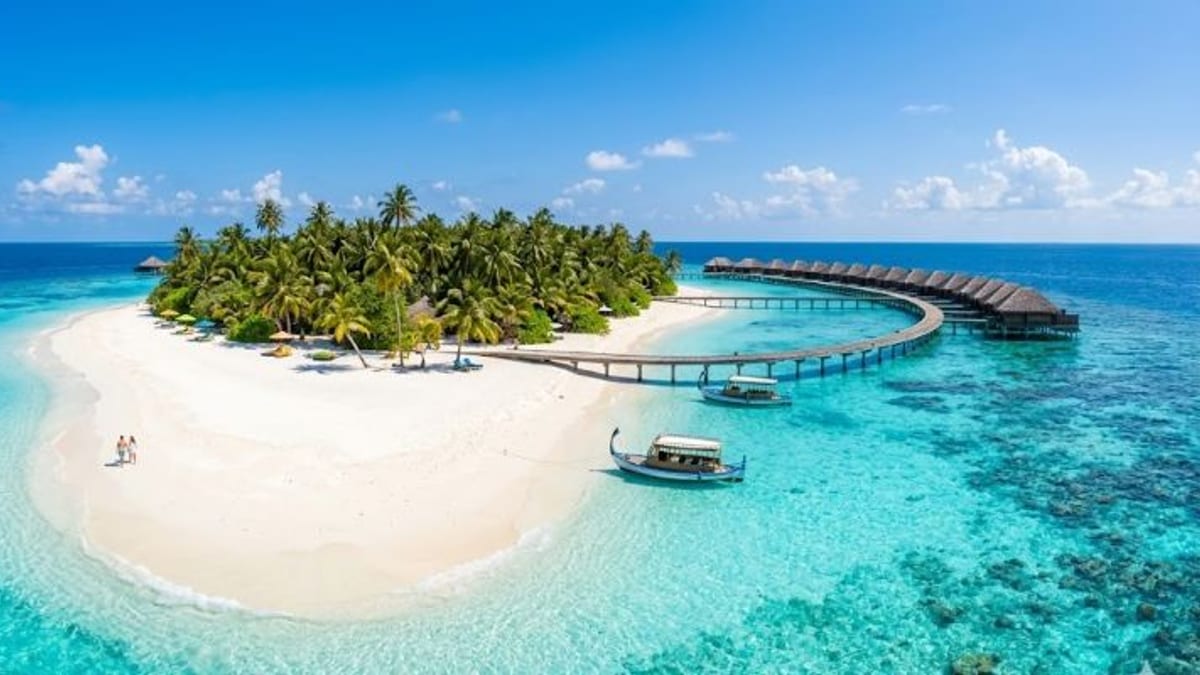
Image by Latest International / Global Travel News, Breaking World Travel News
Record Numbers Put Three Destinations in the Spotlight
Recent tourism data shows that India, Egypt and the Maldives are among the fastest-rising destinations as global travel edges beyond pre-pandemic levels. UN Tourism estimates that international tourist arrivals worldwide reached about 1.45 billion in 2024, virtually matching 2019 volumes, with standout growth in parts of Asia and the Middle East. Within this rebound, these three destinations have converted pent-up demand into record visitor numbers and higher spending.
In India, industry analyses based on World Travel & Tourism Council figures indicate that the country welcomed close to 19 million international visitors in 2024 and set a new high for foreign visitor spending, estimated at more than 3 trillion rupees. That growth has lifted India into the upper tier of most visited countries, underpinned by an expanding aviation network, streamlined e-visa access for scores of nationalities and renewed marketing of the “Incredible India” brand toward culture, wellness and meetings travel.
Egypt has followed a similarly steep trajectory. Published tourism coverage citing official statistics reports that the country hosted around 15 to 19 million visitors across 2024 and 2025, marking double-digit growth year on year. Tourism receipts surpassed 15 billion dollars in 2024, supported by a broad mix of cultural, beach and cruise tourism along the Nile and the Red Sea.
The Maldives stands out for intensity rather than scale. According to recent industry reporting, the island nation broke its own record again in 2025, exceeding 2 million visitor arrivals. That figure is striking for a country of fewer than 600,000 residents and underlines its position as one of the world’s most tourism-dependent economies, as well as a bellwether for high-end, long-haul leisure travel.
India: A Mega-Destination Built on Diversity and New Connectivity
India’s tourism surge is closely tied to structural changes in both infrastructure and product. Government data compendiums and industry briefings highlight the rapid expansion of airport capacity in major metros and secondary cities, alongside incentives for regional air routes. Flagship schemes to develop themed circuits, such as spiritual, Buddhist and heritage trails, are bringing lesser-known destinations into international itineraries while easing pressure on saturated sites.
Digital access has become another differentiator. Publicly available information indicates that India’s e-visa facility now covers well over 150 countries, cutting processing times and simplifying entry for first-time and repeat visitors. Major hubs such as Delhi and Mumbai have rolled out upgraded airport amenities, app-based tourism guides and integrated ticketing for monuments, signaling a push toward a more seamless travel experience that mirrors standards in traditional tourism powerhouses.
At the same time, India is leveraging its cultural depth to move beyond short city breaks. New investments in museums, riverfront redevelopments and performing arts venues, as documented in recent state and municipal reports, are designed to lengthen stays and distribute spending across neighborhoods. Wellness retreats in states like Uttarakhand, Kerala and Goa are targeting higher-yield visitors by packaging traditional Ayurveda, yoga and nature-based stays, aligning the destination with global trends in health-focused travel.
These shifts are repositioning India from a niche, backpacker-heavy market toward a diversified mega-destination. With domestic tourism already numbering in the hundreds of millions of trips annually, the country is increasingly marketing itself as a year-round option for international travelers seeking both marquee attractions and emerging “second cities.”
Egypt: Cultural Icons Meet Mega-Projects and Coastal Expansion
Egypt’s tourism appeal has long revolved around iconic sites such as the Pyramids of Giza, Luxor and the Valley of the Kings. What is changing, according to recent economic analyses and travel industry reports, is the scale and coordination of new projects designed to modernize that appeal. The full opening of the Grand Egyptian Museum near the Giza plateau at the end of 2025, described as one of the largest archaeological museums in the world, has added a new anchor attraction capable of handling millions of visitors annually.
Visitor statistics released in recent months show tourism arrivals reaching new records in 2025, with growth driven not only by traditional European markets but also by travelers from the Gulf, Asia and the Americas. Analysts note that Egypt’s strategy combines heritage investment with resort and infrastructure expansion, particularly along the Red Sea coast and in new urban developments such as New Alamein City on the Mediterranean.
Industry coverage points to upgrades in airports, highways and hotel inventories across resort hubs like Hurghada, Sharm el-Sheikh and Marsa Alam, enabling package holidays that bundle diving, beach stays and cultural excursions. At the same time, niche segments such as river cruises on the Nile and desert eco-lodges in oases like Siwa are being promoted to visitors looking for slower, experience-led travel.
Egypt’s approach positions the country as a bridge between mass and specialist tourism. By offering both large-scale resort capacity and curated cultural experiences linked to one of the world’s oldest civilizations, it is capturing demand from families, cruise passengers and independent travelers who might previously have split their holidays between multiple destinations.
The Maldives: Luxury, Sustainability and the Power of Small-Island Branding
While India and Egypt work with continental-scale geographies, the Maldives is demonstrating how a small island state can play outsized roles in global tourism. Recent arrival figures from the country’s tourism authorities and trade publications confirm back-to-back records, with more than 2 million tourists registered in 2025. China has re-emerged as the top source market, followed by India, Russia and various European countries, reflecting the destination’s broad geographic reach.
The Maldives has refined a resort model in which most visitors stay on private or semi-private islands, many accessible only by seaplane or speedboat. Hospitality market analyses show that the country continues to attract luxury brands while seeing a parallel rise in mid-market and guesthouse options on inhabited islands, opening the destination to a wider demographic without weakening its high-end image.
Sustainability has become a central selling point. Public information on resort developments indicates that new properties increasingly highlight coral restoration projects, renewable energy installations and bans on single-use plastics. Marine protected areas, citizen science snorkeling experiences and collaborations with conservation groups are being incorporated into guest programming, reflecting travelers’ growing interest in low-impact, nature-based stays.
Branding efforts are also evolving at the local level. Regional initiatives, such as destination management offices for specific atolls, are promoting cultural experiences including fishing heritage, local cuisine and community-led excursions. This shift from a purely resort-focused narrative toward a broader story of island life is helping the Maldives stand out in a crowded field of tropical beach destinations.
Shifting Global Tourism Patterns and Competitive Advantages
Across India, Egypt and the Maldives, a common thread is how these destinations align with larger global travel trends identified in recent UN Tourism barometers and industry forecasts. Long-haul leisure demand is rebounding strongly, with travelers willing to combine multiple experiences in a single trip, from cultural immersion and wellness to adventure and seaside relaxation.
Geography gives the three destinations a strategic edge. Located across the Indian Ocean and at the crossroads of Africa, Asia and Europe, they benefit from growing air connectivity between Asia and Europe as well as expanding Gulf carrier networks. This proximity allows travelers from key source markets in Europe, the Middle East and Asia to access multi-country itineraries that might pair, for example, a cultural tour of northern India with a Red Sea cruise or a Maldivian beach stay.
The trio is also emblematic of a broader shift in tourism power away from a narrow set of Western destinations. While Europe remains the most visited region, recent data suggests that Asia and the Middle East are steadily increasing their share of global arrivals, aided by investment in visitor infrastructure, digitization of travel processes and targeted marketing campaigns. India, Egypt and the Maldives are among those capitalizing most visibly on this rebalancing.
For travelers planning their next long-haul journey, the numbers and new developments now emerging from these destinations indicate that they are no longer niche options. Instead, they are becoming central players in the global tourism game, competing directly with established hotspots by blending heritage and natural beauty with upgraded infrastructure, technology and, increasingly, sustainability-focused offerings.