

More news on this day
Across Shizuoka Prefecture and rural Japan, a quiet hotel revolution is reshaping the fate of shrinking towns, turning vacant buildings and fading main streets into new hubs for visitors, jobs, and local pride.
Get the latest news straight to your inbox!
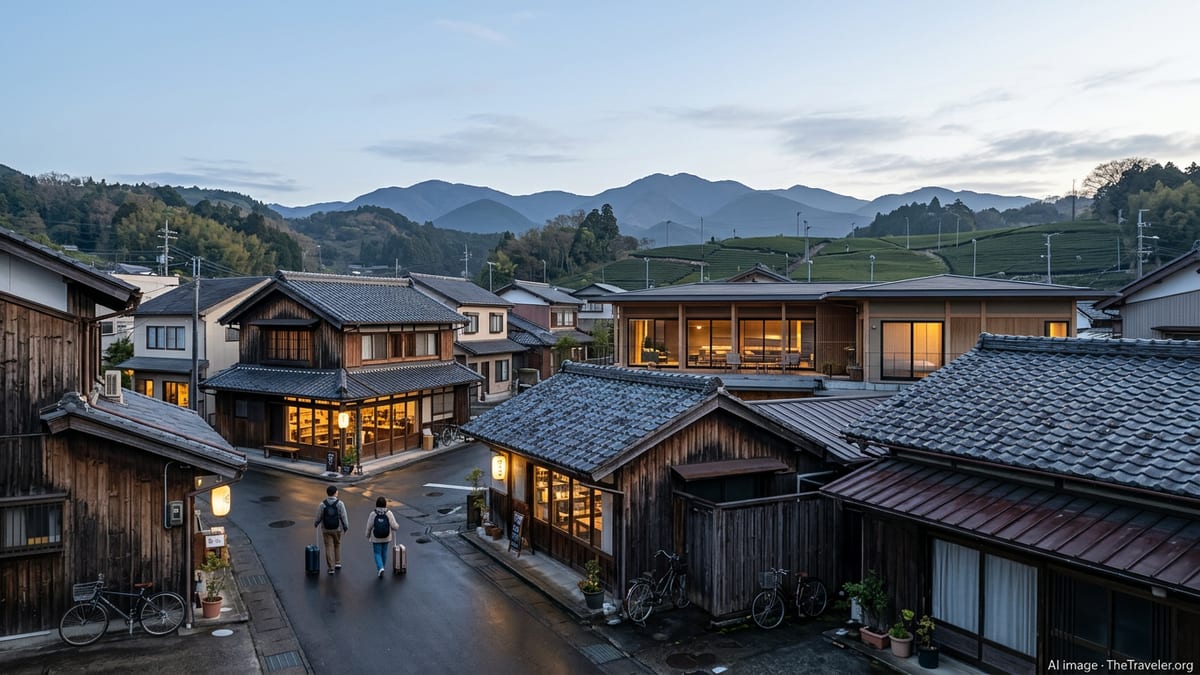
Shizuoka Turns Empty Spaces into Overnight Stays
In the regional capital of Shizuoka, a new approach to lodging is emerging in streets once marked by shuttered shops and underused buildings. According to recent coverage in Asian travel and business media, local partners have begun converting vacant commercial premises into compact, design-forward accommodations aimed at independent travelers. The concept offers an alternative to large hotels, while injecting overnight visitors directly into neighborhoods that have struggled with low foot traffic.
Reports indicate that these revamped spaces are often configured like small suites, with living and sleeping areas that resemble urban apartments more than conventional hotel rooms. Designers are incorporating local materials and motifs, such as textiles from western Shizuoka or displays celebrating local manufacturers, to signal a strong sense of place. The result is a hybrid between hotel and serviced residence, where guests are encouraged to explore nearby cafes, ramen shops, and bars rather than remain inside a single large complex.
Tourism promotion materials for Shizuoka highlight how these projects dovetail with broader regional goals, from supporting small retailers to encouraging longer, more immersive stays. By scattering rooms across town instead of concentrating them in one tower, the model distributes spending across multiple streets and districts. For a mid-sized city facing the familiar pressures of an aging population and consolidating commerce, each renovated unit becomes a small but visible sign that the urban core is not being left to decline.
Nature-Inspired Hotels Anchor New Rural Narratives
Beyond the prefectural capital, Shizuoka’s outlying cities are investing in distinctive properties that position the region as a nature-focused escape. One recent example is Greenity Iwata, a nature-inspired hotel in Iwata City that opened at the end of November 2024. According to hospitality coverage, the property emphasizes views of surrounding greenery, outdoor terraces, and natural materials, aiming to connect guests with the area’s mild climate and agricultural landscape.
Greenity Iwata’s concept aligns with broader trends in Japanese rural tourism, where hotels are no longer just places to sleep but gateways to local experiences such as cycling, tea farm visits, and coastal walks. Public information about the project notes a focus on wellness, sustainability, and community partnerships, including local producers and activity operators. This approach is designed to encourage guests to stay longer, spend more widely, and see Iwata as a base for exploring western Shizuoka rather than a brief stopover.
Elsewhere in the prefecture, restored heritage properties on the Izu Peninsula, including a 100-year-old traditional house converted into a luxury villa, signal similar ambitions. Renovations have preserved original beams and facades while adding modern comforts, drawing visitors who are willing to travel beyond Tokyo and Kyoto for slower-paced stays. These high-touch lodgings, often operated by small teams with deep local ties, serve as anchor points for tours, dining, and cultural activities that would struggle to attract attention without a compelling place to stay.
From Kominka to Castle Towns: A National Shift in Strategy
The experimentation underway in Shizuoka fits into a wider national effort to adapt Japan’s aging building stock to new tourism demand. Government statistics released in 2024 highlighted roughly 9 million vacant homes across the country, with some rural prefectures posting vacancy rates above 20 percent. At the same time, inbound tourism has rebounded strongly since border controls were eased, with industry data describing 2024 as a recovery year that surpassed pre-pandemic visitor levels for several months.
Regional developers, community organizations, and specialized firms are responding by transforming old kominka, or traditional wooden houses, into stylish villas and minpaku short-stay rentals. Travel trade publications and industry reports describe projects in places such as Sawara in Chiba Prefecture and small mountain villages in Yamanashi, where multiple houses have been renovated into decentralized hotels. Guests check in at a central reception, then disperse to separate dwellings scattered through historic streets.
Similar thinking is visible in castle towns such as Ozu in Ehime Prefecture, where local initiatives have converted traditional houses into guest rooms while preserving the streetscape. Public reports from tourism agencies and regional destination organizations describe these efforts as models for systematic town-center revitalization, showing how hospitality can fund restoration work that municipalities struggle to finance. By turning the lights back on in empty houses, operators hope to attract not only tourists but also new residents and entrepreneurs.
Balancing Demolition, Preservation, and New Investment
The rise of hotel-led revitalization comes as policymakers debate what to do with hundreds of abandoned inns and bubble-era resorts, particularly in long-declining hot spring areas. Recent coverage in national newspapers notes that the Japan Tourism Agency is preparing subsidies from fiscal 2026 to help demolish derelict ryokan in places such as the Kinugawa onsen region. The program is framed as a safety measure and a way to clear the way for new, more sustainable development.
At the same time, other properties are being selectively saved and repurposed. Reports from domestic media describe how an aging ryokan in Gunma Prefecture’s Minakami area was transformed into a mixed-use commercial complex, extending the life of a once-faded landmark while trimming excess capacity. In Tokorozawa, Saitama Prefecture, an abandoned hotel has been adapted into a restaurant-equipped lodging facility, pairing modern French cuisine with a rural landscape to attract visitors who might otherwise overlook the area.
This tension between demolition and restoration is shaping how investors and communities think about risk. Large, monolithic resorts that dominated the 1980s tourism boom often no longer match today’s demand profile or environmental expectations. Smaller-scale, modular hotels in renovated buildings, whether in Shizuoka or elsewhere, promise lower operating costs and the flexibility to adjust to future demographic changes. For shrinking towns, that flexibility can be as critical as the immediate economic boost.
Can Tourism Alone Save Japan’s Dying Towns?
Despite eye-catching success stories, analysts and government reports caution that hospitality projects are not a cure-all for deep demographic trends. Rural Japan continues to grapple with low birth rates, infrastructure costs, and limited employment opportunities outside a few sectors. Even thriving boutique hotels often rely heavily on visitors from major cities and overseas, leaving local economies vulnerable to external shocks such as currency swings or border restrictions.
However, proponents argue that these new hotels and guesthouses can act as catalysts rather than final answers. By creating reasons for people to visit and stay, they provide a platform for ancillary businesses, from coffee roasteries and craft studios to cycling guides and farm stays. Case studies cited in tourism policy documents highlight how communities that pair accommodation development with housing support, co-working spaces, and local education initiatives are more likely to see young families and entrepreneurs return.
For Shizuoka and other prefectures, the challenge now is to scale these experiments without losing their individuality. If the region can continue turning vacant stores into compact hotels, farmhouses into villas, and unloved buildings into contemporary inns while maintaining authenticity, its shrinking towns may yet find a sustainable new role. The lodgings themselves may be small, but the bet behind them is ambitious: that a carefully designed place to sleep can help keep entire communities awake.