

Germany offers several pathways to permanent residency, each with different qualifying periods and conditions. For relocation planning, the key question is not only whether permanent residency is possible, but how long it is likely to take for a given profile. This briefing outlines the main timelines under current rules, how they differ by residence title, and what factors can shorten or extend the route to permanent residency.
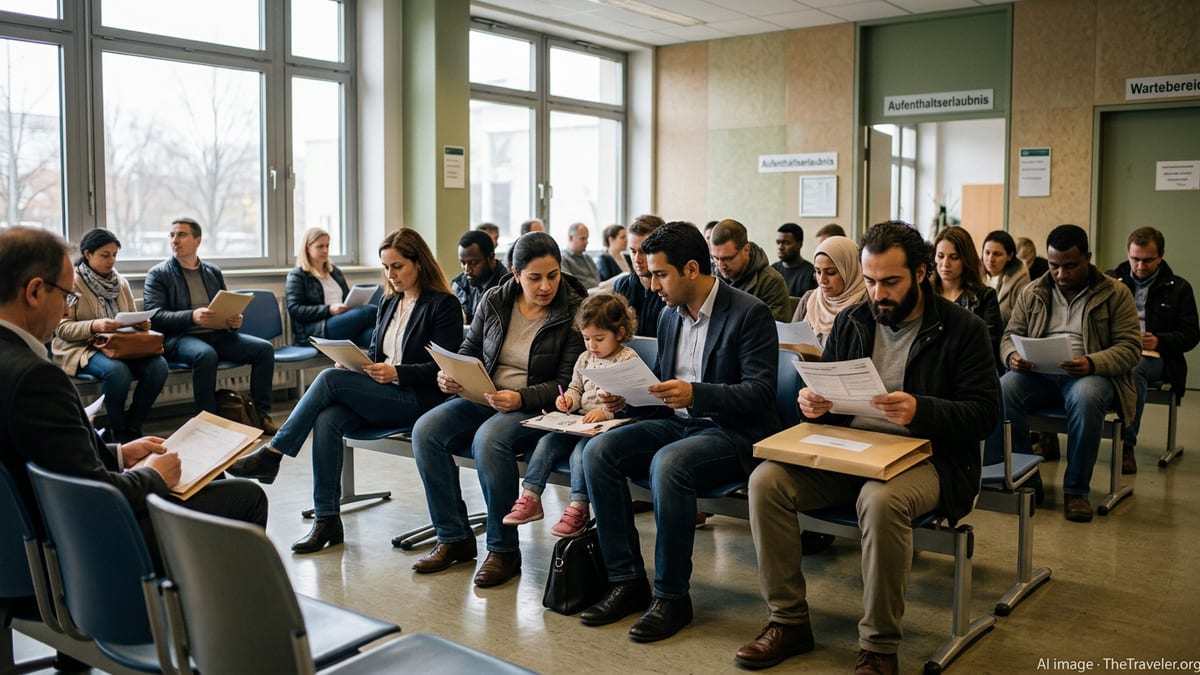
Understanding Permanent Residency Timelines in Germany
Permanent residency in Germany is usually referred to as the settlement permit, or “Niederlassungserlaubnis.” It gives an unlimited right to live and work in Germany, but the path to it is time based and tied to specific types of temporary residence permits. The critical factor for relocation decisions is that the qualifying period is not uniform. It ranges from around 21 months for some highly qualified workers to five years for more general cases, with several intermediate options.
In practice, the German system combines a minimum residence period with additional conditions such as language skills, pension contributions and type of employment. For most non EU nationals, the countdown starts only once a qualifying residence permit for work or family reasons has been granted; time on short term visas usually does not count. EU and EEA citizens follow a different regime based on free movement rules and typically gain an automatic right of permanent residence after five years of lawful stay.
For globally mobile professionals, the key planning task is to understand which category they will enter under and how this determines the earliest realistic application date for permanent residency. The sections below focus on the main categories used in practice and how long each path takes under current rules.
Standard Five Year Route to Permanent Residency
The general rule for many non EU residents is a five year qualifying period before permanent residency becomes available. Under the basic settlement permit framework, applicants must usually have held a residence permit and lived lawfully in Germany for at least five years, maintained secure income and health insurance, and made mandatory pension contributions for much of that period. This route commonly applies to people who do not fall into a faster track category such as EU Blue Card holders or designated skilled workers under specific sections of the Residence Act.
The five year standard is important for relocation planning because it represents the default expectation if no special facilitation applies. For example, individuals on various work permits that are not classified as skilled worker titles, certain family reunion permits, or other humanitarian statuses often need to assume a five year horizon before permanent residency becomes an option. Some local authorities also use the five year rule where legal interpretations are unclear, so it functions as a conservative baseline when modeling long term scenarios.
In addition, even where shorter routes exist in theory, gaps in employment, changes in permit type, or time spent outside Germany can push the effective timeline closer to five years. Companies transferring staff should therefore consider five years as a prudent upper bound for obtaining permanent residency in complex or mixed profile cases.
Accelerated Three Year Path for Skilled Workers
Under the current Skilled Immigration framework, many non EU professionals who hold designated skilled worker residence titles can reach permanent residency faster than the general five year rule. If a person holds a residence permit as a skilled worker under key sections of the Residence Act and has not completed education in Germany, a settlement permit can typically be granted after around three years. This is a policy choice designed to make Germany more attractive to qualified professionals by shortening the route to long term status.
The three year timeline usually applies if the skilled worker has continuously held the relevant work residence permit, maintained qualifying employment in their field and accumulated a specified minimum period of compulsory pension insurance contributions. The employment must be in a role that matches the qualification underlying the permit. In practice, this means that frequent job changes into unrelated roles or long breaks from insured employment can delay eligibility beyond the nominal three years.
For employees being recruited directly from abroad, this three year route is often the most realistic planning assumption if the EU Blue Card is not used. From a relocation policy perspective, it offers a meaningful acceleration relative to the standard five year track, but still requires stability in role and employer for several years.
Fast Track for Graduates of German Universities
Graduates of German universities benefit from one of the shortest residence based timelines to permanent residency. Non EU nationals who complete a qualified degree in Germany and then move into skilled employment can often apply for a settlement permit after approximately two years in the labor market on a suitable work residence permit, provided minimum pension contributions and other integration criteria are met. Recent practice shows that this graduate track is in some cases faster than even the shortest EU Blue Card timeline once the post study work phase is included.
In this pathway, the time spent studying does not normally count directly towards permanent residency, but it unlocks a reduced qualifying period afterwards. The decisive clock starts when the graduate switches to a skilled worker or similar residence permit while in employment. Authorities then look for roughly two years of such status plus 24 months of compulsory pension contributions. Where these conditions are satisfied, the total elapsed time from graduation to permanent residency can be around two to three years, depending on the speed of job placement.
For international students considering Germany as a long term destination, the existence of this two year post graduation route is a significant factor. It allows realistic planning for permanent residency within a relatively short period after entering the professional labor market, provided that continuous, insured employment in a qualifying role is maintained.
EU Blue Card Holders and the 21 to 27 Month Tracks
The EU Blue Card is one of the most time efficient routes to permanent residency in Germany for highly qualified professionals. Under current rules, Blue Card holders can typically apply for a German settlement permit after 27 months of qualifying employment, provided they have at least basic certified German language skills. If they can demonstrate intermediate language proficiency at B1 level, the qualifying period is further reduced to about 21 months.
These timelines refer specifically to months of employment in Germany while holding an EU Blue Card or an equivalent status linked to highly qualified work. In addition, applicants must usually show that they have made mandatory pension insurance contributions throughout that period and that their employment continues at the time of application. Periods of Blue Card residence in other EU states may be relevant for some EU long term residence rights, but for the German settlement permit the focus is on time spent in Germany.
In practice, this means that a highly skilled non EU professional arriving directly on an EU Blue Card, starting insured employment immediately and acquiring B1 German within the first two years can reach eligibility for permanent residency in just under two years of work. Without B1 German, the realistic target moves closer to just over two years, at around 27 months. For relocation decision making at senior or specialist level, these shorter EU Blue Card horizons are often a decisive advantage compared with the three or five year tracks.
Family Members and Special Categories
Family members of foreign nationals in Germany do not automatically follow the same timeline as the principal permit holder, but their path to permanent residency is often linked. Spouses and registered partners who join a skilled worker or Blue Card holder usually receive their own derived residence permits. Over time, these can allow independent access to the settlement permit, frequently after around five years of lawful residence, or sometimes earlier if the spouse qualifies under a skilled worker or graduate track in their own right.
Where the spouse is a German citizen, residence based routes to permanent residency and later citizenship can be somewhat shorter than for other family categories, though permanent residency itself generally assumes several years of lawful stay. Children who grow up in Germany can sometimes secure permanent residency within a reduced timeframe depending on age, schooling and whether one parent is German or already a permanent resident. However, these routes are sensitive to changes in family status, age thresholds and regional implementation, so timelines can vary more than for work based tracks.
For relocation planning, the practical implication is that accompanying family members should not assume they will automatically receive permanent residency at the same time as the main applicant. While in many cases they can align over a medium term horizon, families should model scenarios where the main earner obtains permanent residency first and dependants follow on a slightly longer schedule.
Administrative Processing Times and Practical Delays
The legal qualifying periods described above indicate the earliest date on which an application can be submitted. Actual receipt of the permanent residence card will take longer, as local immigration offices must process the application, verify documents and produce the physical residence document. Reported processing times in large cities can range from several weeks to several months after the appointment, depending on workload and completeness of the file.
Appointment availability is a further factor that effectively lengthens the total timeline. In some regions, it can take a few months to secure a suitable appointment once the formal residence period threshold has been reached. If the applicant does not pre assemble proof of pension contributions, employment, language skills and integration course completion where required, the authority may request additional documentation, leading to further delay.
When building relocation schedules, it is therefore prudent to add at least several months on top of the statutory qualifying period for practical administration. For instance, a Blue Card holder aiming at the 21 month threshold with B1 German should realistically expect the residence card to be issued closer to two years after starting employment, and in some locations slightly later, depending on local capacity and the quality of the application file.
The Takeaway
Germany offers a range of timelines to permanent residency, and the spread is wide. At one end, highly qualified EU Blue Card holders with strong German language skills can reach eligibility in approximately 21 months of employment, plus processing time. Graduates of German universities with skilled employment can often achieve permanent residency after roughly two years of work. Many other skilled workers can plan on a three year horizon, while a broad set of residents, including some family members and holders of more general permits, should expect around five years before permanent residency becomes realistic.
For relocation decision making, it is essential to map an individual’s profile and intended residence title against these categories before arrival. The choice between an EU Blue Card and other skilled worker permits, the possibility of studying in Germany before entering the labor market, and the timing of language acquisition can all shift the expected pathway significantly. Multinational employers and mobile professionals who proactively plan for these variables can compress the route to long term security in Germany and reduce uncertainty during the initial years of residence.
FAQ
Q1. What is the minimum time needed to get permanent residency in Germany as a worker?
The shortest common route is for EU Blue Card holders with B1 German, who can usually apply after about 21 months of qualifying employment, plus processing time.
Q2. How long does it take to get permanent residency with an EU Blue Card if I do not speak much German?
EU Blue Card holders with only basic language skills typically need around 27 months of qualifying employment in Germany before they can apply for a settlement permit.
Q3. I am a graduate of a German university. When can I get permanent residency?
Non EU graduates of German universities who move into skilled employment can often obtain permanent residency after roughly two years on a qualifying work permit with sufficient pension contributions.
Q4. What is the usual timeline for skilled workers who do not have an EU Blue Card?
Many skilled workers on designated work residence permits can qualify for permanent residency after about three years of continuous qualifying employment and pension contributions, subject to language and integration requirements.
Q5. How long is the standard route to permanent residency if no fast track applies?
The general rule for many residents is a five year period of lawful stay on a residence permit before they can apply for a standard settlement permit, assuming all other conditions are met.
Q6. Do my study years in Germany count towards the permanent residency timeline?
Time spent studying usually does not count directly, but a German degree can unlock a shorter post study route in which permanent residency becomes possible after around two years of skilled employment.
Q7. Can family members get permanent residency at the same time as the main applicant?
Family members often follow similar timelines but do not automatically receive permanent residency when the main applicant does; their own duration of stay and permit type are assessed separately.
Q8. How much extra time should I allow for the application and processing?
Beyond the legal qualifying period, applicants should expect several weeks to a few months for appointments, document checks and production of the permanent residence card.
Q9. Does changing jobs affect how long it takes to get permanent residency?
Job changes that remain within the same qualification level and keep mandatory pension contributions continuous may not harm timelines, but long breaks or moves into non qualifying roles can delay eligibility.
Q10. Can time with other types of residence permits shorten my route to permanent residency?
In many cases only years on specific qualifying permits count toward the shorter timelines, so earlier time on visitor, student or limited work visas may not reduce the ultimate path to permanent residency.