

Understanding how long it takes to obtain United Arab Emirates (UAE) residency is critical for planning employment start dates, relocations, school enrollments, and lease commitments. Timelines vary significantly by visa route, emirate, and how efficiently employers or sponsors manage documentation. This briefing evaluates typical processing durations for major UAE residency categories and maps realistic end to end timelines so prospective movers can assess how quickly they can become lawful residents.
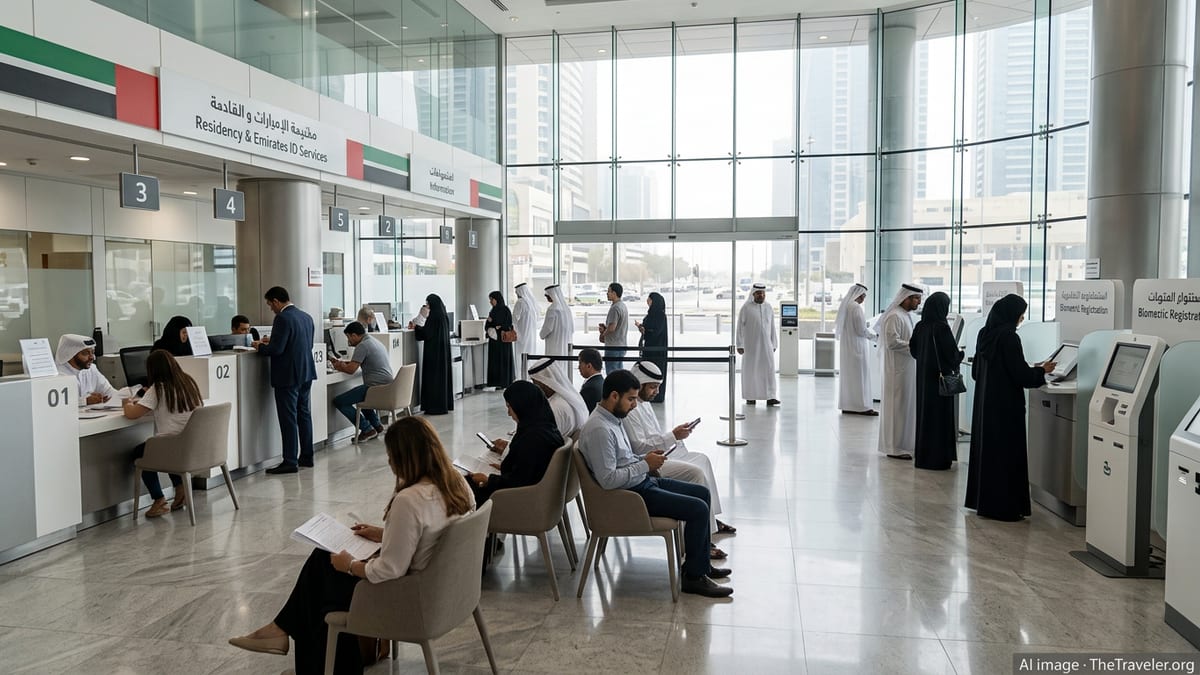
Overview of UAE Residency Processing Stages
Regardless of category, obtaining UAE residency usually involves several distinct stages: entry permit or status change, medical examination, biometrics, residence visa stamping, and Emirates ID issuance. In straightforward cases, these steps can be completed in a matter of days, but practical experience shows that coordination gaps, public holidays and security checks can extend timelines.
Official government portals often quote very short technical processing times, such as 48 hours for certain online residence visa applications in Dubai once the file is submitted and accepted. In practice, end to end timelines are driven less by the automated decision step and more by how long it takes sponsors, applicants and third parties to complete prerequisites such as document attestation, medical tests and scheduling biometrics.
At a high level, a well managed standard employment residence process can often be completed within 2 to 6 weeks from submission of a complete file, while more complex or high value categories such as Golden Visas can range from roughly 2 to 8 weeks, with occasional outliers that are faster or significantly slower. Applicants should treat official “48 hour” or similar figures as single stage processing benchmarks rather than full journey durations.
The following sections differentiate between major routes to residency and outline realistic timelines for each, based on recent guidance and aggregated consultancy and market data as of early 2026.
Standard Employment and Company Sponsored Residence Visas
The most common route to UAE residency remains the employer sponsored residence visa tied to a mainland company, free zone entity, or government employer. For these cases, there are two broad phases: pre arrival processing (or status change if already in country) and post arrival processing.
For mainland employment, obtaining initial work permit approval and the associated entry permit typically takes about 1 to 2 weeks after the employer submits a complete application through the relevant system. Some government and large corporate sponsors report faster handling, but 10 to 14 calendar days is a pragmatic planning assumption, particularly when factoring in weekends and public holidays.
Once the employee is in the UAE or their status is changed inside the country, the remaining residency steps generally take around 1 to 3 additional weeks. This includes completion of mandatory medical tests, capture of biometrics, issuance of the residence visa sticker or digital permit, and production of the Emirates ID. Individual authorities in Dubai have indicated technical residence visa processing targets of roughly 48 hours once all data is in the system, but appointments, lab processing and card printing often extend the real world duration.
In aggregate, most straightforward employment residence cases can be completed in approximately 3 to 5 weeks from the date a fully compliant application is lodged by the employer. However, if degree attestations, police clearances or other background documents are not already prepared, the overall end to end readiness timeline can stretch to several months, even though the formal immigration processing period remains in the 3 to 5 week range.
Free Zone Residency Processing Timelines
Free zones such as those in Dubai and Abu Dhabi run their own residency workflows within the federal framework, and many position themselves as relatively fast for company setup and visa issuance. Practical timelines, however, still follow the same core stages of entry permit, medical, biometrics and Emirates ID.
Once a free zone company is established and its establishment card is in place, entry permits for employees are often issued within approximately 5 to 7 working days when the application is complete and no additional checks are triggered. Some zones advertise shorter turnaround times, particularly for priority service tiers, but these are not guaranteed.
After arrival or internal status change, free zones typically coordinate medical tests and biometrics through designated centers. Completing these steps and receiving the final residence visa approval and Emirates ID typically adds around 7 to 14 working days. In some business parks with high application volumes, appointment bottlenecks can lengthen this phase.
Overall, once the free zone company itself is fully operational, employees should expect a realistic timeline of about 3 to 4 weeks to obtain residency from the point a complete visa application is filed. Applicants joining newly formed entities should additionally budget time for company licensing and registration, which can take anywhere from several days to a few weeks depending on the zone and sector.
Family, Dependent and Sponsored Residence Visas
Family sponsorship remains a significant component of UAE residency. Residents who meet salary and housing criteria can sponsor spouses, children and in some cases parents. The underlying processing mechanics mirror employment visas, but timing is sensitive to how quickly the principal resident completes their own residency activation.
Once the sponsor’s residence visa and Emirates ID are active, applying for family residence visas is usually a relatively streamlined process. Entry permits for dependents are commonly issued in around 3 to 7 working days for standard cases where documentation such as marriage and birth certificates are already attested and available.
Following arrival, dependents must complete medical tests where required by age and category, then attend biometrics appointments. Final residence approval and Emirates ID issuance typically adds another 1 to 2 weeks. As with employment visas, the technical approval step at the immigration authority may be fast, but appointment logistics and document review can introduce delay.
In practice, many families secure dependent residency for immediate family members within roughly 2 to 4 weeks from starting the dependent application, assuming all civil status documents are properly attested in advance. The principal source of extended timelines is usually the pre immigration document preparation stage rather than the official processing itself.
Golden Visa and Long Term Residency Processing Times
Golden Visas, offering 5 or 10 year residency for investors, entrepreneurs, highly skilled workers and other qualifying groups, involve more extensive eligibility checks than standard two year residence visas. As a result, processing times are longer and more variable, particularly when third party endorsements or property valuations are required.
Recent consultancy data for 2025 and early 2026 indicates that many straightforward Golden Visa cases are approved within roughly 1 to 3 weeks once all documents and endorsements are in order. For property investors whose title deeds and valuations meet the thresholds and are correctly recorded, approvals around 7 to 10 working days are common, with some reported approvals in under 24 hours viewed as outliers under ideal conditions.
More complex Golden Visa categories such as entrepreneurs, exceptional talents and individuals requiring ministry level endorsements typically see longer processing windows, often in the range of 3 to 8 weeks. This reflects the time required for business viability assessments, review of academic or professional credentials, and issuance of nomination letters from competent authorities.
It is also important to note that in late 2025 and early 2026 some emirates experienced temporary suspensions or framework adjustments affecting Golden Visa issuance, which created backlogs and longer waiting times in certain categories. Applicants considering this route should check very current status and be prepared for timing volatility if the policy framework is being updated. As a conservative planning assumption, potential Golden Visa applicants should budget up to 30 to 45 days from full application submission to final residency activation, even if many cases conclude sooner.
Short Term Green Visa and Specialized Categories
The UAE Green Visa and other specialized residency types, including selected self sponsored categories, follow similar digital workflows but serve different eligibility groups such as skilled professionals, self employed individuals and investors not using the Golden Visa structure. Official guidance often describes Green Visa processing as relatively fast once documents are verified, reflecting the intent to attract independent talent.
In general, once a complete Green Visa file is submitted through the federal system, applicants can expect an indicative processing period in the low weeks rather than months, provided there are no complications. This would broadly place realistic timelines in the approximate 2 to 4 week range for many applicants, though market transparency on actual turnaround times remains more limited than for mainstream employment routes.
Specialized categories that rely on professional classification, academic equivalency, or external endorsements may experience timing variability similar to Golden Visa cases. The time required to complete equivalency procedures and obtain necessary attestations can significantly outweigh the formal immigration processing window listed for the visa type itself.
Given these uncertainties, individuals pursuing Green Visa or niche residency categories should avoid making fixed relocation commitments based solely on the shortest processing times advertised by intermediaries. Instead, planning should assume that actual end to end residency activation could be meaningfully longer than the best case figures.
Key Factors That Influence UAE Residency Timelines
Across all categories, several recurring factors strongly influence how long it takes to achieve active UAE residency. The most critical variable is the completeness and quality of documentation at the time of submission. Missing or incorrectly attested academic degrees, civil status certificates or police clearances routinely halt or slow processing.
Security and background checks are another important factor. While many applications clear within standard timelines, some nationalities or individual profiles may trigger additional review, which can extend decision times without any published maximum. Applicants with previous immigration violations or overstays in the UAE or elsewhere may also face enhanced scrutiny.
Operational capacity and public holidays additionally shape practical timelines. The UAE work week, weekends and official holiday calendar mean that applications submitted immediately before extended holiday periods can experience multi day pauses. Periods of high demand, regulatory change or system upgrades can create temporary processing bottlenecks, as seen recently in some long term visa programs.
Finally, the responsiveness of sponsors and intermediaries is decisive. Even when government processing is efficient, delays in employers uploading documents, paying fees, scheduling medical tests or arranging biometrics appointments can easily add one to two weeks to an otherwise straightforward case. Applicants should factor in this human element when estimating how long it will take to secure their residency.
Planning Assumptions and Comparative Timelines
From a relocation planning perspective, it is useful to translate the various data points into conservative timelines that can be used for employment contracts, school admissions and lease negotiations. The table below summarizes indicative end to end processing windows for key residency routes, measured from submission of a substantially complete file.
For standard employer sponsored mainland or free zone residence visas, a practical planning window is approximately 3 to 5 weeks. Many cases will fall toward the shorter end of this range, but the allowance helps absorb scheduling gaps and minor document issues without jeopardizing start dates.
For dependent and family sponsorship, a 2 to 4 week window is reasonable once the sponsor already holds an active residence visa and Emirates ID and all family civil documents are attested. Delays are more likely to arise from document preparation in the home country than from UAE processing itself.
For Golden Visas and comparable long term or self sponsored categories, conservative planning should assume 4 to 8 weeks from submission of a complete, endorsed file, with recognition that some investors and high profile applicants secure approvals in closer to 1 to 3 weeks. Where program frameworks are under review or temporarily suspended, planning should be especially cautious.
The Takeaway
Evaluating a move to the UAE requires a realistic understanding of how long it takes to transition from intent to active residency. Official processing benchmarks can give the impression that residence visas are issued in a matter of hours, but the operational reality involves multiple stages and actors that extend the end to end timeline.
For most professionals relocating through employer sponsorship, it is prudent to treat 3 to 6 weeks as a normal range for completing residence and Emirates ID formalities after submission of a complete application, while beginning document attestation several months in advance. Families should synchronize dependent visa planning with the principal applicant’s timeline to avoid extended separations or schooling disruptions.
Prospective Golden Visa and Green Visa applicants should view advertised minimum processing figures as best case scenarios contingent on stable regulations and perfect files. In periods of regulatory change or heavy demand, longer waiting times are plausible and should be built into relocation schedules.
Overall, UAE residency processing can be comparatively efficient by international standards, but decision grade planning must be anchored in conservative assumptions that allow for documentation, appointment and policy related variability.
FAQ
Q1. How long does a standard UAE employment residence visa usually take to process?
For most straightforward employment cases, a realistic end to end processing time from submission of a complete application to Emirates ID issuance is about 3 to 5 weeks, although some files are finalized faster.
Q2. Can UAE residency really be issued in 48 hours?
Some authorities quote 48 hour processing targets for specific decision stages, but full residency, including medical tests, biometrics and Emirates ID, nearly always takes longer in practice.
Q3. How long should be allowed for a UAE Golden Visa application?
Golden Visa approvals for uncomplicated investor or professional cases often fall in the 1 to 3 week range, but planning should assume 4 to 8 weeks to accommodate endorsements and potential backlogs.
Q4. What is the typical timeline for family and dependent residency visas?
Once the sponsor’s residence is active and all required documents are attested, most family sponsorship cases take around 2 to 4 weeks from application to issuance of dependents’ residence permits and Emirates IDs.
Q5. Are free zone residence visas faster than mainland visas?
Free zone authorities often provide relatively efficient processing, and many applicants complete residency within about 3 to 4 weeks, which is broadly comparable to well managed mainland cases.
Q6. How much extra time should be built in for document preparation?
Document attestation, police clearances and degree verifications can take several weeks or even months in the country of origin, so these steps should start well before any planned move date.
Q7. Can public holidays significantly delay UAE residency processing?
Yes. Applications submitted just before long public holiday periods can experience pauses of several days, so it is prudent to avoid time critical filings immediately before national holidays.
Q8. What happens if additional security checks are required?
If an application is selected for enhanced review, processing can extend beyond normal timeframes with no fixed maximum, and applicants may experience “under processing” status for an extended period.
Q9. Is it possible to fast track UAE residency processing?
Some service providers and free zones offer priority handling that can shorten certain stages, but no provider can guarantee ultra fast approvals in every case, especially when security checks are involved.
Q10. How much buffer time should be built into relocation plans for UAE residency?
For decision grade planning, it is advisable to include at least several extra weeks beyond the typical processing ranges so that flight bookings, school enrollments and lease start dates are not jeopardized by modest delays.